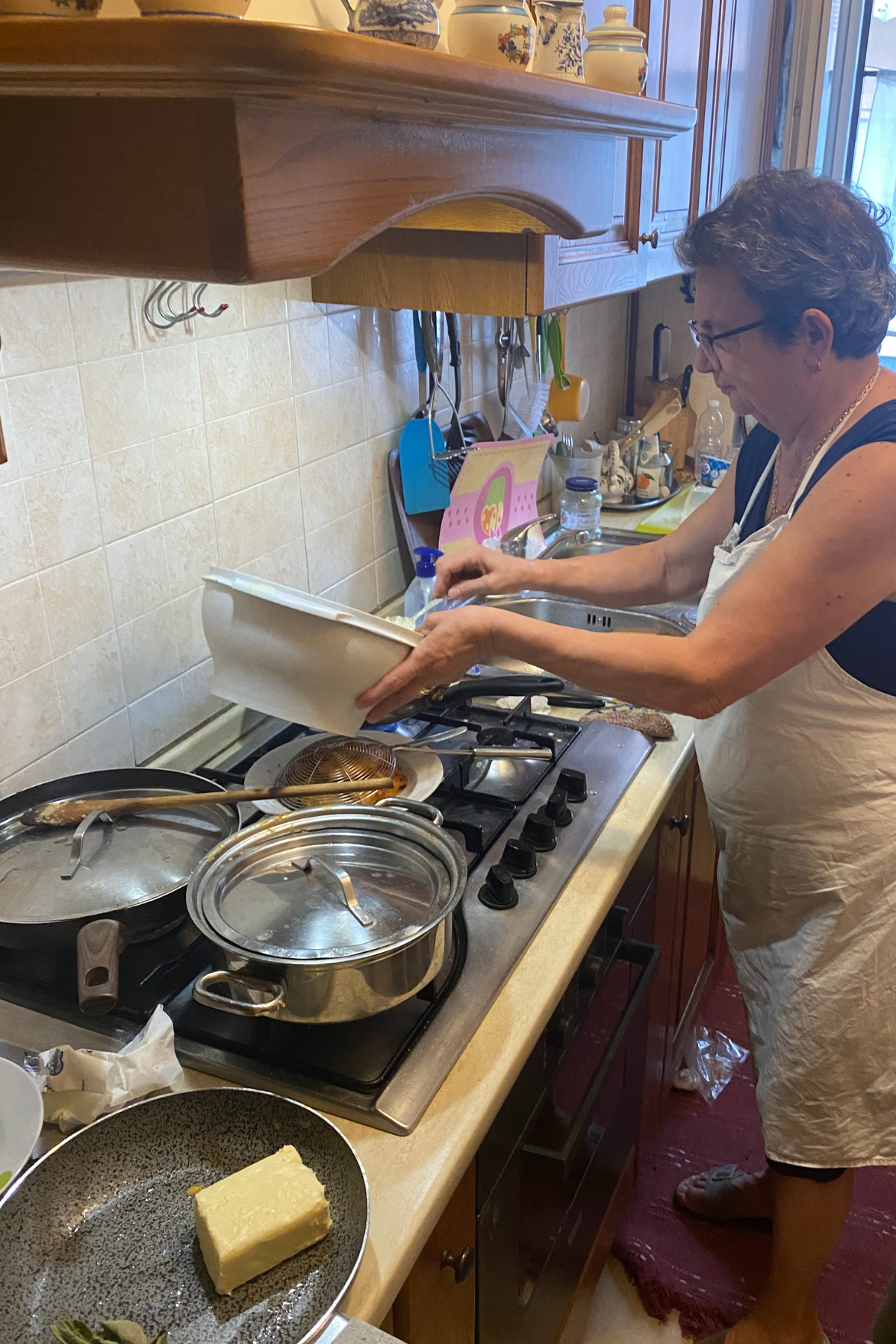
Growing up, every time we'd visit my nonna's house, you could count on two things: the incredible smell of something simmering on the stove-and her voice ringing out from the kitchen saying, "Mangia!"
It wasn't just a command. It was an invitation. A tradition. A warm, insistent reminder that we were about to sit down to a homemade meal she'd spent hours lovingly preparing-and there was no skipping it.
In Italy, mangia means "eat!" But it means so much more than that.
What Does Mangia Literally Mean?
Mangia is the imperative form of the verb "mangiare" (to eat), directed at one person. You'll hear it said at nearly every Italian table, especially by parents, grandparents, and hosts who have cooked for guests. It's a way to say:
"Dig in!" "Go ahead, eat up!" "Enjoy this food I made for you!"
You might also hear it repeated for extra emphasis: "Mangia, mangia!"-especially when you're not eating fast enough for Nonna's liking.
It's More Than Just a Word-It's Cultural
In Italian homes, food is love. When someone tells you mangia, they're not just telling you to eat-they're telling you to feel at home. Saying no to food can sometimes be taken as offensive, especially when someone's cooked for you. Even if you're full, you're expected to try a little bit, just out of respect.
This isn't unique to my nonna-it's the norm in Italian households. Whether you're in Sicily, Milan, or a tiny town in the hills of Tuscany, you'll likely hear someone say mangia with affection and urgency. It's a cornerstone of hospitality.
Common Ways You'll Hear Mangia Used
Mangia che ti fa bene! - Eat, it's good for you!
Mangia tutto! - Eat it all!
Mangia piano! - Eat slowly!
Dai, mangia qualcosa! - Come on, eat something!
The tone can be loving, concerned, or slightly exasperated (especially when a picky eater is involved)-but it always comes from a good place.
Regional Dialects & Expressions
Depending on where you are in Italy, you might hear different versions of the phrase:
In Naples, you might hear "A mangiá, a tavola!"
In Sicily, "Mangia e stai zitto!" (Eat and be quiet!)-usually said with humor.
Some say "mangiate" when speaking to a group, or "mangiamo" to suggest eating together.
Here's a video of my little brother making meatballs with nonna. And later on she would be at the dinner table encouraging everyone to "mangia!".
Why You'll Never Forget Mangia
If you've ever eaten in an Italian home-or even a cozy trattoria-you've probably heard it. Whether you're eating a bowl of pasta, a plate of polpette, or just nibbling on bread, mangia is a word that wraps you in warmth. It tells a story of family, tradition, and the importance of food as something that brings us together.
So next time you hear it, know it's more than just a suggestion-it's an invitation into Italian culture itself.
Final Takeaway
Mangia = "Eat!" (imperative of mangiare)
Used lovingly in every Italian home
Deeply rooted in culture, tradition, and hospitality