
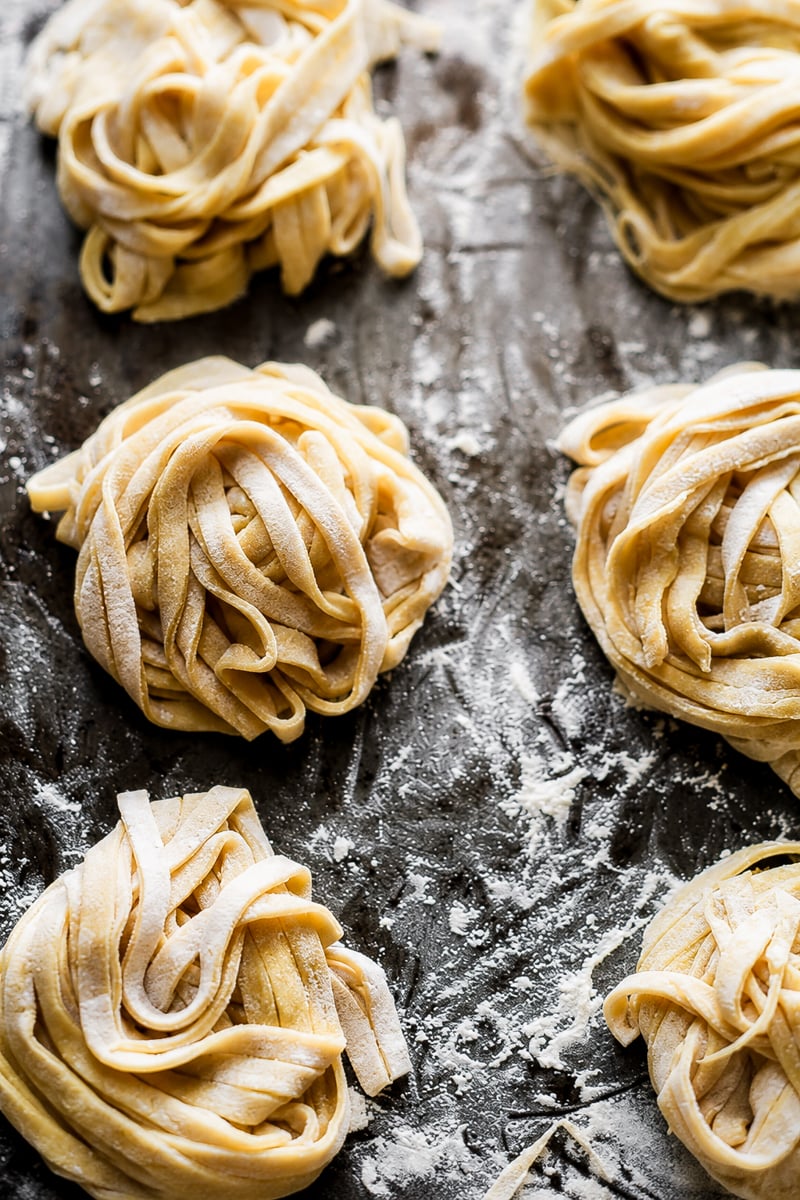
I'm excited to share my homemade fettuccine recipe that teaches you how to make fettuccine pasta from scratch. In this guide, I walk you through the simple steps of combining flour, eggs, and olive oil to create fresh fettuccine that brings a taste of Italy into your kitchen. Perfect for anyone who loves making their own pasta, this recipe will help you master the art of homemade fettuccine.
This article contains affiliate links which support us at no extra cost to you.
Jump To
- 💖Why we love this homemade fettuccine
- What does fettuccine mean in Italian?
- What is the difference between fettuccine and linguine?
- 🛒 Ingredients for homemade fettuccine
- 🍽️How to make homemade fettuccine?
- 🫙 Leftover and Storing
- 📃 Substitutions & Variations
- Some notes on this recipe:
- ☑️ Our Top Tips
- ❓ FAQ'S
- Homemade Fettuccine Recipe
What is something that you crave for your birthday? Is it a big chocolate cake? Is it ice-cream? Me, I crave homemade fettuccine! Well, not every year. But this year...this year...I was craving fettuccine!
And so it happened, right when we were taking out the pasta machine, my mother-in-law Teresa (at the moment, she's in Italy in her hometown in Calabria)called to wish me a happy birthday and I told her my mom is over and we were making pasta. "La tua mamma sta facendo la passsstaaa? Ma quando mai?". Something to the effect of, "Since when does your mother make pasta?".
So I explained to her that she was making pasta and I was helping her and that we make pasta together, even if she's never seen us do it. I can remember making pasta since I can remember eating pasta. I mean, I truly believe that strands of silky smooth fettuccine are literally running through my veins! It's that much a part of my life.
So I hung up the phone and mom and I were already busy with the pasta production. Mom says, "See! see how I do it with ease? I have experience making pasta and, unlike your mother-in-law, I don't make a mess."
The conversation continued as each portion of pasta was rolled through the machine. This is my mom, "I still can't believe she was surprised we were making pasta for your birthday." Mom continues as the next portion of pasta is rolled through the machine, :I think she was a little bit jealous if you ask me. She thinks she's the only one that knows how to do every thing.
So there is a little bit of cooking rivalry going on. I was aware of some hints of its existence whenever she comes from Italy to visit us or when we've brought my mom there to visit them. But this one phone conversation on my birthday, through the thousands of miles of distance and a not so good cell connection, this one conversation revealed something that I think many women feel with food and their in-laws.
Or at least with Italian women. A slight competition in the kitchen! How could you all cook something as good as I could for my son (even though this wasn't really made specifically for him, but for me and my birthday!)? A sort of disbelief, even though Teresa knows it is true and it does make her happy.
But there still is that incredulous moment. That really explains why my mom steers clear from the kitchen when she is here visiting, which is why Teresa never saw my mom and I actually make pasta on our own.
💖Why we love this homemade fettuccine
- Freshness and Flavor: Nothing beats the taste of fresh pasta. Making fettuccine from scratch ensures a superior flavor and texture compared to store-bought versions, elevating any dish it accompanies.
- Simple Ingredients: This recipe requires just a few basic ingredients-flour, eggs, and olive oil-making it accessible and straightforward. These are pantry staples in many households, so you can decide to make pasta on a whim without needing a special shopping trip.
- Versatility: Homemade fettuccine serves as a perfect base for a wide array of sauces and toppings. Whether you prefer a light olive oil dressing, a rich cream sauce like Alfredo, or a hearty meat sauce, this pasta complements them all beautifully.
- Fun to Make: The process of making pasta from scratch can be a delightful and rewarding culinary activity. It's a great way to spend quality time in the kitchen, whether you're cooking solo or involving friends or family.
- Customizable: This recipe is easily adaptable. You can add herbs or spices to the dough to enhance the pasta with additional flavors, or adjust the thickness and width of your noodles to suit different dishes and preferences.
What does fettuccine mean in Italian?
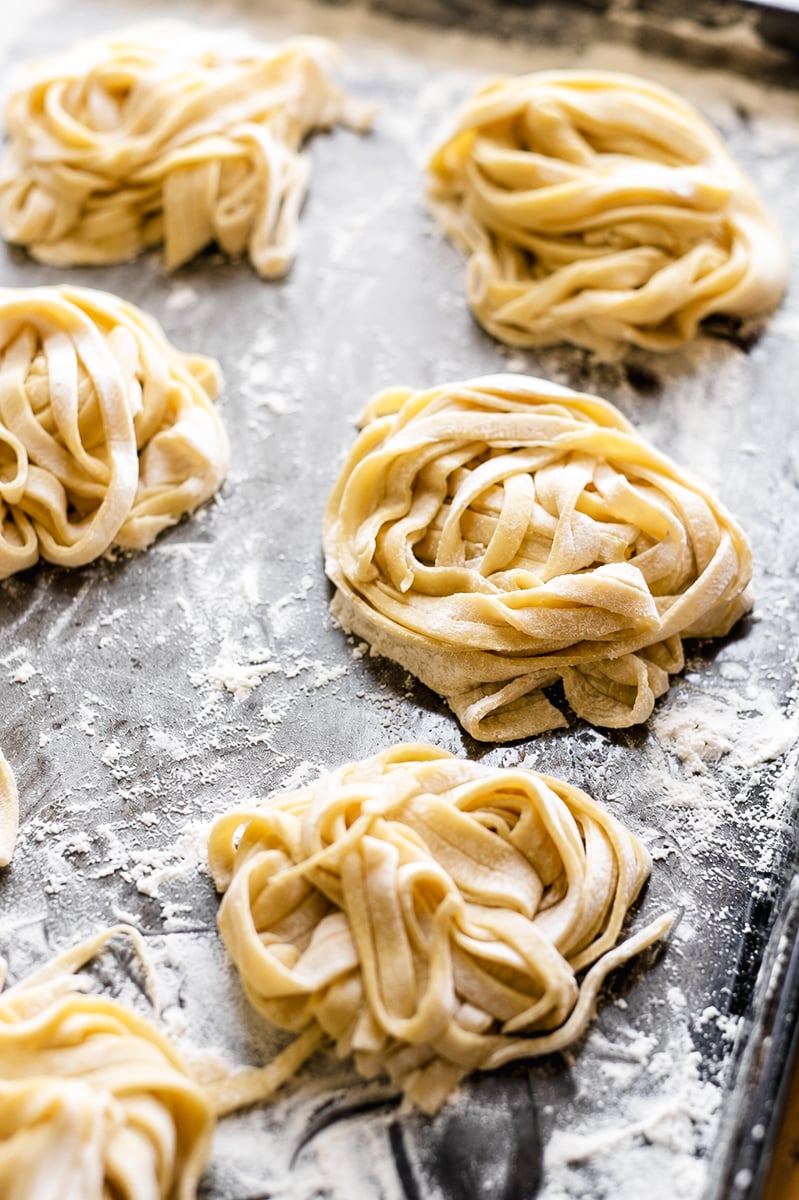
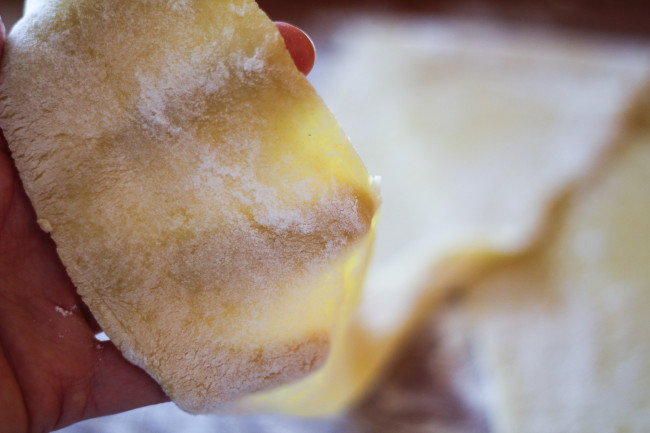
In Italian, fettuccine means "little ribbons," and the pasta does resemble a lovely pile of ribbons when you see it on the plate. The pasta has to be thin like this. If you hold it up, it's sort of transparent and that is just perfection for achieving the most delicate pasta. I recently shared my pappardelle, a little bit of a wider pasta shape.
What is the difference between fettuccine and linguine?
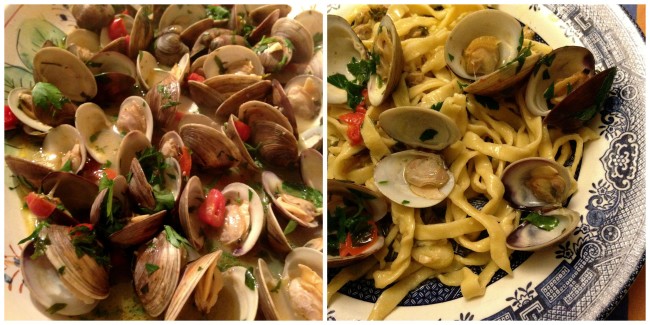
It's just a little bit of a size difference. The fettuccine are a tad wider and also a little flatter than linguine. Fettuccine is a great pasta to serve with heavier sauces and especially cream sauces. But this evening, we served them gorgeous clams. Mom made her famous clam sauce (that's all I wanted for my birthday!).
🛒 Ingredients for homemade fettuccine
- 4 cups All-Purpose Flour (or a combination of 2 cups All-Purpose Flour and 2 cups 00 Flour): Provides the base and structure for your pasta dough.
- ¾ teaspoon kosher salt: Enhances the flavor of the pasta.
- 4 large eggs: Binds the dough and adds richness.
- 1 tablespoon extra-virgin olive oil (additional as needed): Improves the dough's texture and adds a slight richness.
Say you don't have a pasta machine and you want to make the pasta by hand? No problema! Here is how you do it:
🍽️How to make homemade fettuccine?
Step 1: Preparing the Dough
- Mixing Ingredients:
- In a large bowl, combine the flour and salt.
- Create a well in the center of the flour mixture, and add the eggs and olive oil into it.
- Start mixing the ingredients together with your hands or a fork, gradually incorporating the flour into the liquid from the center outward, until the mixture begins to form a cohesive ball.
- Resting the Dough:
- Cut the dough into four equal pieces.
- Cover each piece with a tea towel or plastic wrap to prevent drying out.
- Let the dough rest for an hour to allow the gluten to relax, making it easier to roll out.
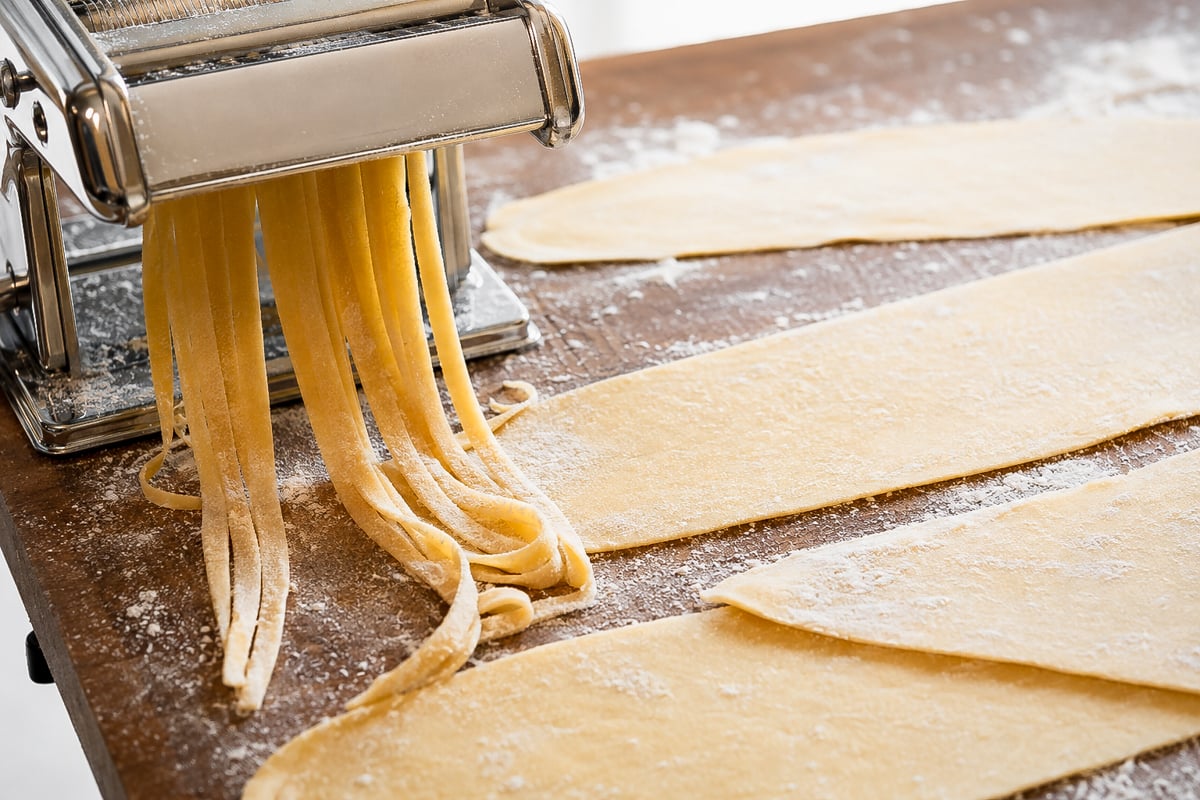
Step 2: Rolling and Cutting the Pasta
- Rolling the Dough:
- Begin with one piece of the rested dough, keeping the others covered.
- On a clean, floured surface, roll out the dough as thin as possible, adding flour as needed to prevent sticking.
- Cutting the Pasta:
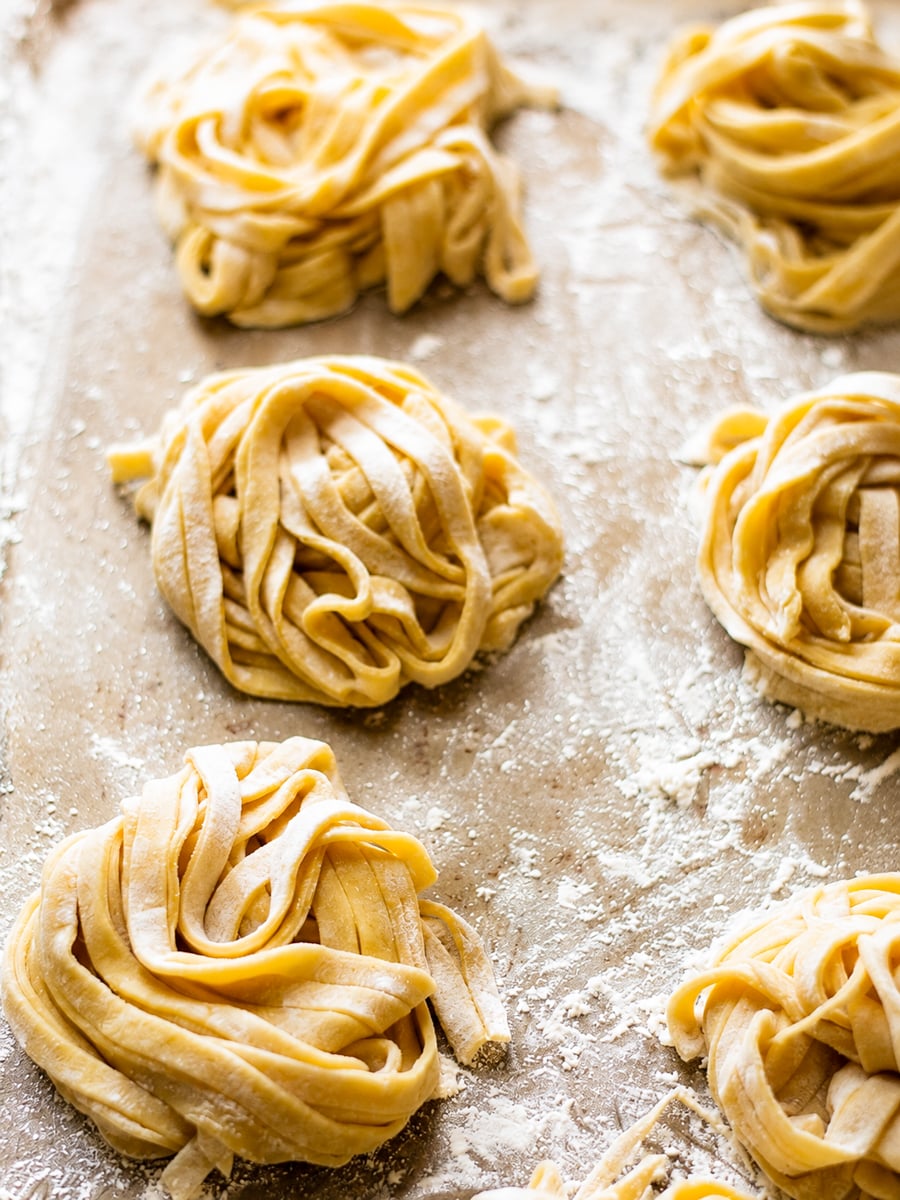
- For fettuccine, cut the rolled dough into ¼ inch wide strips.
- For pappardelle, cut the strips into ½ inch widths.
- Gently gather the cut strips and twist into small nests to make them easier to manage and to prevent them from sticking together.
- Cooking the Pasta:
- Bring a large pot of salted water to a rolling boil.
- Carefully add the pasta nests to the boiling water.
- Cook for about 3-4 minutes or until al dente, ensuring the pasta is tender yet firm to the bite.
📃 NOTE: Recipe card with detailed instructions are below! Print it out for later!
🫙 Leftover and Storing
Freezing the Pasta: You can freeze the noodles in an airtight container and be sure to use them in the next 3 months. Frozen noodles may take an extra couple of minutes to cook.
Cooked Fettuccine:
- Quickly cool the cooked pasta.
- Store in an airtight container in the refrigerator for up to 3-4 days.
Uncooked Fettuccine:
- Allow the pasta to dry completely at room temperature on a baking sheet.
- Once dry, transfer to an airtight container or a zip-lock bag.
- Store in a cool, dry place for several weeks.
Reheating/Boiling:
- For reheating cooked fettuccine, simply toss in boiling water for 30-60 seconds or microwave with a splash of water.
- Cook dried fettuccine directly in boiling water, adding an extra minute or two to the usual cooking time.
📃 Substitutions & Variations
Flour Substitutions:
- Whole Wheat Flour: Substitute half of the all-purpose flour with whole wheat for a healthier option.
- Gluten-Free Flour: Use a gluten-free all-purpose flour blend to accommodate gluten sensitivities.
Egg Alternatives:
- Eggless Pasta: Use water and a bit of olive oil in place of eggs for a vegan version.
Flavor Additions:
- Herb-Infused Pasta: Add finely chopped herbs like basil, parsley, or rosemary to the dough for extra flavor.
- Spinach Pasta: Incorporate spinach puree into the dough for a boost of color and nutrients.
Richer Dough:
- Semolina Flour: Replace half of the all-purpose flour with semolina for a chewier texture and richer flavor.
Some notes on this recipe:
- Adjusting for Conditions: The dough may require different amounts of flour or water each time due to changes in humidity, temperature, and ingredient variability.
- Texture of Dough: Aim for a dough that is smooth, supple, and silky to the touch. It should not be sticky or wet.
- Practice Makes Perfect: The first attempt might not be perfect; pasta-making can be an art that benefits from practice.
☑️ Our Top Tips
- Rest the Dough: Allow your dough to rest for at least 30 minutes after kneading. This helps relax the gluten, making it easier to roll out and shape.
- Consistent Thickness: When rolling out your dough, aim for consistent thickness to ensure even cooking. A pasta machine can help achieve uniform thinness.
- Prevent Sticking: Dust your work surface, rolling pin, and pasta with a little flour to prevent sticking. Also, keep cut pasta dusted and separated before cooking.
- Salt the Water: Always salt your pasta water generously. It should taste like the sea to give your fettuccine the right flavor.
- Fresh is Best: Cook your fettuccine immediately after cutting for the best texture and taste. If you need to store it, drying or freezing are your best options.
- Boiling Time: Fresh pasta cooks much quicker than dried. Keep a close eye on it and taste test for doneness after about 3-4 minutes in boiling water.
Need a great ragu' (Bolognese sauce …AKA, meat sauce) to with it? Here is one to try, and you can also see my butternut squash gnocchi….so good!!
Are you craving pasta and are crunched for time? Here is an easy skillet lasagna recipe you will love!
❓ FAQ'S
All-purpose flour or a mix of all-purpose and 00 flour is commonly used to make fettuccine. The 00 flour gives the pasta a smoother texture and is great for achieving a more elastic dough.
Fettuccine refers to the type of pasta-a thick, flat noodle made from egg and flour. Alfredo is a rich sauce made with butter, heavy cream, and Parmesan cheese. Fettuccine Alfredo combines the two, featuring fettuccine pasta tossed with Alfredo sauce.
Homemade fettuccine usually cooks very quickly, typically in about 3-4 minutes when fresh. The pasta should be tender but still firm to the bite, known as 'al dente'.
More recipes like this:
Fettuccine with Weeknight Lamb Ragù
Did you make this and love it? Please RATE THE RECIPE below:)
I would LOVE IT if you can leave me a star rating and a review down below and let me know your thoughts! It means the world to me to hear how you liked it.
Please Subscribe and give a follow on Instagram, Facebook, Pinterest, and TikTok xx
Homemade Fettuccine Recipe
Ingredients
- 2 Cups All-Purpose Flour
- 2 Cups 00 Flour or just use 4 cups All-Purpose Flour
- ¾ teaspoon kosher salt
- 4 large Eggs
- 1 tablespoon extra-virgin olive oil more as needed
Instructions
- In a food processor, pulse together flour and salt. Add eggs, yolks and oil and run the machine until the dough holds together. If dough looks dry, add a teaspoon of water. If the dough seems too wet, add a little bit of flour.
- Turn out the dough onto a clean counter (or whatever work surface you are using, I use my big board).
- Hold the dough with one hand and fold over the other portion of dough with your other hand.
- Flatten the dough with he palm of your hand. Keep doing this movement pushing the dough away from you.
- Continue kneading until the dough is very smooth and supple. Add a little bit of flour if it is too sticky.
- Wrap in plastic and let it rest at in the fridge for 30 minutes or even overnight.
- Cut the dough into 4 pieces, keeping them covered with plastic wrap or a dish towel when not in use. (If you're rolling the dough out by hand, rather than using a pasta machine, cut it into 2 pieces instead.) Set pasta machine to the widest setting, roll one piece of dough that is flattened into a 3-inch wide rectangle out into a sheet. Fold the sheet in thirds like a letter and pass it through the machine 4 more times on the same setting, making sure to dust lightly with flour if the dough is sticking. Continue to run piece through machine, adjusting to next-narrower setting after every 5 passes, until dough is about 26 inches long. Cut crosswise into 3 equal pieces. Run each piece through machine, adjusting to next-narrower setting, until strip is scant 1/16 inch thick and 14 to 16 inches long.
- Continue same process with the next portions of the dough. Arrange strips in single layer on sheets of parchment.
To cut by hand:
- Brush lightly with flour, roll up sheet, and, using a sharp knife, cut into ¼-inch-wide strips; unroll.
To cut with machine:
- Cut each piece of dough using the fettuccine cutter. Flour the cut pasta so that it does not stick together.
- Place cut pasta on a flour-dusted sheet tray and cover with a dish towel while rolling and cutting the remaining dough. It is best to separate the piles of pasta. If you layer them on top, they will stick to each other. Cover with a tea towel while you finish prepping the other strips.Bring a large pot of well-salted water to a boil, add fresh pasta and boil for 3-4 minutes (depending on the thickness, it should be al dente), Drain well and serve with your sauce.
Nutrition Disclaimer
Please keep in mind that the nutritional information presented below is an approximation and may vary depending on the exact ingredients used.
Notes
- There are certain variables that can affect your homemade pasta dough such as temperature, humidity and the variations in flour, eggs and other ingredients.
- You may need to make slight adjustments to your ingredients every time you make pasta. And pasta dough is not like pastry dough, so this is ok.
- The first time you make the pasta, you may need more flour as you knead. It could be that the next time you make it the dough is too dry and you need to add a little more water. The end result should be a dough that is supple and smooth.
- The dough should feel silky to the touch and not sticky or wet.

My absolute favorite pasta recipe. I always come back to this recipe and now I make the pasta with my kids!