
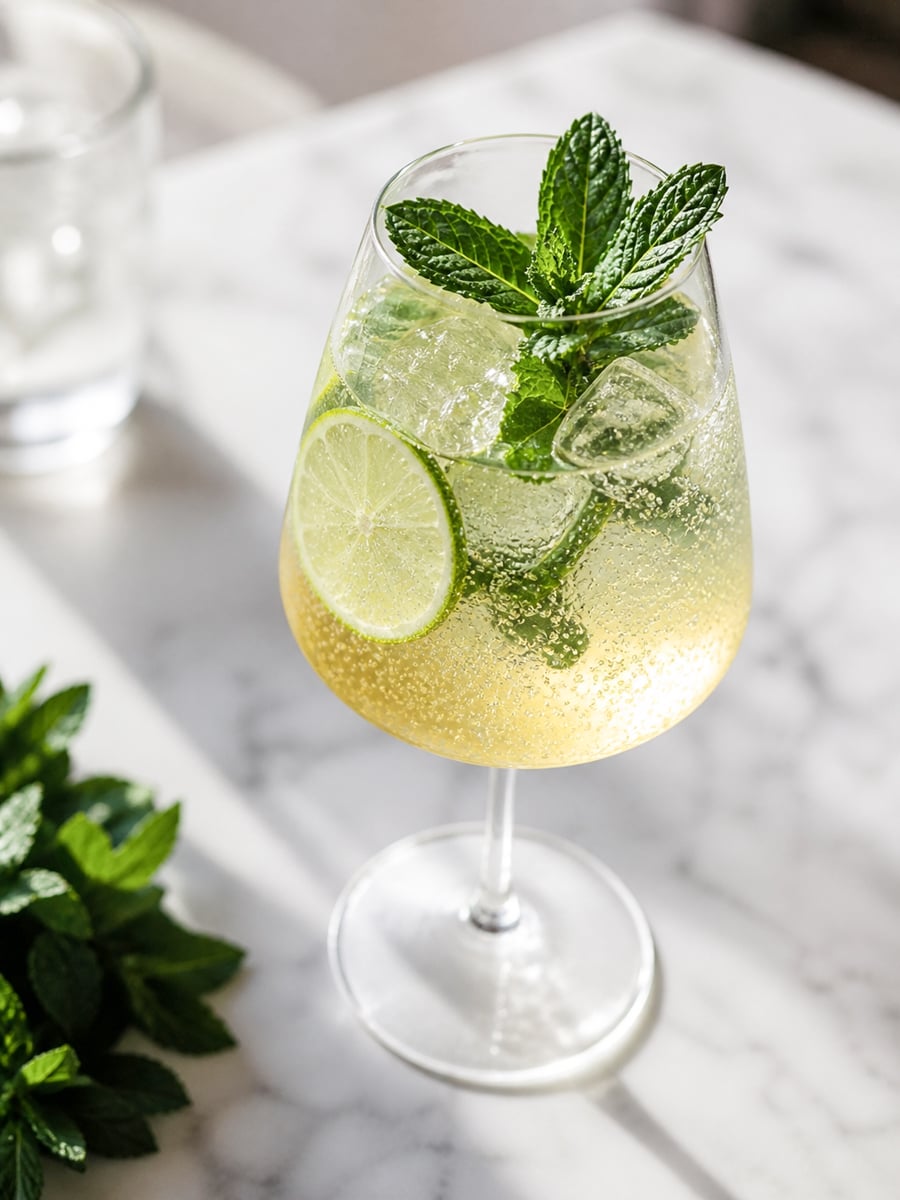
If you have spent time in northern Italy, especially in the Dolomites or South Tyrol, you have definitely seen a Hugo spritz on the table.
It is the drink of that region. Light, floral, a little herby from the fresh mint, with just enough citrus to keep it bright. It is everything I want in a summer cocktail.
If you love Italian spritzes, also try my classic Aperol spritz and my Limoncello spritz, both just as easy and just as crowd pleasing.
This article contains affiliate links which support us at no extra cost to you.
Jump To
The Hugo spritz was invented in 2005 in South Tyrol by a bartender named Roland Gruber. He swapped out the Aperol and used elderflower syrup and fresh mint instead. It became a sensation across northern Italy and has spread throughout Europe ever since.
I use St. Germain elderflower liqueur in place of elderflower syrup - it is more complex and adds a light sweetness that does not overwhelm the drink. The fresh mint and a squeeze of lime make it taste exactly like summer.
This comes together in under 10 minutes and is the most requested cocktail I make whenever we have people over.
What is a Hugo Spritz?
The Hugo spritz is a northern Italian aperitivo cocktail made with elderflower liqueur or syrup, prosecco, fresh mint, lime or lemon, and a splash of soda water.
It was created in the South Tyrol region of Italy - a place where Austrian and Italian culture meet - and it has been popular there for over twenty years. Outside of Italy it is still considered a bit of a discovery, which means your guests will feel like you found something special.
The name Hugo comes from the bartender's nickname for the drink. Simple as that.
To understand the Italian culture around this kind of cocktail, read my guide to Italian aperitivo tradition - it puts the Hugo perfectly in context.
Why You'll Love This Recipe
- A real Italian cocktail, not a trend. The Hugo spritz has been drunk in northern Italy for twenty years. It is the real deal.
- Light and low ABV. Refreshing and easy to sip through a long aperitivo hour without overdoing it.
- Floral and fresh. The combination of elderflower, mint, and lime is unlike any other cocktail. Elegant but not fussy.
- Ready in 5 minutes. No shaking, no complicated technique. Pour, stir, garnish, done.
- Impressive to serve. Most people have never had one. You will look like you brought Italy home with you.
Ingredients
- 1 ounce St. Germain elderflower liqueur (or elderflower syrup for a non-alcoholic base)
- 6 to 8 fresh mint leaves, plus a sprig for garnish
- 5 ounces chilled prosecco
- ½ lime, juiced (about 1 tablespoon)
- Splash of sparkling water
- Lime wheels and extra mint, for garnish
Use a dry Brut or Extra Dry prosecco. A sweeter prosecco can make the Hugo too cloying paired with the floral elderflower. Brut keeps everything balanced.
No St. Germain? Elderflower cordial (like Belvoir or Ikea's version) works well and makes the drink alcohol-free at its base. Add a splash more soda to compensate for the lower liquid volume.
How to Make a Hugo Spritz
Step 1: Infuse the Mint
Slap the mint leaves firmly between your palms - you will smell the oils release immediately. Drop them into your glass and pour the St. Germain over them. Let them infuse for 3 minutes while you open the prosecco, juice the lime, and prepare the garnish. This step is quick but it matters - it gives the Hugo its signature herbal freshness without bitterness.
Step 2: Build the Cocktail
Add ice generously to the glass. Pour in the prosecco first, then the lime juice, then a small splash of sparkling water. Stir gently with a bar spoon - just two or three slow turns. The goal is to combine everything without knocking out the bubbles.
Step 3: Garnish and Serve
Add a fresh mint sprig and a couple of lime wheels. Serve immediately while the prosecco is cold and effervescent.
Tips
- Slap the mint, don't muddle. Slapping releases the aromatic oils without bruising the leaves, which turns them bitter. The St. Germain infusion does the rest.
- Want more mint flavor? Gently muddle the leaves in the base of the glass with the St. Germain before adding ice. This gives a more pronounced, mint-forward Hugo.
- Chill the prosecco well. A warm prosecco goes flat fast and throws off the balance of the drink. Keep it in the fridge until the moment you pour.
- Make a pitcher for a crowd. Multiply the ratios - 6 oz St. Germain, 30 oz prosecco, 3 limes juiced - and pour into a large pitcher over ice with a generous handful of mint. Let guests serve themselves. Add soda water when pouring each glass so it stays fizzy.
- Try it with lemon instead of lime. Traditional Hugo recipes often use lemon. Both work - lime is slightly sharper and more citrusy, lemon is softer and more floral with the elderflower.
FAQs
The Hugo is lighter, less bitter, and arguably more delicate. They are both Italian spritzes but they taste completely different.
Yes - substitute the St. Germain with elderflower cordial and replace the prosecco with a good sparkling water or non-alcoholic sparkling wine. It is still refreshing and floral, just without the alcohol.
Elderflower cordial is the most common substitute and makes the drink lighter and a little sweeter. You can also use elderflower simple syrup. St. Germain has more depth and complexity than cordial, but the drink is delicious either way.
More Italian Cocktails to Try
- Classic Aperol Spritz - the iconic Italian aperitivo
- Limoncello Spritz - bright, citrusy, and just 3 ingredients
- Negroni Sbagliato - a prosecco twist on the classic Negroni
- What is Italian Aperitivo? - the full guide to Italy's pre-dinner tradition

Hugo Spritz (Italian Elderflower Cocktail)
Equipment
- Shaker
Ingredients
- 1 ounce St. Germain elderflower liqueur or elderflower syrup for a non-alcoholic base
- 6 to 8 fresh mint leaves plus a sprig for garnish
- 5 ounces chilled prosecco
- ½ lime juiced (about 1 tablespoon)
- Splash of sparkling water
- Lime wheels and extra mint for garnish
Instructions
- Step 1: Infuse the Mint: Slap the mint leaves firmly between your palms - you will smell the oils release immediately. Drop them into your glass and pour the St. Germain over them. Let them infuse for 3 minutes while you open the prosecco, juice the lime, and prepare the garnish. This step is quick but it matters - it gives the Hugo its signature herbal freshness without bitterness.
- Step 2: Build the Cocktail: Add ice generously to the glass. Pour in the prosecco first, then the lime juice, then a small splash of sparkling water. Stir gently with a bar spoon - just two or three slow turns. The goal is to combine everything without knocking out the bubbles.
- Step 3: Garnish and Serve: Add a fresh mint sprig and a couple of lime wheels. Serve immediately while the prosecco is cold and effervescent.
Nutrition Disclaimer
Please keep in mind that the nutritional information presented below is an approximation and may vary depending on the exact ingredients used.
Notes
- Slap the mint, don't muddle. Slapping releases the aromatic oils without bruising the leaves, which turns them bitter. The St. Germain infusion does the rest.
- Want more mint flavor? Gently muddle the leaves in the base of the glass with the St. Germain before adding ice. This gives a more pronounced, mint-forward Hugo.
- Chill the prosecco well. A warm prosecco goes flat fast and throws off the balance of the drink. Keep it in the fridge until the moment you pour.
- Make a pitcher for a crowd. Multiply the ratios - 6 oz St. Germain, 30 oz prosecco, 3 limes juiced - and pour into a large pitcher over ice with a generous handful of mint. Let guests serve themselves. Add soda water when pouring each glass so it stays fizzy.
- Try it with lemon instead of lime. Traditional Hugo recipes often use lemon. Both work - lime is slightly sharper and more citrusy, lemon is softer and more floral with the elderflower.

This looks super refreshing and delicious! This is perfect for summer coming up as well, I will definitely be making this. Thank you for sharing this recipe!
Hugo spritz is delicious and refreshing, thanks for introducing this drink. I am going to make it again.
I made this, and it instantly became my go-to summer drink! It’s so light and refreshing, with that perfect floral note and a hint of freshness from the mint. The citrus really brightens everything up without being overpowering. It just tastes like summer in a glass.
Most cocktails are too sweet for my tastes but this is perfect! Refreshing, herby, and easy to make too.
This turned out so light and refreshing! The elderflower, mint, and prosecco make such a lovely combo. It felt elegant but was incredibly easy to put together.