
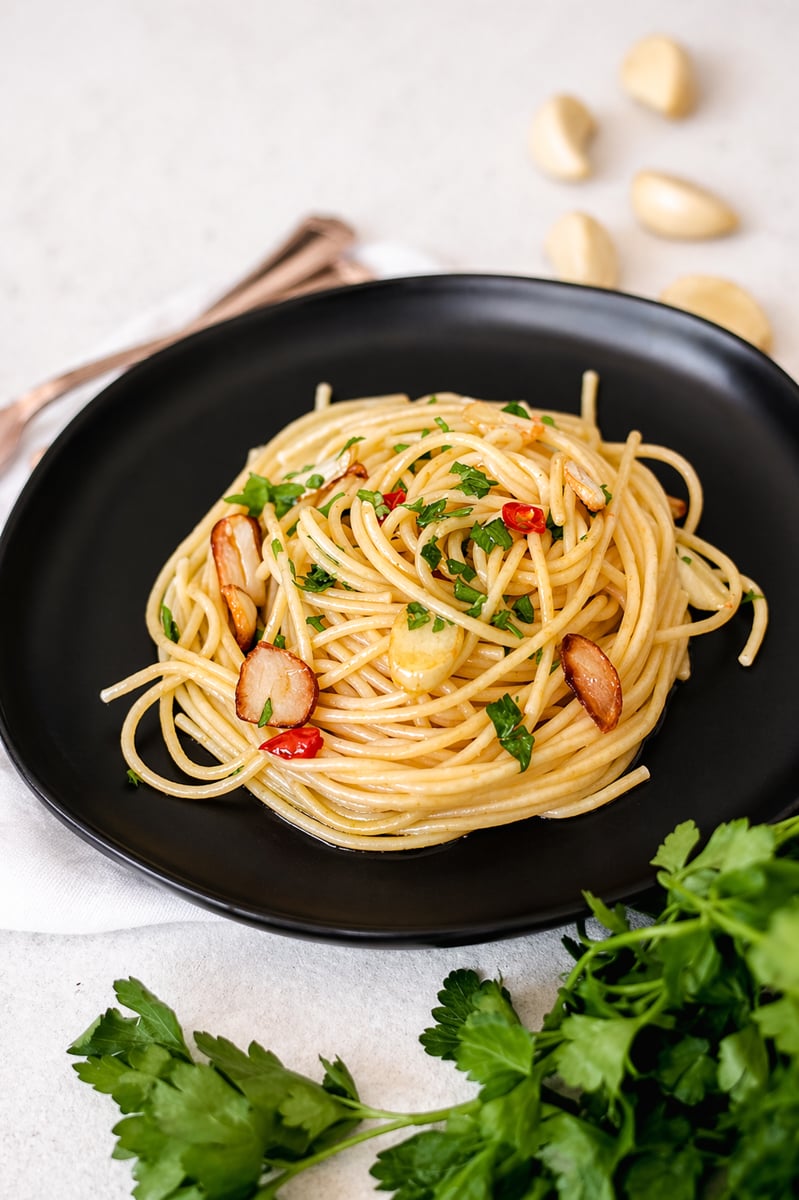
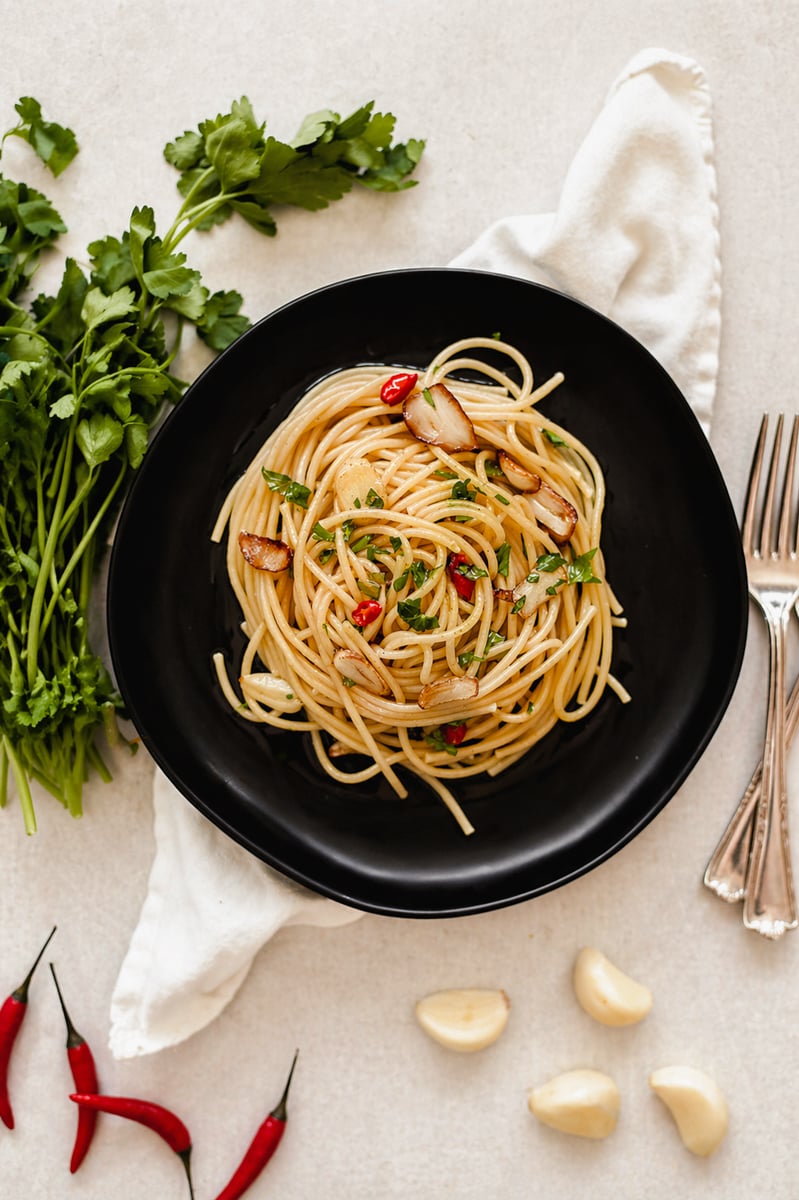
This authentic aglio e olio recipe is the Italian pasta I've been making since I was a teenager - four pantry ingredients, fifteen minutes, and flavor that punches way above its ingredient list. If you've ever wondered how Italians turn spaghetti, garlic, olive oil, and chili flakes into something unforgettable, this is the post that will show you.
If you love classic Roman pasta, don't miss our guide to the 4 Classic Roman Pasta Recipes and our authentic Easy Cacio e Pepe - both are cornerstones of the Italian pantry pasta tradition.
This article contains affiliate links which support us at no extra cost to you.
Jump To
- Why we love this Italian pasta recipe?
- What ingredients are in aglio e olio?
- How to make spaghetti aglio e olio?
- Tips for the best aglio e olio:
- Common Mistakes to Avoid
- Aglio e Olio vs. Cacio e Pepe vs. Carbonara
- How to Store and Reheat
- What Is Aglio e Olio?
- What is a Spaghettata di Mezzanotte?
- Is Aglio e Olio Authentic Italian?
- What to serve aglio e olio with?
- Variations/Substitutions
- FAQ'S
- More Italian Pasta Recipes to Try
- Authentic Spaghetti Aglio e Olio (Garlic and Oil Sauce)
An easy Italian garlic and oil pasta recipe that is vegan, vegetarian, sugar-free, dairy-free, and could be made gluten-free.
If there is one Italian pasta recipe that we make on constant rotation, it would have to be this one! Fast and flavorful like our easy pasta Amatriciana or even our pasta with ricotta and peas (soooo good!).
Spaghetti aglio e olio (literally "spaghetti, garlic, and oil") is one of Italy's great culinary tricks - a garlic and oil pasta so simple it almost dares you to mess it up, but so good you'll come back to it every week. It's the dish my Calabrian mother-in-law makes late at night with whatever's in the pantry.
It's the pasta I learned before I knew how to boil water properly. And once you learn the technique, it belongs to you forever.
I can't even remember when I first learned how to make it. It's one of the first recipes I made on my own. Since it is so simple to make, once you learn how to make it, you'll add this to your pasta repertoire.
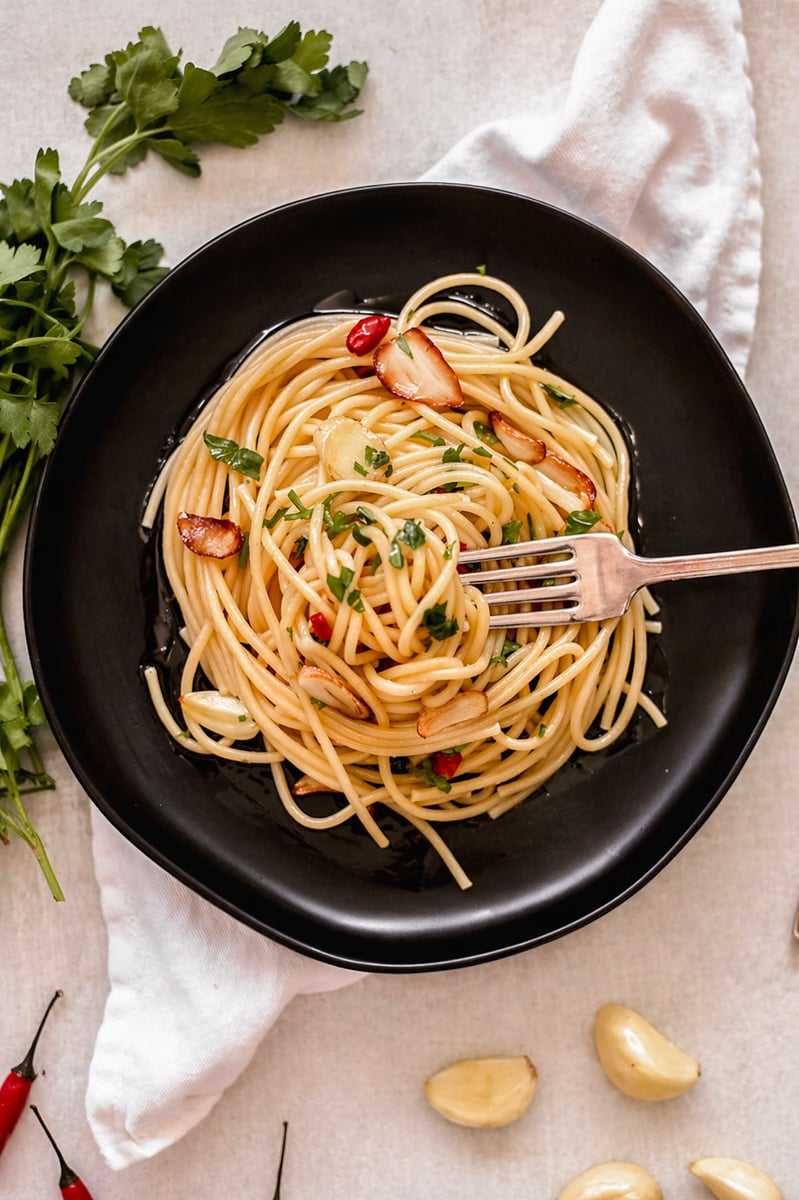
Why we love this Italian pasta recipe?
- Only 4 main ingredients - you likely have them all right now
- Ready in 15 minutes - faster than delivery
- Naturally vegan + dairy-free - and easy to make gluten-free
- Authentic technique - not a watered-down American version
- Pantry pasta perfection - the dish every home cook should master
What ingredients are in aglio e olio?
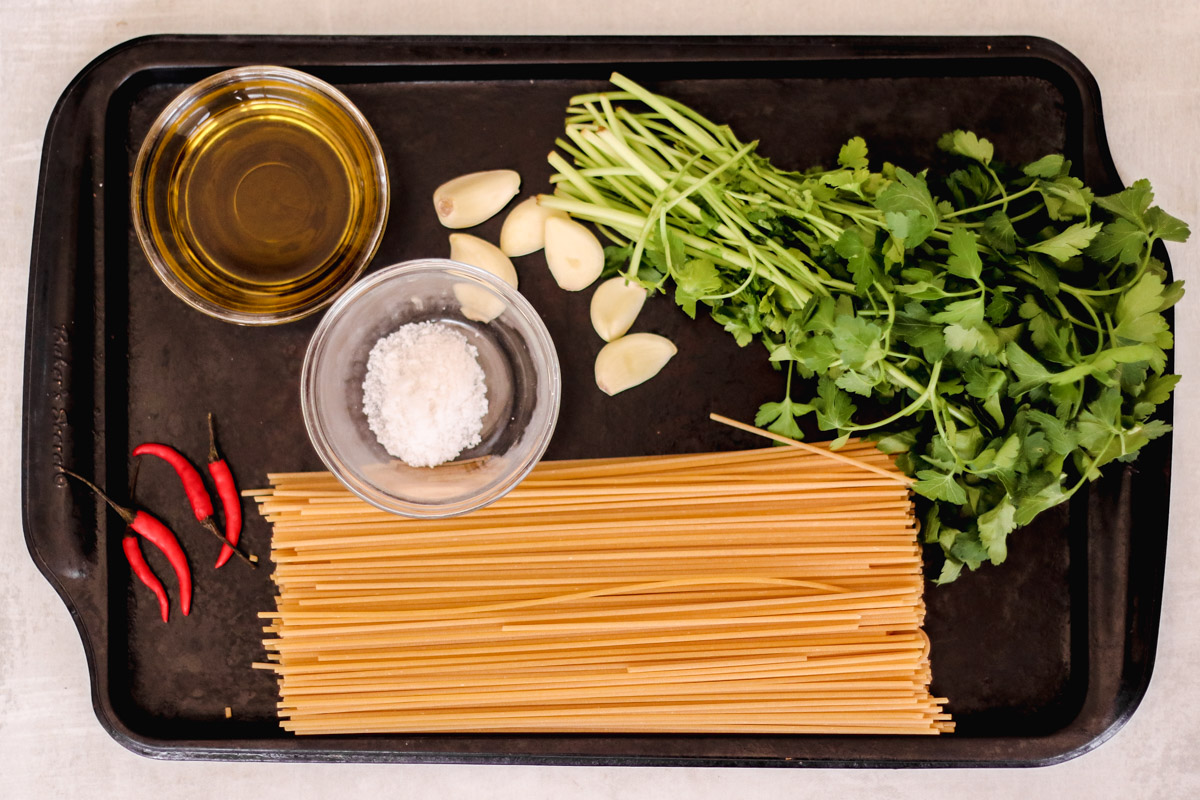
Here is all you need to make this classic Italian pasta dish (full printable recipe is below):
- Pasta: Use spaghetti, bucatini, linguine, fettuccine, or any long pasta you enjoy.
- Olive oil: Olive oil is the main feature of the sauce, so I highly recommend using a very good quality extra-virgin olive oil. Even if you get a small bottle, you'll notice the flavor difference.
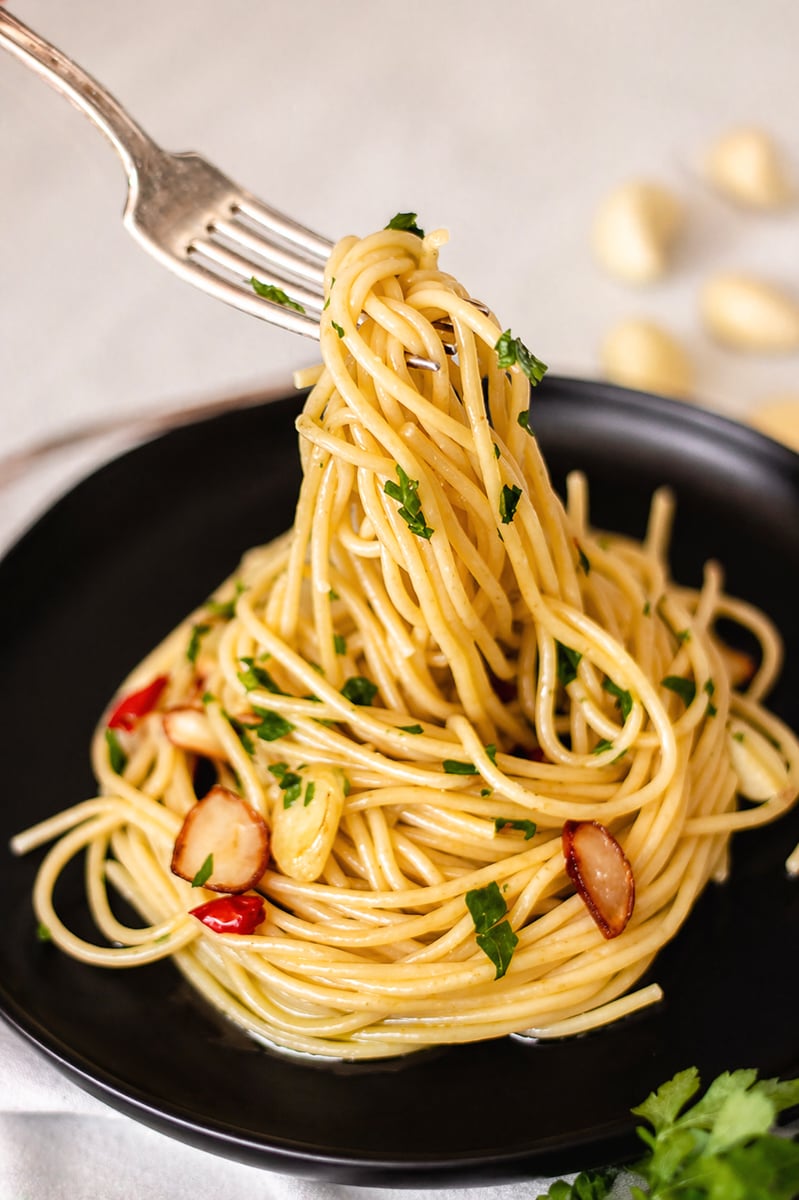
- Garlic: Fresh garlic is best. You could even use garlic that bottled minced garlic. I used fresh and cut the cloves into big slices. If using fresh, you'll use between 5-10 cloves (depending on how big the cloves are and how much garlic you like...we used 6).
- Crushed red pepper flakes: When you get your hands on peperoncini (red hot chili peppers) at any produce market (depending if you're in the States, you could use another type of red hot pepper), grab them, and make this pasta! My Calabrian mother-in-law gives us jars of them that she preserves in Italy every summer (amazingly hot!). In place of fresh, use crushed red pepper flakes.
- Salt: I used sea salt for the garlic oil sauce (you could use kosher salt). I use coarse salt to salt the pasta water.
- Parsley: An optional topping is parsley. I only use fresh Italian parsley (no dried parsley). Chop up the leaves (not the stems).
How to make spaghetti aglio e olio?
Here's how to make classic spaghetti aglio e olio…(full printable recipe below)
Gather up the ingredients and get started with boiling the water.
While you're waiting for the water to boil, heat a large skillet with the olive oil.
Once the water is boiling, add the salt, add the spaghetti.
A few minutes after you have the pasta boiling, add the garlic slices to the heated oil and shake the pan or use a spoon to keep the garlic moving. Sauté the garlic until it is a nice light golden brown (should take 3-5 minutes).

Add in the hot pepper flakes (or peperoncino) and stir to combine with the garlic and oil.
Once the garlic reaches the light golden color, remove the pan from the heat while the pasta keeps cooking. Stir in the parsley (you could reserve some to toss on top at the end, it's up to you).
Cook the pasta until it's just before al dente (set a timer for 1 minute less than the cooking time on the pasta instructions so you don't forget ). Reserve a ½ cup of starchy pasta water.
Add the pan back onto medium-high heat. Drain the pasta and immediately add to the pan with the garlic oil. Add in the reserved pasta water and toss to combine.
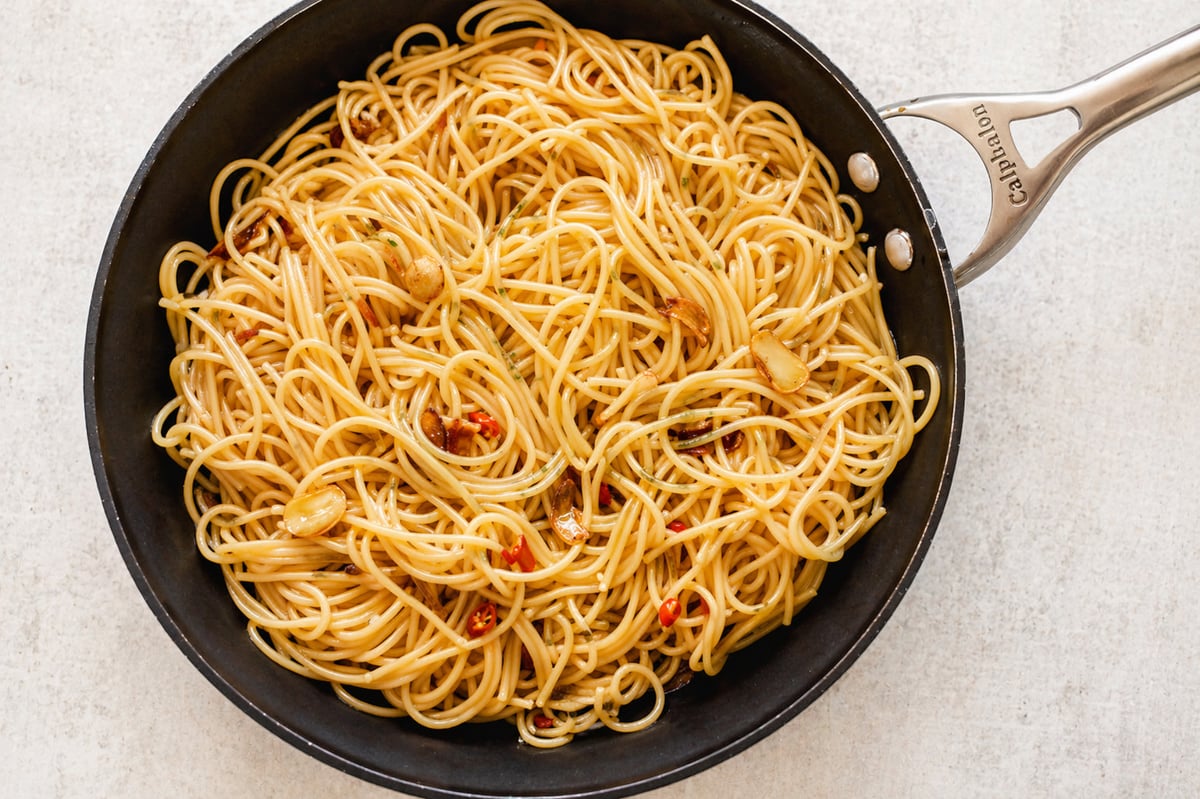
Plate up the pasta and add some more fresh chopped parsley and pepper flakes (if you like).
Tips for the best aglio e olio:
- Golden - not dark - garlic. Burnt garlic is bitter and ruins the dish. Pull it off heat the second it turns amber.
- Never rinse the pasta. That starchy coating is what emulsifies with the oil to make the sauce.
- Pasta water is the secret. The magic happens when starchy water, olive oil, and pasta toss together off-heat.
- Finish cooking the pasta in the sauce. Drain at 1 minute before al dente - the last minute of cooking happens in the pan.
- Use enough garlic. Italians don't mess around - 6 cloves minimum for a pound of pasta.
- Don't add cheese. Traditional aglio e olio is served without parmigiano. The oil is the star.
Common Mistakes to Avoid
- Burning the garlic → bitter pasta. Keep heat on medium, stir constantly.
- Under-salting the pasta water → bland pasta, no amount of sauce can fix it.
- Draining all the pasta water → no emulsion, just oily spaghetti.
- Using cheap olive oil → flat flavor. The oil is the sauce.
- Adding the garlic to cold oil → the garlic will absorb too much oil and get soggy.
- Rinsing cooked pasta → washes away the starch that bonds the sauce.
Aglio e Olio vs. Cacio e Pepe vs. Carbonara
All three are iconic Italian pasta dishes built on 3-4 pantry ingredients - but they're very different:
- Aglio e Olio - garlic, olive oil, chili flakes. No cheese, no meat.
- Cacio e Pepe - Pecorino Romano and black pepper. No garlic, no oil.
- Carbonara - egg yolks, Pecorino, guanciale, black pepper. Rich and creamy.
How to Store and Reheat
- Freezer: Not recommended - the texture suffers.
- Fridge: Leftovers keep in an airtight container for up to 2 days.
- Reheat: Warm in a skillet over medium heat with a splash of water and a drizzle of olive oil to bring the sauce back.
What Is Aglio e Olio?
Aglio e olio (pronounced AH-lee-oh eh OH-lee-oh) is a traditional Italian pasta dish from Naples, made with four ingredients: spaghetti, extra-virgin olive oil, garlic, and crushed red pepper flakes. In Italy it's often called aglio, olio e peperoncino - the peperoncino being the spicy red chili pepper that gives it its kick.
It is the definition of cucina povera - peasant cooking - and one of the purest expressions of Italian food philosophy: four beautiful ingredients, perfectly cooked, needing nothing else.
What is a Spaghettata di Mezzanotte?
In Italy spaghetti aglio e olio is also called spaghetti aglio olio e peperoncino, or the spaghettata di mezzanotte. Peperoncino is the red hot chili peppers.
There were many summers when I was living in Italy that my friends and I would enjoy a nice spaghettata di mezzanotte-"midnight spaghetti. That is the Italian after-party tradition of enjoying a very garlicky and very spicy plate of spaghetti after being out with friends.
Since it's super easy to make, very flavorful, and has a kick of spice, it's the perfect no-fuss pasta to make with friends.
Is Aglio e Olio Authentic Italian?
Yes - 100% authentic. Aglio e olio originated in Naples and became beloved across all of southern Italy, particularly in Rome where it's considered part of the classic Roman pasta tradition alongside cacio e pepe, carbonara, amatriciana, and pasta alla gricia.
Italians eat it for quick weeknight dinners, as the famous spaghettata di mezzanotte (midnight spaghetti) after a night out with friends, and as a simple primo when tomatoes aren't in season.
What to serve aglio e olio with?
- Authentic and Easy Italian Bruschetta: This classic Italian appetizer features toasted bread slices topped with a mixture of chopped tomatoes, extra-virgin olive oil, garlic, and fresh basil. It's a simple yet flavorful dish that can be customized with various toppings like mozzarella, red onion, or pesto .
- Best Marinated Mushrooms: This recipe involves marinating mushrooms in a mixture of lemon juice, white wine vinegar, olive oil, garlic, herbs, and red pepper flakes. It's an easy and refreshing appetizer that can be served in salads, antipasto, or pasta salad, or enjoyed straight from the jar .
- Easy Baked Brie in Puff Pastry With Cranberries: This appetizer consists of a wheel of brie cheese wrapped in puff pastry, topped with cranberry sauce, and baked until the pastry is golden and the cheese is melted. It's garnished with toasted almonds, honey, and fresh cranberries for added flavor and texture .
Variations/Substitutions
- Add protein: Shrimp, clams, or calamari are classic Italian additions.
- Whole grain or gluten-free: Swap in your favorite long pasta.
- Extra heat: Add a pinch of cayenne or Calabrian chili paste.
- Herby: Finish with fresh basil or a squeeze of lemon.
- Anchovy version: Melt 2-3 anchovy fillets into the oil before adding garlic - an authentic southern Italian variation.
FAQ'S
If your aglio olio is tasteless, it could be due to the quality of your ingredients. Ensure to use extra virgin olive oil for a richer flavor and fresh garlic instead of pre-minced or jarred versions. Also, properly seasoning the dish with salt and pepper is essential to bring out the flavors.
Yes, aglio olio is indeed a traditional Italian dish. It originates from Naples and is especially popular in the Southern part of Italy. The dish is often enjoyed late at night, as it's quick and easy to prepare.
To enhance the flavor of your aglio olio, use high-quality ingredients including extra virgin olive oil and fresh garlic. You can also experiment with adding freshly chopped parsley, grated Parmesan, or a sprinkle of red pepper flakes for some heat.
Yes, it is. Take a trip to Naples and you will see it added to this pasta dish. Actually, if you go around different parts of Italy, you'll see parsley added to it. It's your choice to add some, or not. If you do decide to use it, use the Italian parsley.
We never serve it with grated Parmigiano-Reggiano, but you will find some regions of Italy do serve it with some grated pecorino.
Yes, a definite YES! It is one of the main ingredients and I highly recommend using a very good quality extra-virgin olive oil. Even if you splurge on a small bottle and will use it for a handful of recipes, it is worth the investment
Yes, use your favorite gluten-free spaghetti brand.
The most traditional pasta type is spaghetti, however, you could use any long pasta like bucatini, linguine, even angel-hair pasta.
More Italian Pasta Recipes to Try
- Easy Cacio e Pepe
- Authentic Spaghetti alla Carbonara
- Pasta all'Amatriciana
- Pasta alla Gricia
- Pasta with Ricotta and Peas
- Pasta con le Sarde
Did you make this and love it? Please RATE THE RECIPE below:)
I would LOVE IT if you can leave me a star rating and a review down below and let me know your thoughts! It means the world to me to hear how you liked it.
Please Subscribe and give a follow on Instagram, Facebook, Pinterest, and TikTok xx
Authentic Spaghetti Aglio e Olio (Garlic and Oil Sauce)
Ingredients
- 1 pound spaghetti
- ½ cup extra-virgin olive oil
- 6 cloves garlic thinly sliced
- ¼ teaspoon crushed red pepper flakes or to taste
- Sea salt to taste (or kosher salt)
- ¼ cup chopped fresh Italian parsley
Instructions
- Boil water: Bring a large pot of salted water to boil for the pasta.
- Cook the pasta: Once the water is boiling, add in the spaghetti. Stir it in the boiling water. Keep stirring it while it's cooking.
- Heat the olive oil: In a large sauté pan, add the oil on medium-high heat.
- Add the garlic: A few minutes after you have the pasta cooking and when the oil is shimmering, lower the heat of the sauté pan to medium. Add the garlic to the oil.
- Sauté the garlic: Cook the garlic until it is a nice light golden brown (should take 3-5 minutes). Add in the crushed red pepper flakes (or peperoncino) and stir to combine with the garlic and oil.
- Remove from the heat: Once the garlic reaches a light golden color, remove the pan from the heat. Meanwhile, the pasta keeps cooking . (Optional)Stir in the parsley (you could reserve some to toss on top at the end, it's up to you)and a teaspoon of salt.
- Drain the pasta: Cook the pasta until it's just before al dente (set a timer for 1 minute less than the cooking time on the pasta instructions so you don't forget). Reserve a ½ cup of starchy pasta water.
- Cook with sauce: Immediately add the drained pasta and the reserved pasta water to the garlic oil sauce. Use tongs or a spoon to continuously toss together for 1-2 minutes, until the pasta is finally al dente.
- Serve: Plate up the pasta while it's very hot and ENJOY!
Nutrition Disclaimer
Please keep in mind that the nutritional information presented below is an approximation and may vary depending on the exact ingredients used.
Notes
- Pasta: I have only had this dish with spaghetti. If you want to stay authentic, use only spaghetti. Choose a very good quality spaghetti. If you can find bronze cut, that would be even better and will cook up nice and al dente.
- Olive oil: Use a very good quality extra-virgin olive oil. It is the base for the sauce, so keep that in mind, as it will make the sauce taste even better.
- Garlic: Adjust the amount of fresh garlic to your taste. You could slice it or mince it. The minced garlic will brown very quickly, so you'll have to carefully watch it while you cook it in the hot olive oil.
- Hot pepper: Adjust the heat to your liking. If you don't like spicy, do not add in any hot pepper flakes. My kids do not like spicy, so I only add it in for those that do.
- Add-in: This is a really great pasta dish to add seafood to. Shrimp or calamari would be great.
- Leftovers: Any leftovers will stay fresh in the fridge for a couple of days in an airtight container.
Love this recipe! I have made this several times and is great for nights when you don't know what to cook and don't feel like spending hours in the kitchen. Easy and delicious.
Growing up my mother always made this. This tasted just as good. Thanks much
I made this for a late dinner and was reminded how delicious simple ingredients can be. The garlic and olive oil created such an amazing flavor!
This Aglio e Olio is simple, quick, and full of goodness. Perfect for those days when you want an easy pasta dinner.
I love how the red pepper flakes add just the right amount of heat to such a classic, comforting dish.