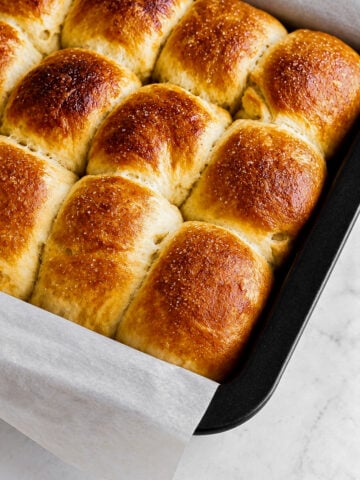
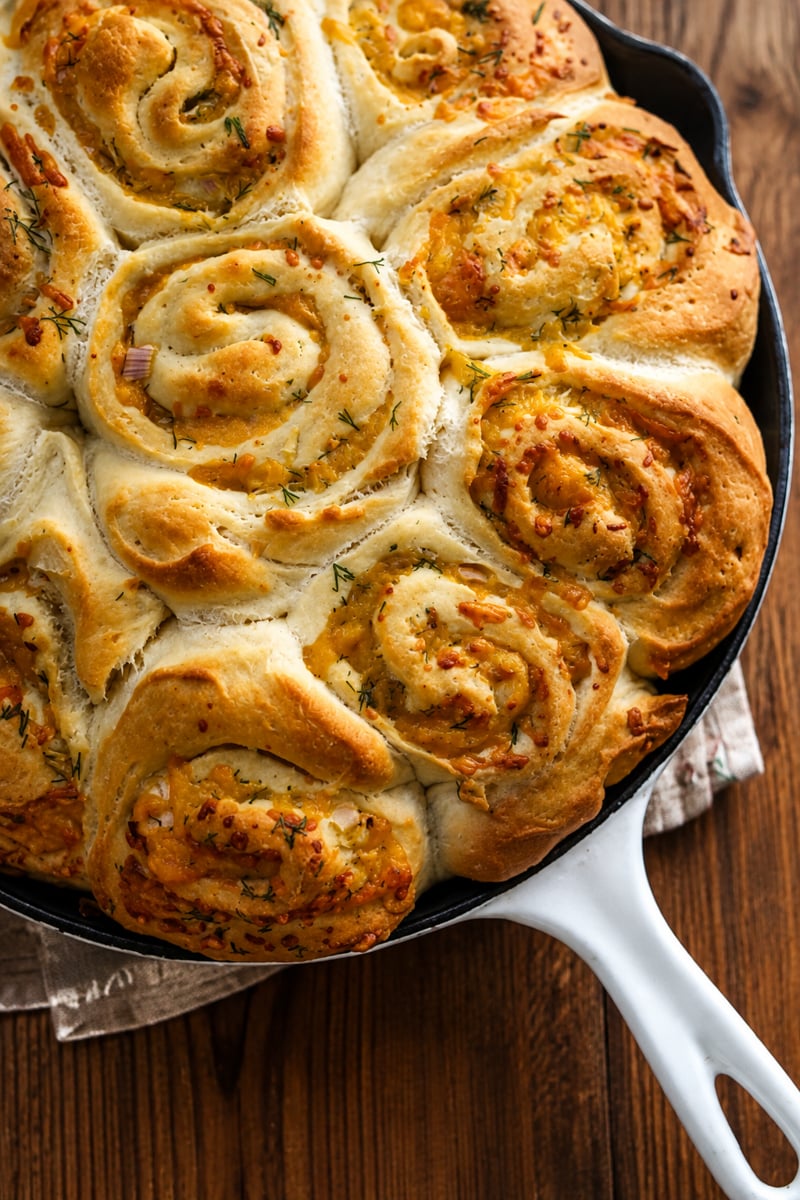
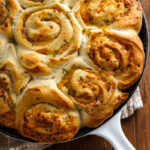
These cheddar scallion potato buns are the softest, fluffiest rolls you will ever make, stuffed with sharp cheddar, scallions, and fresh dill. Make the dough the night before!
If you love savory cheese breads, my caramelized onion rolls use a similar approach and are just as satisfying.
This article contains affiliate links which support us at no extra cost to you.
Jump To
These cheddar scallion potato buns are the softest rolls I have ever pulled out of the oven. The secret is mashed potatoes in the dough - potato starch makes bread incredibly tender and keeps it soft for days longer than a regular roll. Add a filling of sharp cheddar, sliced scallions, and fresh dill, and every bite is savory, a little cheesy, and just a bit herby in the best possible way.
I make these using an overnight refrigerator dough method, which means most of the work happens the night before. The cold fermentation develops a deeper flavor and makes the dough so much easier to roll and shape the next day.
See the full recipe below, including tips for getting the dough right and making these ahead of time.
Quick Look at This Recipe
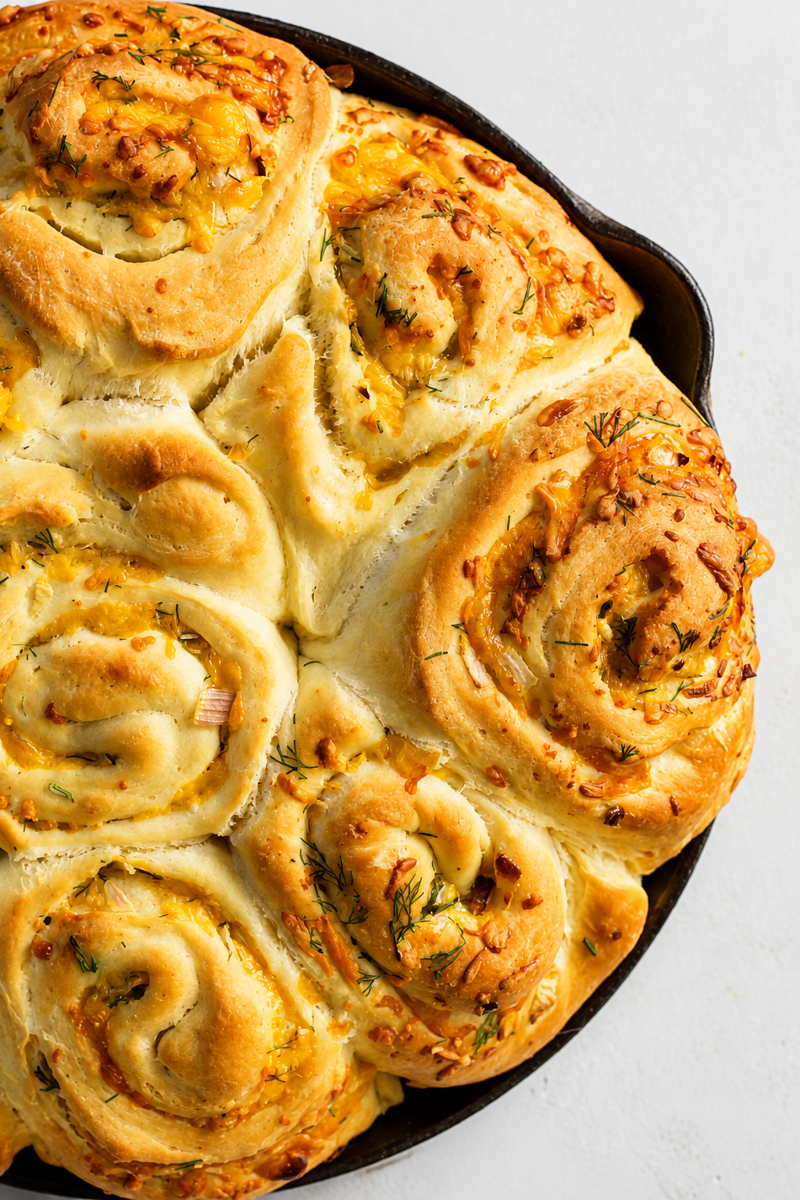
- Flavor and Texture: melt-in-your-mouth soft rolls with a buttery, slightly sweet dough and a savory cheddar, scallion, and dill filling
- Active Prep Time: about 25 minutes
- Refrigeration: overnight (8 to 24 hours, hands-off)
- Second Rise: 2 to 4 hours (hands-off)
- Bake Time: 30 to 40 minutes
- Total Time: about 13 hours start to finish (most of it is hands-off rest and rise time)
- Makes: 9 to 12 rolls depending on how you slice them
- Method: enriched yeasted dough, rolled and filled, baked in a pan
Why Mashed Potatoes Make the Best Rolls
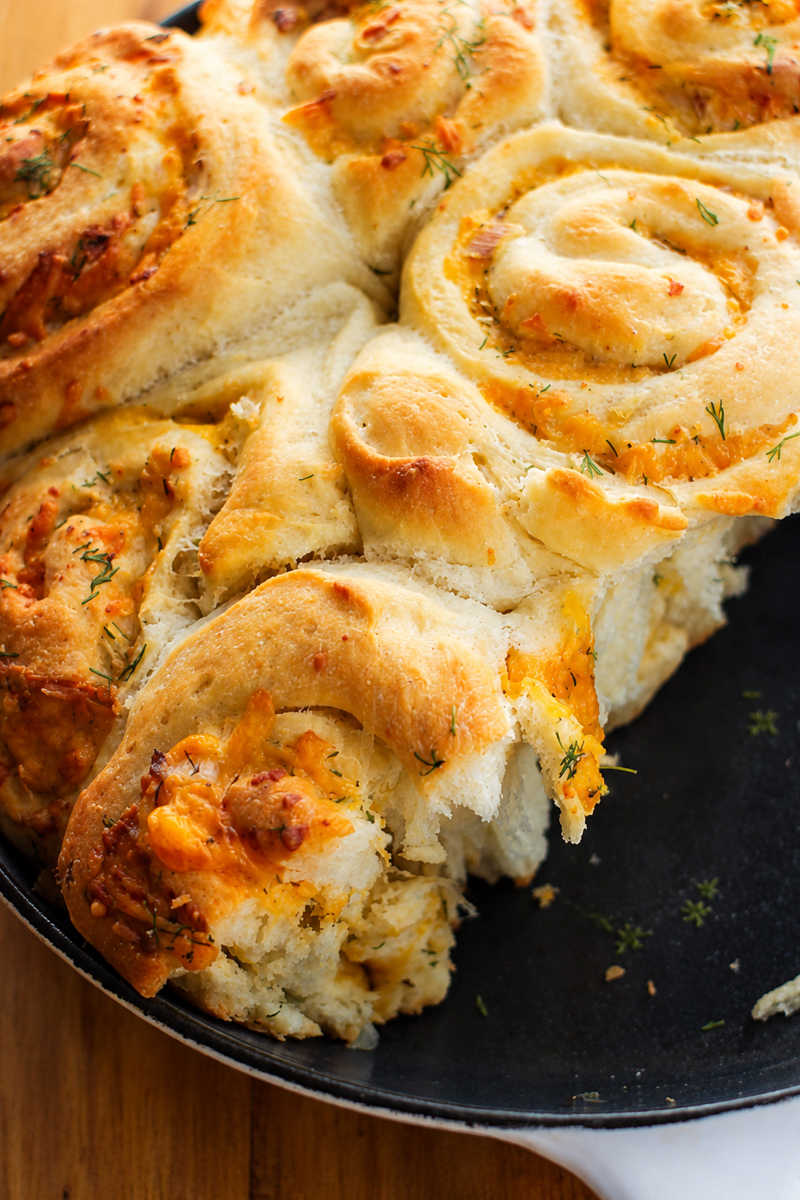
Adding mashed potatoes to bread dough is one of those techniques that sounds unusual until you taste the result. Potato starch gelatinizes during baking and traps moisture inside the crumb. This is why potato rolls stay soft longer than regular dinner rolls - they genuinely do not dry out as quickly.
Ingredient Notes
Everything here is simple. A few things are worth a note:
- Mashed potatoes: You need 1 cup of plain mashed potatoes - no butter or cream added, just boiled and mashed potatoes. About ½ pound of russet or Yukon Gold potatoes will give you the right amount. Save the cooking water.
- Potato water: The starchy water from boiling the potatoes is the liquid in the dough. It adds flavor and nutrients, and it helps the yeast work well. Make sure it is lukewarm (not hot) before using - too hot will kill the yeast.
- Instant yeast: The recipe uses instant yeast, which you can add directly to the dough without proofing first. Red Star Platinum or any reliable instant yeast brand works well. If you only have active dry yeast, proof it first in the warm water for 5 minutes.
- All-purpose flour: King Arthur all-purpose flour gives the best structure here. The dough will be sticky before refrigerating - that is normal. Do not add more flour to compensate; the cold rest firms it up.
- Butter: ¾ cup (12 tablespoons) at room temperature. Softened butter, not melted - you want it to incorporate smoothly into the enriched dough. Take it out at least an hour before you start.
- Sharp cheddar cheese: Grated sharp cheddar gives the most flavor. Provolone also works well and gives a slightly milder, stretchier result. Grate it yourself if you can - pre-shredded cheese has a coating that affects how it melts.
- Scallions: Use both the white and green parts, thinly sliced. They soften during baking but keep a slight freshness against the richness of the cheese and butter.
- Fresh dill: This is what makes these rolls distinctive. Do not use dried dill here - fresh dill has a brightness that dried completely loses. Two teaspoons of minced fresh dill is all you need, and it makes a noticeable difference in the finished roll.
How to Make Cheddar Scallion Potato Buns
Step 1 - Make the Dough (Day Before)
- Beat together the yeast, sugar, potato water, butter, salt, eggs, mashed potatoes, and flour in the bowl of a stand mixer using the paddle attachment on medium-high speed for 4 to 5 minutes. Stop to scrape the sides and bottom of the bowl as needed. The dough will look shaggy at first and then begin to smooth out and look slightly shiny.
- Switch to the dough hook and knead at medium speed for 7 minutes, stopping once or twice to scrape the dough into a ball. The finished dough will be soft and slightly sticky - this is correct.
- Scrape the dough into a lightly oiled bowl, cover tightly, and refrigerate overnight or for up to 24 hours. The cold rest firms the dough and develops flavor.
Step 2 - Shape and Fill (Next Day)
- Remove the dough from the refrigerator. Punch it down and turn it out onto a well-floured surface. Roll it into a 10 by 18-inch rectangle.
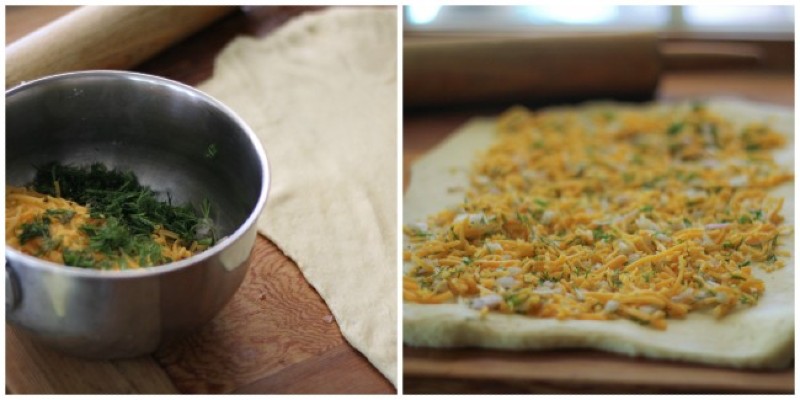
- Mix together the cheddar, scallions, fresh dill, salt, and pepper. Spread the filling evenly over the dough, leaving a 1-inch border on all sides. Brush the border with a little water.
- Starting from one of the long edges, roll the dough tightly into an 18-inch log. Pinch the seam firmly to seal it. Slice crosswise into 9 to 12 pieces, each about 1½ inches thick.
- Grease two 9×9-inch pans or one 9×13-inch pan. Arrange the rolls cut side up with a little space between them. Cover with lightly greased plastic wrap.
Step 3 - Second Rise and Bake
- Let the rolls rise at room temperature until puffed and coming about 1 inch above the rim of the pan, 2 to 4 hours. The exact time depends on how warm your kitchen is. A cooler kitchen takes longer; a warm spot speeds things up.
- Preheat the oven to 350°F (175°C). Uncover the rolls and bake for 30 to 40 minutes until deep golden brown and the cheese filling is bubbling. Transfer to a wire rack and cool for at least 10 minutes before serving.
Recipe Tips
- Do not add extra flour to fix a sticky dough. A sticky, soft dough is correct for this recipe. Adding flour will make the finished rolls denser and less fluffy. The overnight refrigeration is what makes the dough manageable for rolling - trust the process.
- Grate your own cheese. Pre-shredded cheddar is coated with anti-caking agents that affect how it melts inside the rolls. Freshly grated sharp cheddar melts more evenly and gives better pull when you tear the rolls apart.
- Make sure your potato water is lukewarm, not hot. Water above 115°F will kill the yeast and the dough will not rise. Let the potato water cool to somewhere between 100°F and 110°F before using - it should feel warm, not hot, on the inside of your wrist.
- Give the second rise enough time. Cold dough coming straight from the refrigerator can take up to 4 hours to rise fully at room temperature. If your kitchen is cool, place the pan in the oven with just the oven light on - it creates a perfectly warm proofing environment.
- Watch the color, not just the clock. The rolls are done when they are deep golden brown and the cheese is bubbling up around the edges. Pull them out at pale golden and they will be undercooked in the center. Bake time will fall somewhere between 30 and 40 minutes depending on your oven.
Serving Suggestions
These rolls are best served warm, about 10 minutes out of the oven when the cheese is still soft and the dough is at its most pillowy. They work beautifully as a brunch centerpiece alongside eggs, as a side to a bowl of tomato soup or minestrone, or as a roll for a roast beef or turkey sandwich. The cheddar and scallion filling also makes them sturdy enough to pack well for a picnic. Pair them with my Caramelized Vidalia Onion Focaccia and a simple salad for a bread-forward spread that feels genuinely special.
Leftovers keep at room temperature for 1 day or refrigerated for up to 3 days. Reheat in a 300°F oven for 8 to 10 minutes to bring them back to life. They also freeze beautifully - freeze after baking, then reheat from frozen at 325°F for 15 to 18 minutes.
More Recipes to Try
- Savory Cheese and Chive Bread - Another pull-apart cheesy bread that uses a similar enriched dough. Great alongside soup or on its own.
- Crusty No-Knead Italian Bread - If you love a good homemade bread but want something hands-off and rustic, this is the one.
- Sourdough Discard Challah Bread - Braided, slightly sweet, and perfect for weekend baking.
- Colomba Italian Easter Dove Bread - An Italian classic for spring - soft, lightly sweet, and worth every step.
If you try these rolls, leave a rating and let me know how they came out. I love hearing from you!
Some other bread recipes to enjoy:
- Colomba Italian Easter Dove Bread
- Sourdough Discard Challah Bread
- Psomi Spitiko-Really Easy Greek Bread
- Crusty No-Knead Italian Bread
Did you make this and love it? Please RATE THE RECIPE below:)
I would LOVE IT if you can leave me a star rating and a review down below and let me know your thoughts! It means the world to me to hear how you liked it.
Please Subscribe and give a follow on Instagram, Facebook, Pinterest, and TikTok xx
Potato Rolls with Cheese & Scallions
Equipment
Ingredients
- 1 Tablespoon instant yeast I love Red Star Platinum yeast
- ½ cup sugar
- 1¼ to 1½ cups lukewarm water or potato water boiling water from potatoes. Use the larger amount of liquid in drier, winter months
- ¾ cup 12 tablespoons butter, at room temperature
- 2½ teaspoons salt
- 2 large eggs
- 1 cup mashed potatoes from about ½ pound potatoes
- 6½ cups all purpose flour King Arthur preferred
- filling
- ½ cup scallion
- 1 ½ cups grated sharp cheddar cheese or provolone
- 2 teaspoons minced fresh dill
- 1 teaspoon salt
- pinch of black pepper
Instructions
- Beat together all of the dough ingredients, using the paddle attachment of your stand mixer for 4 to 5 minutes at medium-high speed, stopping the mixer to scrape down the sides and bottom of the bowl as needed. The mixture should start to become smooth and a bit shiny.
- Switch to the dough hook, and knead the dough at medium speed (only if your mixer will tolerate it) for 7 minutes, stopping to scrape the dough into a ball a couple times.
- Scrape the dough into a ball (it will be sticky), and place it in a lightly greased bowl or large greased plastic bag. Refrigerate overnight, or for up to 24 hours.
- Remove the dough from the refrigerator.
- Punch down the dough. Dump the dough out onto a floured surface, roll out the dough into a 10-by-18-inch rectangle. Spread the cheddar mixture over the dough, leaving a 1-inch border on the sides. Brush the borders with water. Tightly roll the dough into an 18-inch log, rolling toward the clean border; pinch the seam to seal.
- Cut crosswise into 12 generous 1 ½ inch pieces.
- Arrange 6 pieces in each prepared pan.
- Cover the pans with lightly greased plastic wrap, and allow the dough to rise until comes about 1″ over the rim of the pan. Since the dough is cold, this will take anywhere from 2 to 4 hours
- Heat oven to 350°F.
- Uncover pans and bake buns until they are golden-brown and bubbly, 30 to 40 minutes.
- Transfer to a wire rack and let cool 10 minutes.
Nutrition Disclaimer
Please keep in mind that the nutritional information presented below is an approximation and may vary depending on the exact ingredients used.