
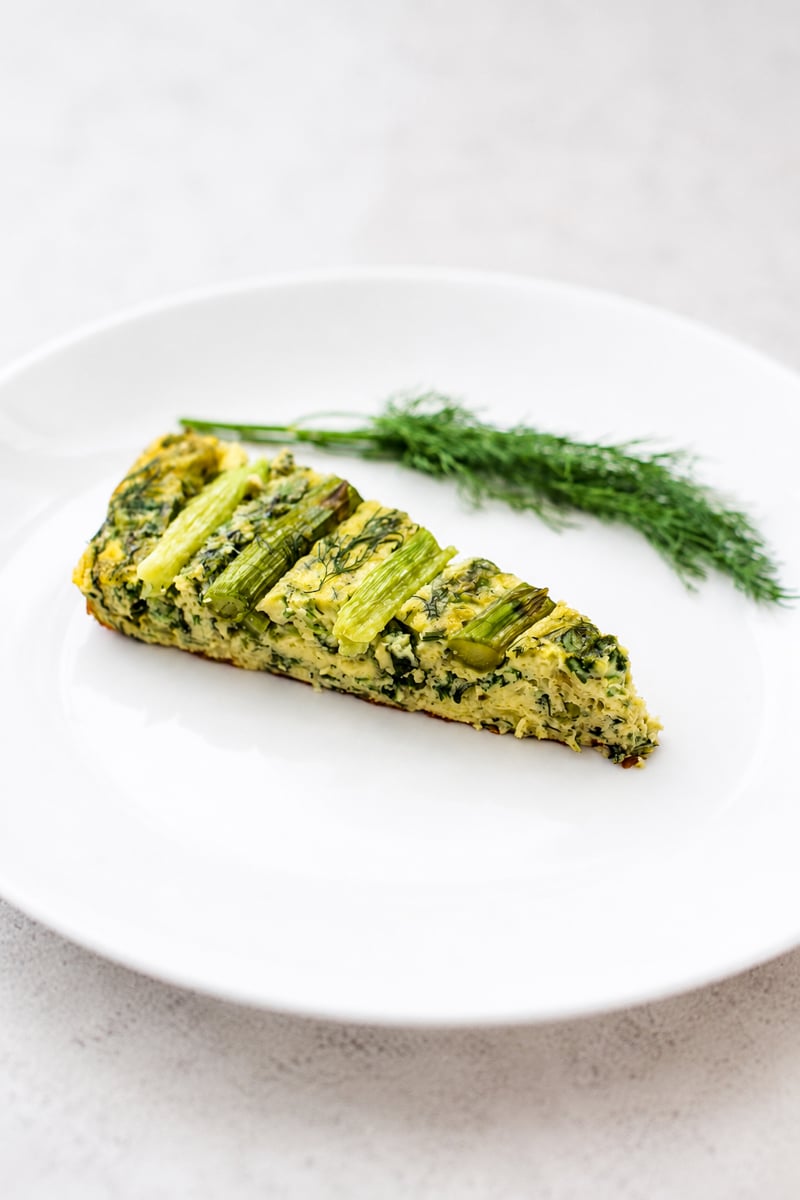
This easy asparagus frittata is made with spring onions, Parmigiano Reggiano, fresh herbs, and a splash of heavy cream for a soft, tender texture. It starts on the stovetop and finishes in the oven, making it perfect for a spring or summer breakfast or brunch.
If you love easy Italian egg recipes, also try my Egg White Frittata and Eggs in Purgatory - both are simple, fresh, and full of Italian flavor.
This article contains affiliate links which support us at no extra cost to you.
Jump To
The frittata is one of the most Italian things you can make - it is the Italian answer to the omelet, and it is infinitely more forgiving. You start it on the stovetop and finish baking in the oven, it cooks into a golden crust, and you slide it onto a plate and cut it into wedges.
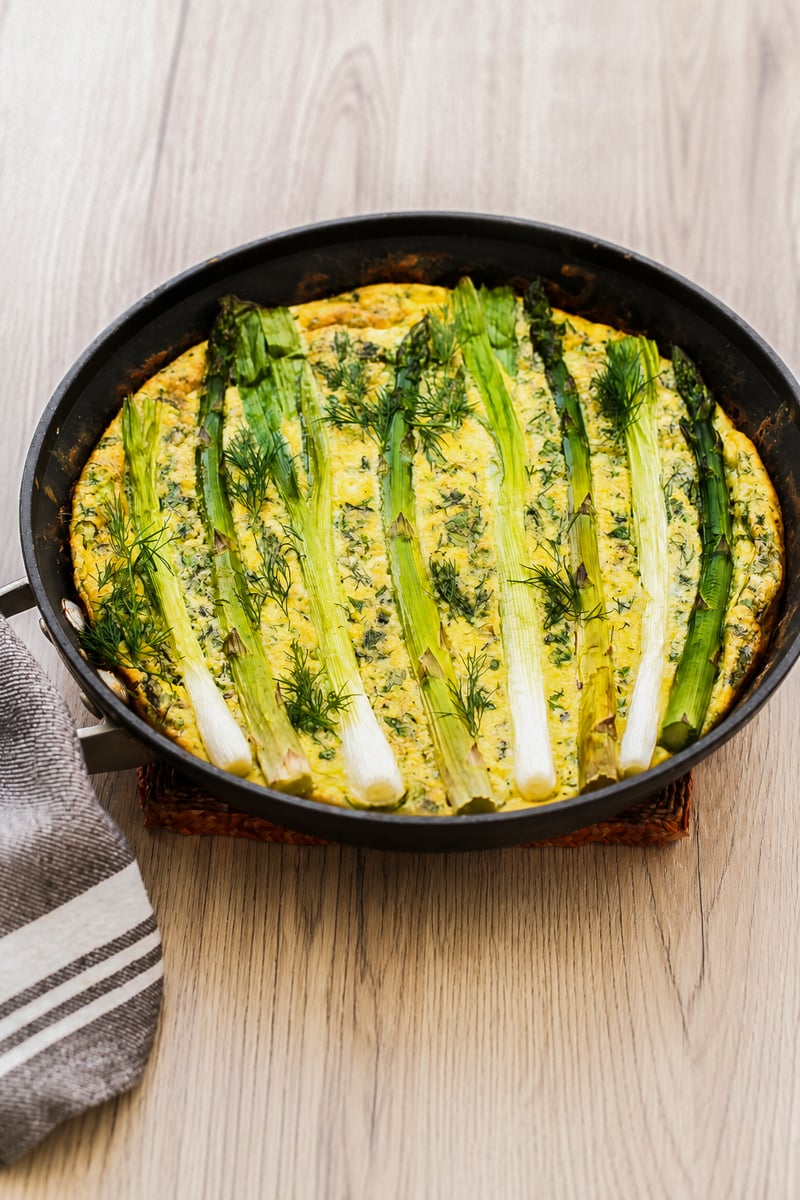
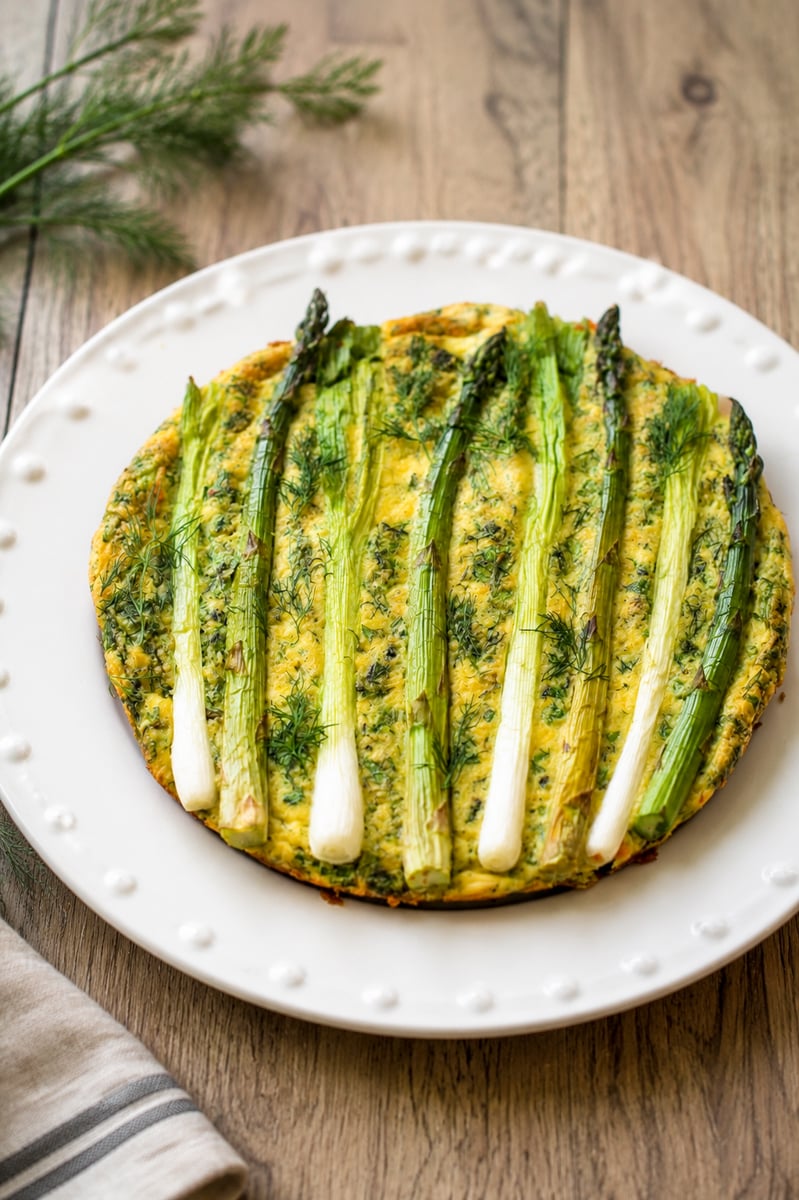
This asparagus frittata is one of my favorite recipes to make when spring asparagus is at its best. Tender asparagus and scallions cook right into the eggs, while fresh mint, parsley, dill, lemon zest, and a little Parmigiano Reggiano give it a bright, savory flavor. The whole asparagus spears and scallions arranged on top make it just as beautiful as it is delicious.
In Italy, frittata di asparagi is a classic spring dish served for lunch, dinner, or tucked into a sandwich for an easy meal. My mother-in-law in Calabria often makes frittata with whatever vegetables and herbs she has on hand. This version has become one of my favorites because the spring onions, fresh herbs, lemon zest, and Parmigiano give the eggs so much fresh, savory flavor.
Why You'll Love This Recipe
- Ready in about 35 minutes - the frittata starts on the stovetop and finishes in the oven, making it an easy option for breakfast, lunch, or dinner.
- Fresh herbs add plenty of flavor - mint, parsley, dill, lemon zest, and Parmigiano make the eggs bright, savory, and perfect for spring.
- Perfect for any meal - breakfast, brunch, lunch, or a light dinner. A frittata does not belong to just one part of the day.
- Great at room temperature - like all frittatas, this one holds up beautifully. Make it ahead and serve it at room temperature for brunch without any last-minute stress.
Ingredient Notes
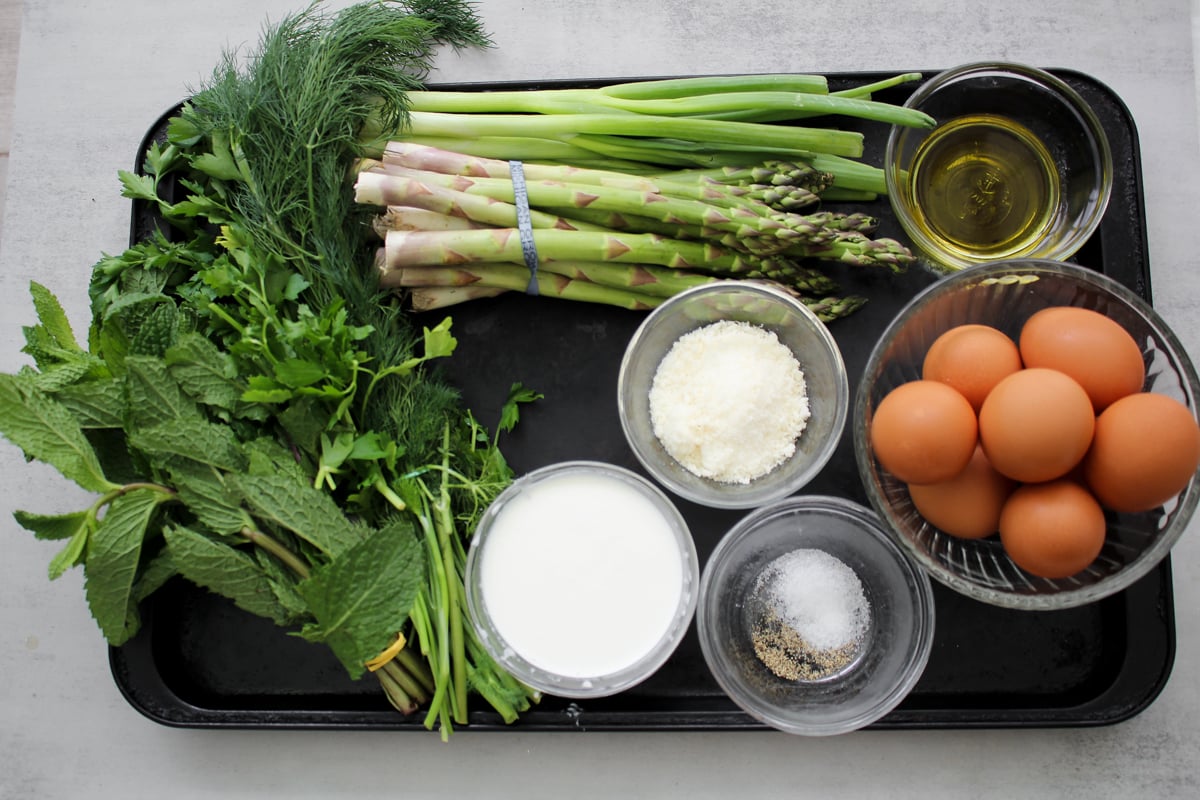
- Asparagus - 1 pound thin spears, tough ends snapped off, cut diagonally into 1-inch pieces. If you happen to find very thin asparagus, no need to blanch them. If your spears are thick, blanch them briefly in salted water before adding to the pan.
- Extra virgin olive oil - for cooking the scallions and asparagus. Butter gives a richer flavor than olive oil here and browns the bottom of the frittata beautifully.
- Scallions -Scallions have a mild onion flavor that works especially well with asparagus and eggs without overpowering the fresh herbs.
- Eggs - The base of the frittata. Whisk them just until the yolks and whites are combined, but avoid beating in too much air.
- Sea salt and black pepper - Season the eggs and vegetables, bringing out their fresh, savory flavors.
- Heavy cream - Adds richness and helps keep the frittata soft and tender as it cooks.
- Fresh herbs- Bright, oniony, and fresh. Stir them into the egg mixture rather than scattering on top so the flavor goes all the way through.
- Parmigiano Reggiano - Adds a salty, nutty flavor without making the frittata heavy. You can substitute Pecorino Romano for a sharper, saltier taste, or use Grana Padano for a slightly milder option.
How to Make Asparagus Frittata
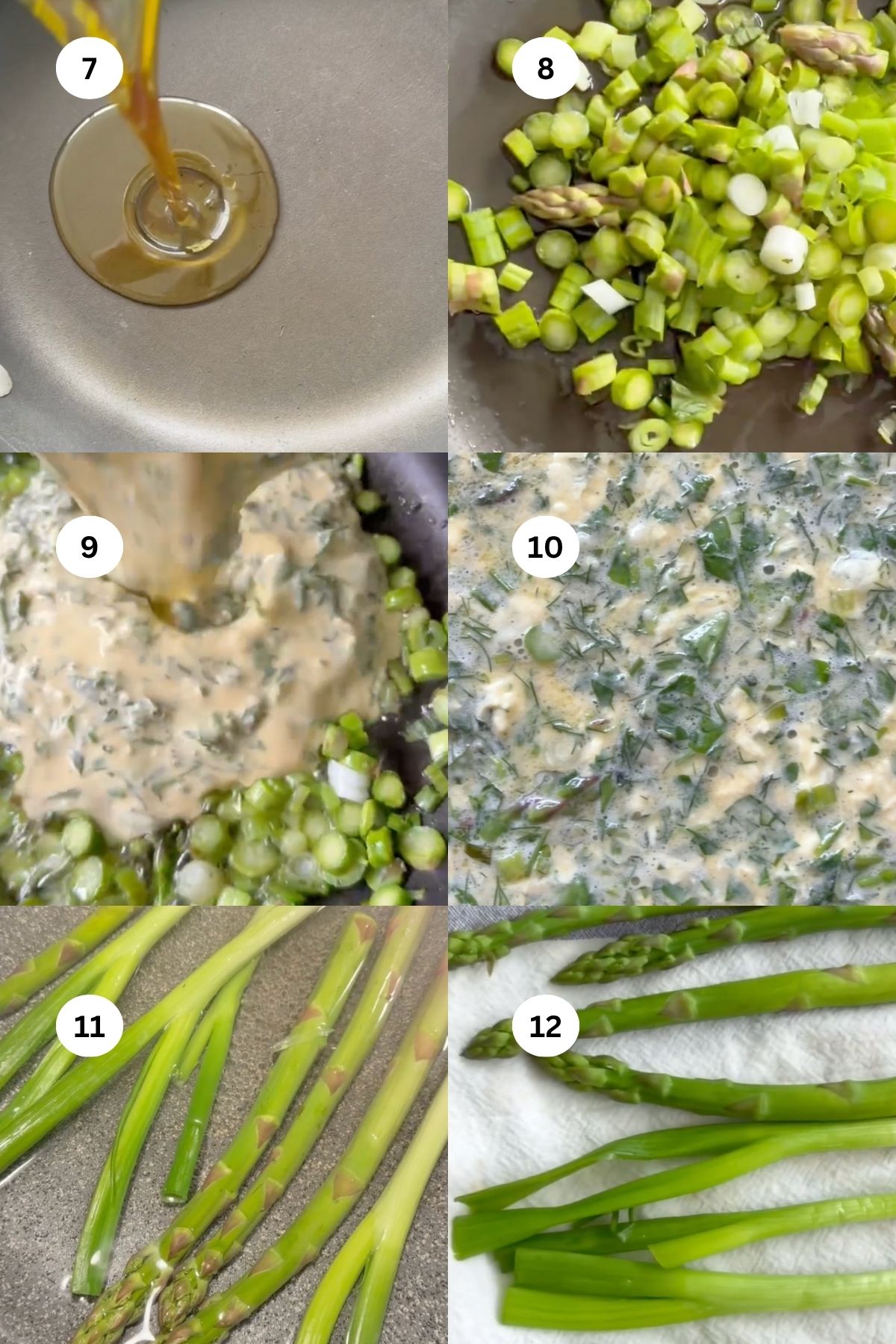
- Step 3: Blanch the topping. Cook the whole asparagus and spring onions in gently boiling water for 1-2 minutes, then drain and pat dry.
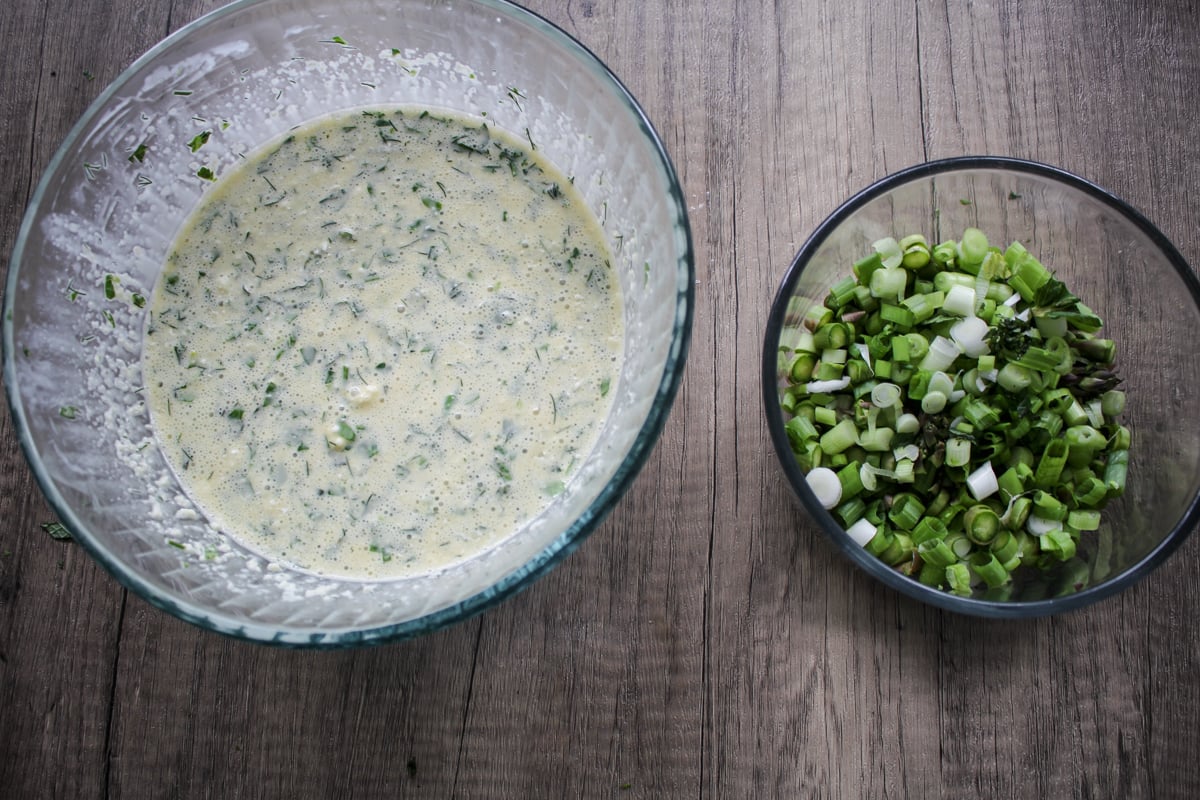
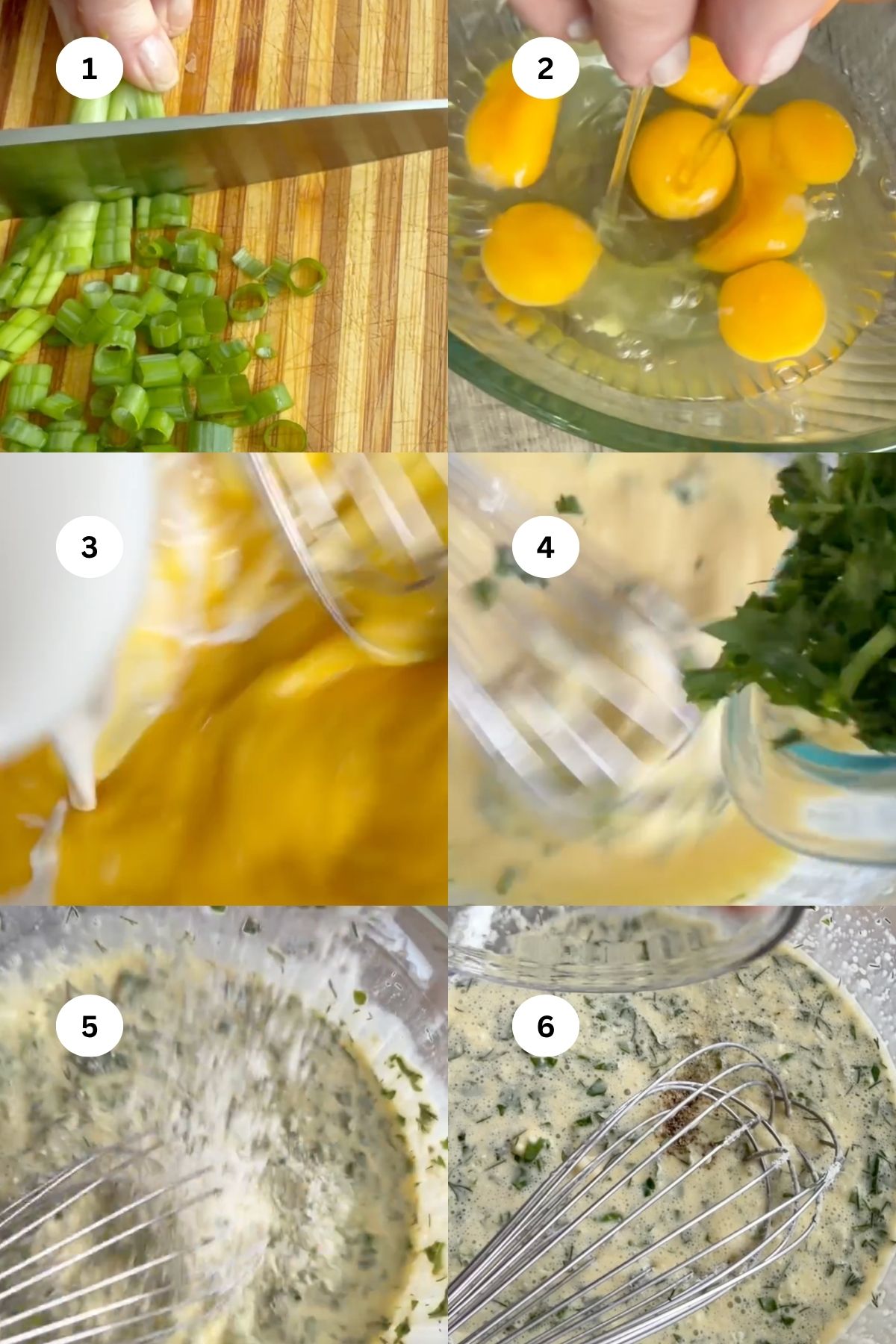
- Step 4: Make the egg mixture. Lightly whisk the eggs, heavy cream, fresh herbs, and remaining salt until just combined.
- Step 5: Start the frittata. Pour the egg mixture over the sautéed vegetables and cook over medium heat, gently stirring as soft curds form.
- Step 6: Add the cheese. Stir in the Parmigiano Reggiano and cook for about 3 minutes, keeping the eggs slightly loose.
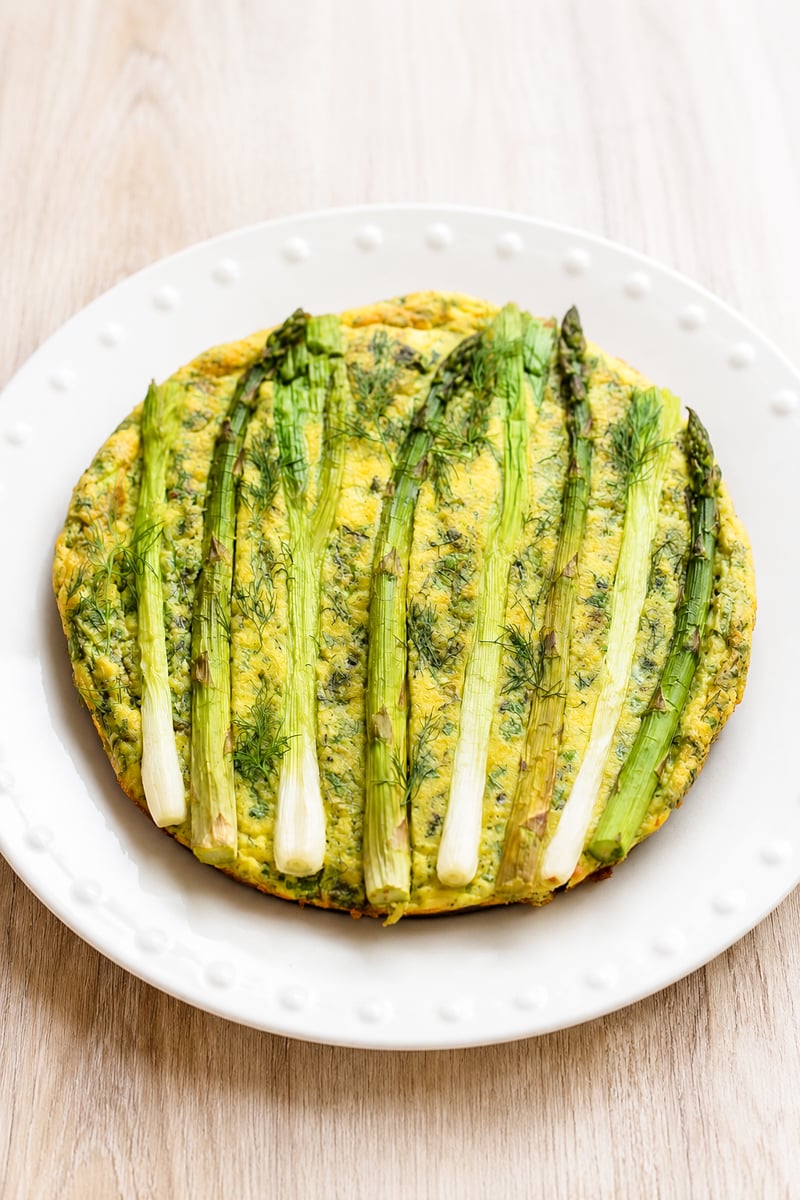
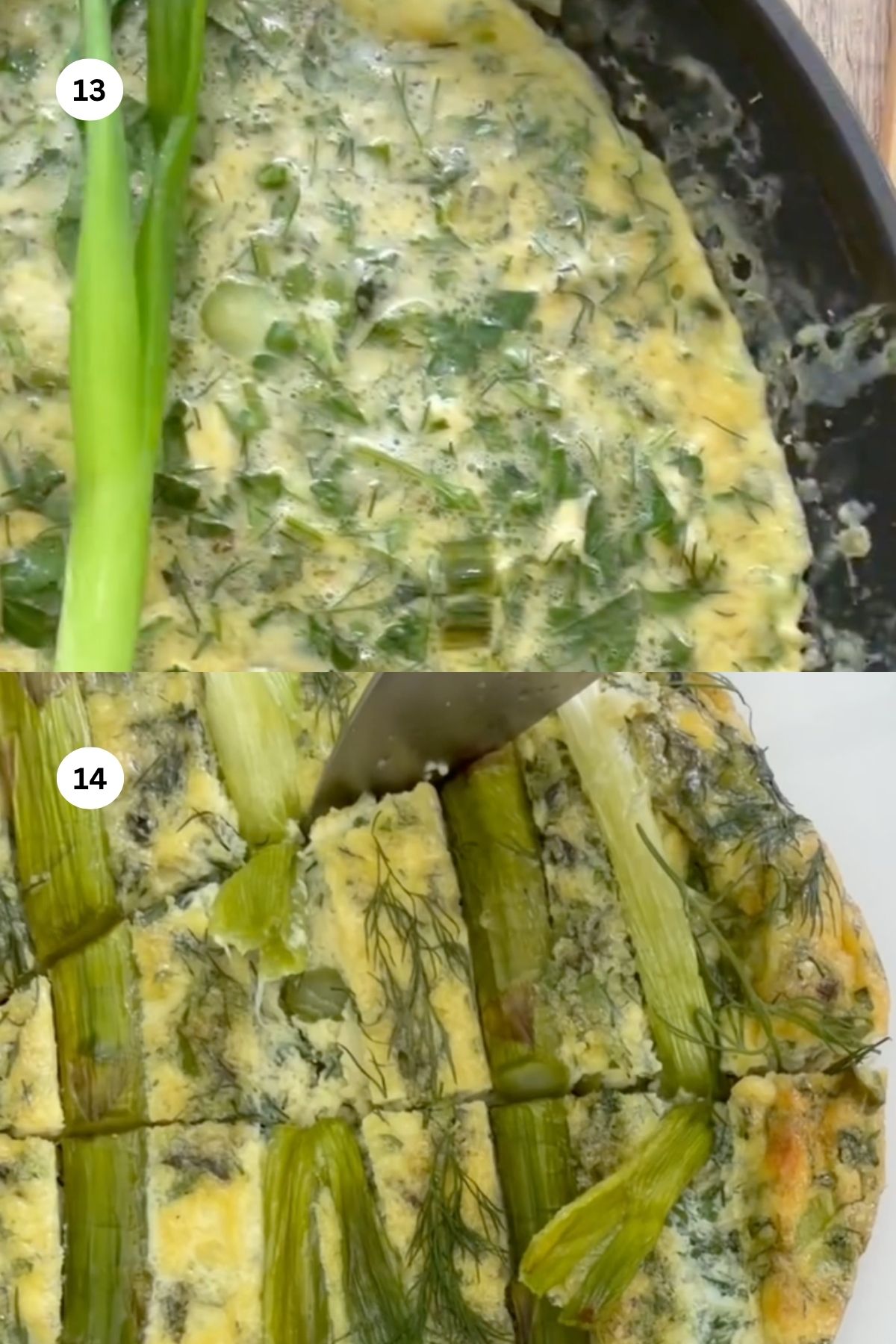
- Step 7: Decorate the top. Arrange the whole asparagus, spring onions, and dill over the frittata.
- Step 8: Bake. Transfer the skillet to a 375°F conventional oven and bake for about 10 minutes, until just set.
- Step 9: Cool and serve. Let the frittata rest for 5-10 minutes, then slide it onto a serving plate and cut into wedges.
Expert Tips
- Use an ovenproof skillet - a cast iron or stainless steel skillet goes from stovetop to broiler without a problem. If your skillet has a plastic or rubber handle, wrap it tightly in several layers of aluminum foil before putting it under the broiler.
- Mark the hot handle - after pulling the skillet from the broiler, place a folded kitchen towel or oven mitt over the handle immediately. The handle stays dangerously hot for much longer than you expect. This is the one safety detail I cannot stress enough.
- Do not overcook it on the stovetop - gently stir the eggs only until soft curds begin to form. The mixture should still look slightly loose before you transfer the skillet to the oven, where it will finish cooking without becoming dry or rubbery.
- Trim the asparagus ends - cut off the tough, woody ends before slicing the spears. You can usually spot the fibrous section by its paler color and firmer texture.
Variations
- Try Pecorino Romano - replace the Parmigiano Reggiano with Pecorino Romano for a sharper, saltier flavor. You can also use a combination of both cheeses for a richer finish.
- Add prosciutto - lay a few thin slices of prosciutto di Parma in the pan with the shallots before adding the asparagus. The prosciutto crisps slightly and adds a salty, savory depth.
- Add sun-dried tomatoes - a handful of oil-packed sun-dried tomatoes stirred into the egg mixture adds sweetness and a deep, concentrated flavor.
- Make it lighter - use a mix of whole eggs and egg whites (4 whole eggs plus 4 whites) for a lower-calorie version. The texture will be slightly less rich but still very good.
- Change the vegetables - zucchini and mint, roasted red peppers and basil, or mushrooms and thyme all work with the same base technique.
What to Serve With
- For brunch - serve with a simple green salad, good bread, and a glass of prosecco. This is classic Italian weekend brunch.
- Watermelon Cucumber Feta Salad - a bright, fresh side that contrasts beautifully with the richness of the frittata.
- Easy Tabbouleh - serve alongside for a light, herb-forward lunch spread.
- Crusty bread or focaccia - the frittata is rich and satisfying on its own. All it needs alongside is good bread and maybe a simple salad.
- As a dinner starter - cut into small wedges and serve as an antipasto before a pasta dinner.
Did you make this and love it? Please RATE THE RECIPE below:)
I would LOVE IT if you can leave me a star rating and a review down below and let me know your thoughts! It means the world to me to hear how you liked it.
Please Subscribe and give a follow on Instagram, Facebook, Pinterest, and TikTok xx
Easy Asparagus Frittata
Equipment
Ingredients
For the frittata
- 1 Tablespoon extra-virgin olive oil
- 6 asparagus spears woody ends trimmed, then sliced into small bite-size pieces
- 4 scallions ends removed and thinly sliced
- 1 teaspoon sea salt
- ⅛ teaspoon freshly ground black pepper
- ¼ teaspoon lemon zest
- 8 large eggs
- 1 tablespoon finely chopped fresh mint
- 2 tablespoons finely chopped fresh parsley
- 2 tablespoons finely chopped fresh dill
- ⅓ cup heavy whipping cream
- ½ teaspoon sea salt for the eggs
- 2 Tablespoons freshly grated Parmigiano Reggiano or Pecorino
For the top
- 4 whole asparagus spears ends trimmed to fit the length of the skillet
- 4 whole spring onions cleaned and ends trimmed to fit the end of the skillet
Instructions
Arrange the topping
- Place the whole asparagus spears and spring onions in a nonstick, oven-safe skillet to test your design. Trim them as needed so they fit neatly across the top of the frittata, then remove them and set them aside.
Sauté the asparagus and onions
- Heat the olive oil in the skillet over medium-low heat. Add the chopped asparagus and sliced spring onions. Cook for 3-4 minutes, stirring occasionally, until the vegetables begin to soften.
- Stir in the lemon zest, then remove the skillet from the heat.
Quickly cook the whole vegetables
- Bring a small pot of water to a gentle boil. Add the whole asparagus spears and spring onions and cook for 1-2 minutes.
- Remove them with tongs and transfer them to a paper towel-lined plate to dry.
Heat the oven
- Preheat the oven to 375°F C.
Whisk the eggs and herbs
- Stir in the chopped mint, parsley, dill, heavy cream, and the remaining ½ teaspoon sea salt.
Begin cooking the eggs
- Pour the egg mixture into the skillet over the sautéed vegetables. Return the skillet to medium heat and gently stir with a spatula as the eggs begin to cook.
Fold in the cheese
- Add the grated Parmigiano Reggiano or Pecorino. Continue cooking and gently stirring for about 3 minutes, or until soft egg curds begin to form.
- The eggs should remain soft but feel firm enough to support the vegetables on top, but you're not making scrambled eggs, so be gentle with the stir. The eggs should be firm enough to support the vegetables placed on top.
Finish the top
- Arrange the blanched asparagus spears and spring onions over the surface of the frittata.
Bake until just set
- Transfer the skillet to the preheated oven and bake for about 12-18 minutes, or until the eggs are just set and the edges are lightly golden.
- Take care not to overbake the frittata. The center should remain soft and tender.
Cool and transfer
- Let the frittata cool in the skillet for 5-10 minutes. Run a thin spatula around the edges to loosen it, then carefully slide it onto a serving platter.
- Cut the frittata into 6 wedges using a serrated knife. Serve it warm, at room temperature, or chilled. When making it ahead, refrigerate it once cooled and remove it from the refrigerator about 1 hour before serving.
Nutrition Disclaimer
Please keep in mind that the nutritional information presented below is an approximation and may vary depending on the exact ingredients used.
Video
Notes
- Asparagus: Trim away the tough, woody ends before cutting the spears into small pieces.
- Scallions: You can replace the scallions with thinly sliced shallots, leeks, or a small amount of finely chopped yellow onion. Shallots offer the closest mild, slightly sweet flavor.
- Cheese: Parmigiano Reggiano adds a nutty, savory flavor. You can substitute Pecorino Romano or Grana Padano. For a softer, creamier frittata, gently fold in about ½ cup of well-drained ricotta before cooking. You can still keep the Parmigiano for extra flavor.
- Heavy cream: This keeps the eggs soft and tender without making the frittata too rich.
- Stovetop cooking: Cook only until soft curds begin to form. The eggs should still look slightly loose before going into the oven.
- Oven temperature: Bake at 375°F in a conventional oven or 350°F in a convection oven.
- Make ahead: Let the frittata cool completely, then refrigerate it in an airtight container for up to 3 days.
- Serving: Serve warm, at room temperature, or chilled. Let a refrigerated frittata sit out for about 30-60 minutes before serving. It is even delicious cold!
- Removing from the skillet: Let it rest for 5-10 minutes, loosen the edges with a thin spatula, then carefully slide it onto a serving plate.

I gave this recipe a try, and it exceeded my expectations. It was simple, healthy, and incredibly satisfying!
Letting it rest before slicing seems worth the patience; frittatas always look better once the center settles.
I made this for brunch and it turned out light, fluffy, and full of fresh flavor. The asparagus stayed perfectly tender and added a nice crunch!
I'm not usually a huge fan of asparagus, but I had some in the fridge I wanted to use up. I was looking for a new recipe, and this was a huge hit! My husband loved it. too.
I'm not a huge asparagus fan either, Elizabeth! But somehow the frittata makes it magical! THANK YOU
This asparagus frittata is delicious easy to put together, I am going to make it again.
I love eggs and asparagus, so I knew this was going to be good. I was not disappointed.
This made a great dinner AND a tasty breakfast. I'm bookmarking this one.
I love the flavor of the asparagus with the eggs, and the presentation is so pretty!
This was the most delicious way to use up the rest of the asparagus we got at the farmers' market! Great recipe!
I made this as soon as I saw it come through in my email. I used dried dill I didn't have fresh. Turned out very nice for breakfast today! Had to let you know immediately. Saving this one!