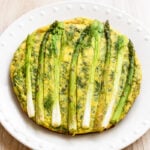
Easy Asparagus Frittata
This easy asparagus frittata is made with scallions, Parmigiano Reggiano, fresh herbs, and a splash of heavy cream for a soft, tender texture. It starts on the stovetop and finishes in the oven, making it perfect for a spring breakfast or brunch.
Servings: 6 servings
Calories: 71kcal
Equipment
Ingredients
For the frittata
- 1 Tablespoon extra-virgin olive oil
- 6 asparagus spears woody ends trimmed, then sliced into small bite-size pieces
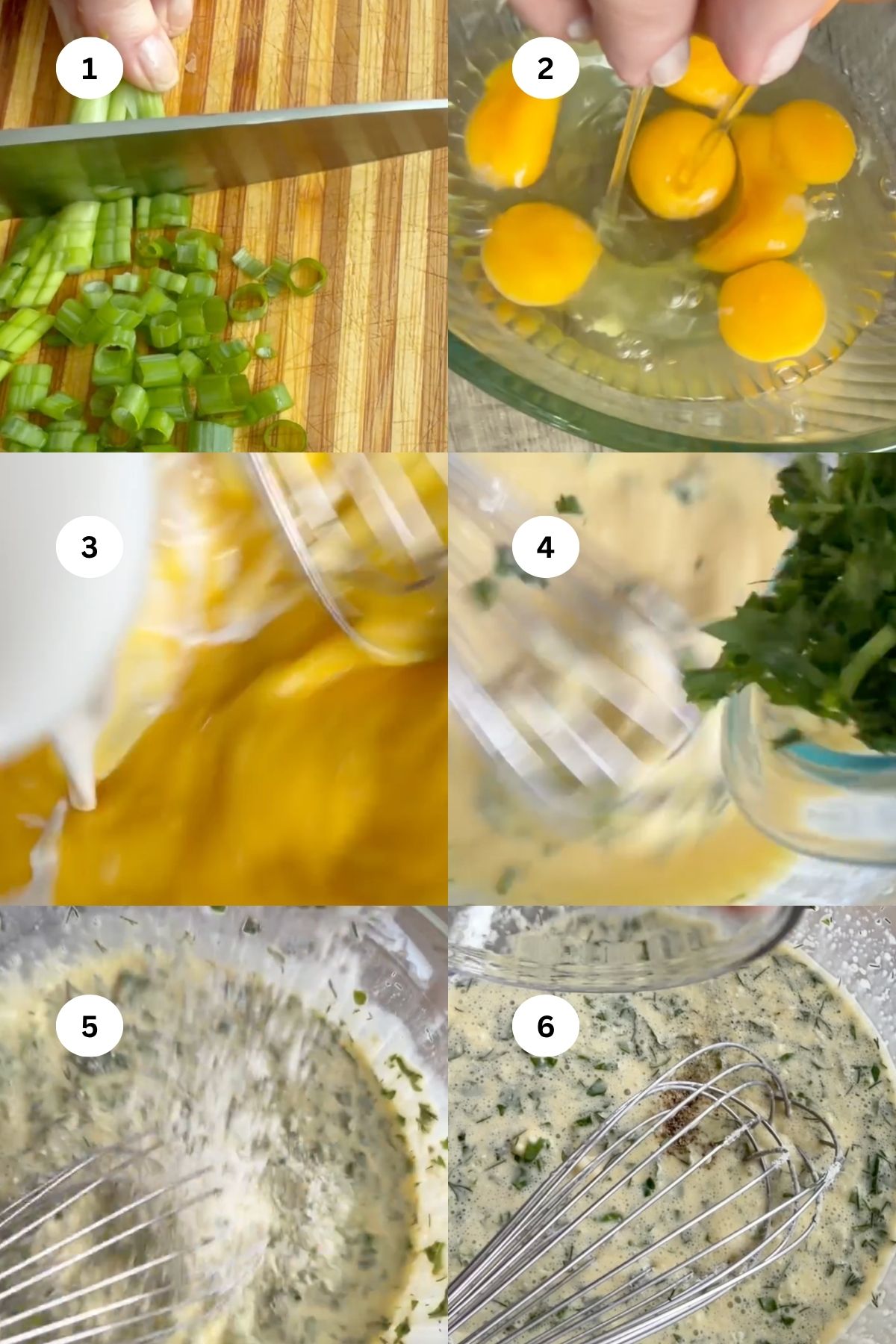
- 4 scallions ends removed and thinly sliced
- 1 teaspoon sea salt
- ⅛ teaspoon freshly ground black pepper
- ¼ teaspoon lemon zest
- 8 large eggs
- 1 tablespoon finely chopped fresh mint
- 2 tablespoons finely chopped fresh parsley
- 2 tablespoons finely chopped fresh dill
- ⅓ cup heavy whipping cream
- ½ teaspoon sea salt for the eggs
- 2 Tablespoons freshly grated Parmigiano Reggiano or Pecorino
For the top
- 4 whole asparagus spears ends trimmed to fit the length of the skillet
- 4 whole spring onions cleaned and ends trimmed to fit the end of the skillet
Instructions
Arrange the topping
- Place the whole asparagus spears and spring onions in a nonstick, oven-safe skillet to test your design. Trim them as needed so they fit neatly across the top of the frittata, then remove them and set them aside.
Sauté the asparagus and onions
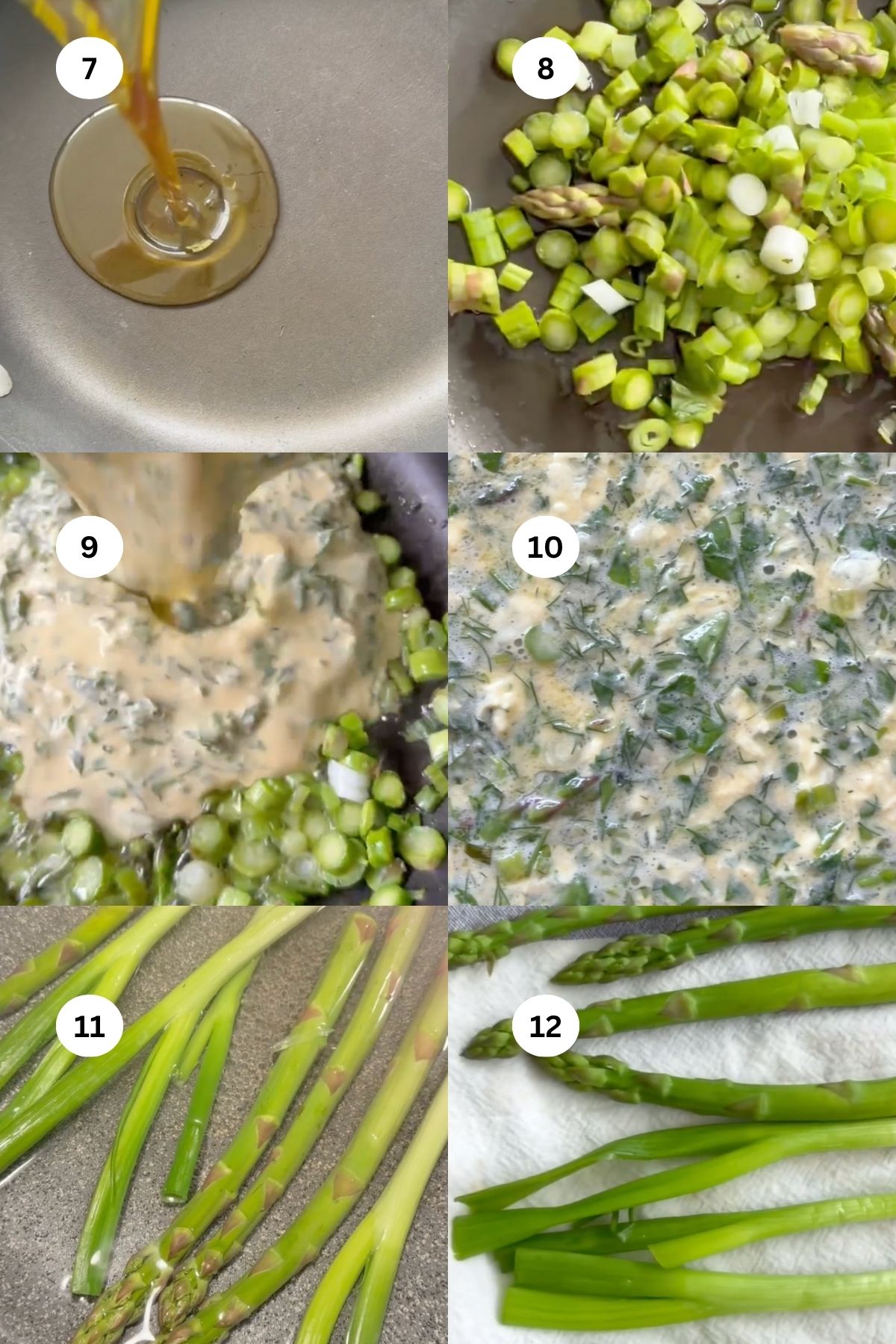
- Heat the olive oil in the skillet over medium-low heat. Add the chopped asparagus and sliced spring onions. Cook for 3–4 minutes, stirring occasionally, until the vegetables begin to soften.
- Stir in the lemon zest, then remove the skillet from the heat.
Quickly cook the whole vegetables
- Bring a small pot of water to a gentle boil. Add the whole asparagus spears and spring onions and cook for 1–2 minutes.
- Remove them with tongs and transfer them to a paper towel-lined plate to dry.
Heat the oven
- Preheat the oven to 375°F C.
Whisk the eggs and herbs
- Add the eggs to a large bowl and lightly whisk until the yolks and whites are just combined. Add 1 teaspoon salt and pepper. Avoid whisking until the eggs become foamy.
- Stir in the chopped mint, parsley, dill, heavy cream, and the remaining ½ teaspoon sea salt.
Begin cooking the eggs
- Pour the egg mixture into the skillet over the sautéed vegetables. Return the skillet to medium heat and gently stir with a spatula as the eggs begin to cook.
Fold in the cheese
- Add the grated Parmigiano Reggiano or Pecorino. Continue cooking and gently stirring for about 3 minutes, or until soft egg curds begin to form.
- The eggs should remain soft but feel firm enough to support the vegetables on top, but you’re not making scrambled eggs, so be gentle with the stir. The eggs should be firm enough to support the vegetables placed on top.
Finish the top
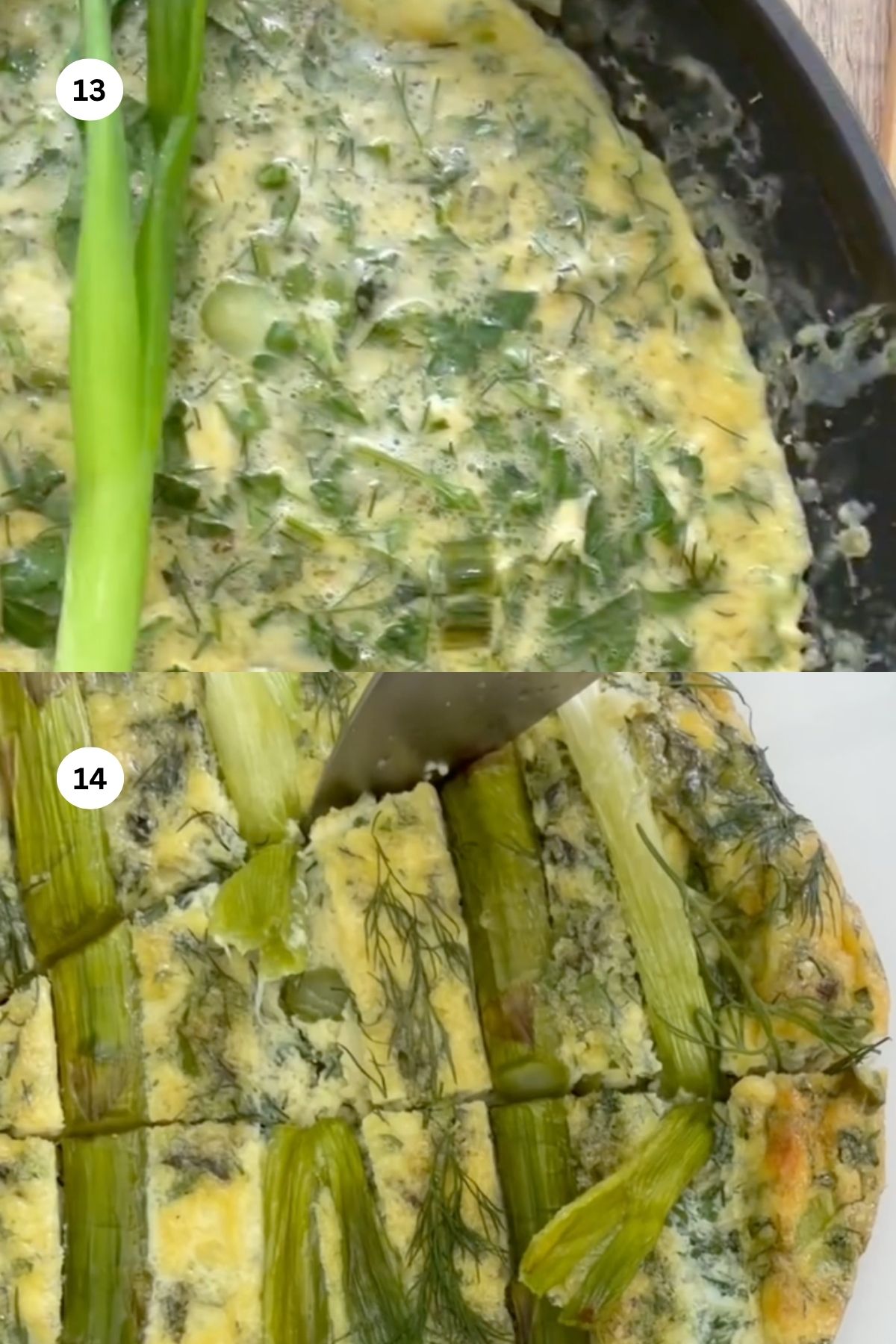
- Arrange the blanched asparagus spears and spring onions over the surface of the frittata.
Bake until just set
- Transfer the skillet to the preheated oven and bake for about 12-18 minutes, or until the eggs are just set and the edges are lightly golden.
- Take care not to overbake the frittata. The center should remain soft and tender.
Cool and transfer
- Let the frittata cool in the skillet for 5–10 minutes. Run a thin spatula around the edges to loosen it, then carefully slide it onto a serving platter.
- Cut the frittata into 6 wedges using a serrated knife. Serve it warm, at room temperature, or chilled. When making it ahead, refrigerate it once cooled and remove it from the refrigerator about 1 hour before serving.
Video
Notes
- Asparagus: Trim away the tough, woody ends before cutting the spears into small pieces.
- Scallions: You can replace the scallions with thinly sliced shallots, leeks, or a small amount of finely chopped yellow onion. Shallots offer the closest mild, slightly sweet flavor.
- Cheese: Parmigiano Reggiano adds a nutty, savory flavor. You can substitute Pecorino Romano or Grana Padano. For a softer, creamier frittata, gently fold in about ½ cup of well-drained ricotta before cooking. You can still keep the Parmigiano for extra flavor.
- Heavy cream: This keeps the eggs soft and tender without making the frittata too rich.
- Stovetop cooking: Cook only until soft curds begin to form. The eggs should still look slightly loose before going into the oven.
- Oven temperature: Bake at 375°F in a conventional oven or 350°F in a convection oven.
- Make ahead: Let the frittata cool completely, then refrigerate it in an airtight container for up to 3 days.
- Serving: Serve warm, at room temperature, or chilled. Let a refrigerated frittata sit out for about 30–60 minutes before serving. It is even delicious cold!
- Removing from the skillet: Let it rest for 5–10 minutes, loosen the edges with a thin spatula, then carefully slide it onto a serving plate.
Nutrition
Calories: 71kcal | Carbohydrates: 2g | Protein: 1g | Fat: 7g | Saturated Fat: 3g | Polyunsaturated Fat: 0.5g | Monounsaturated Fat: 3g | Cholesterol: 15mg | Sodium: 587mg | Potassium: 68mg | Fiber: 1g | Sugar: 1g | Vitamin A: 395IU | Vitamin C: 3mg | Calcium: 19mg | Iron: 0.5mg