
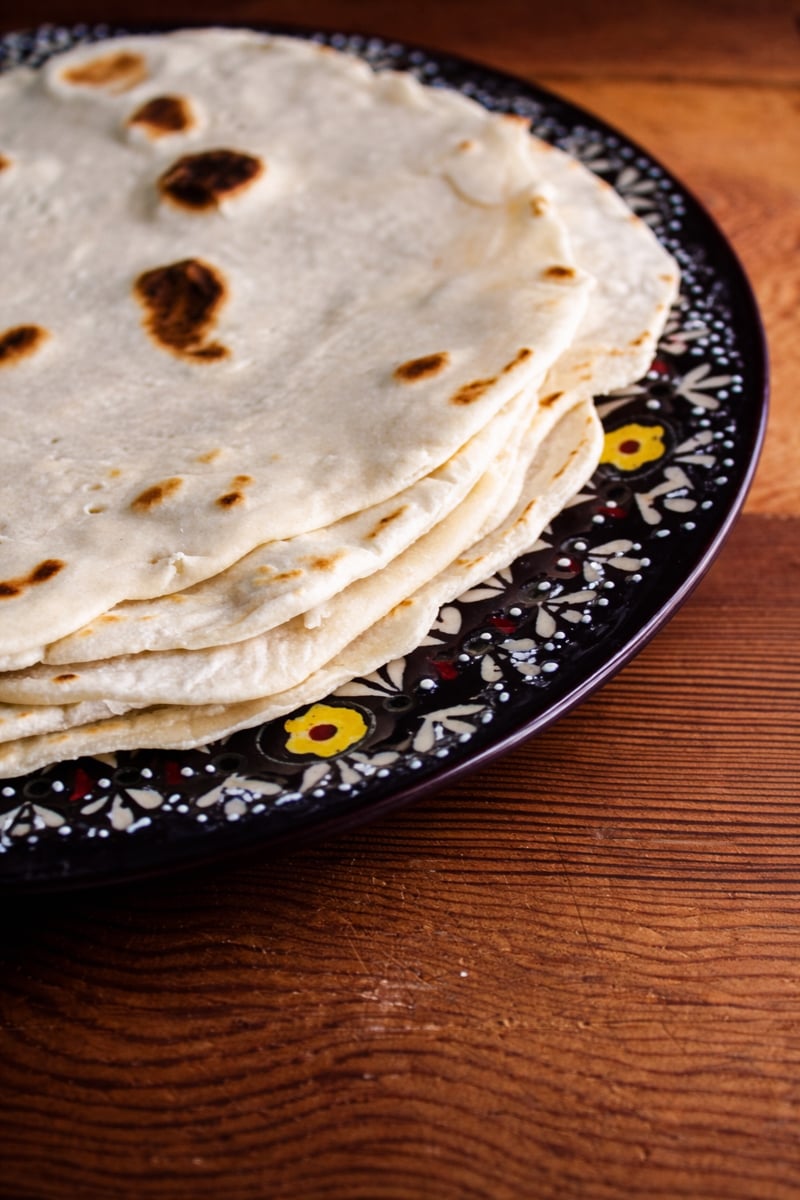
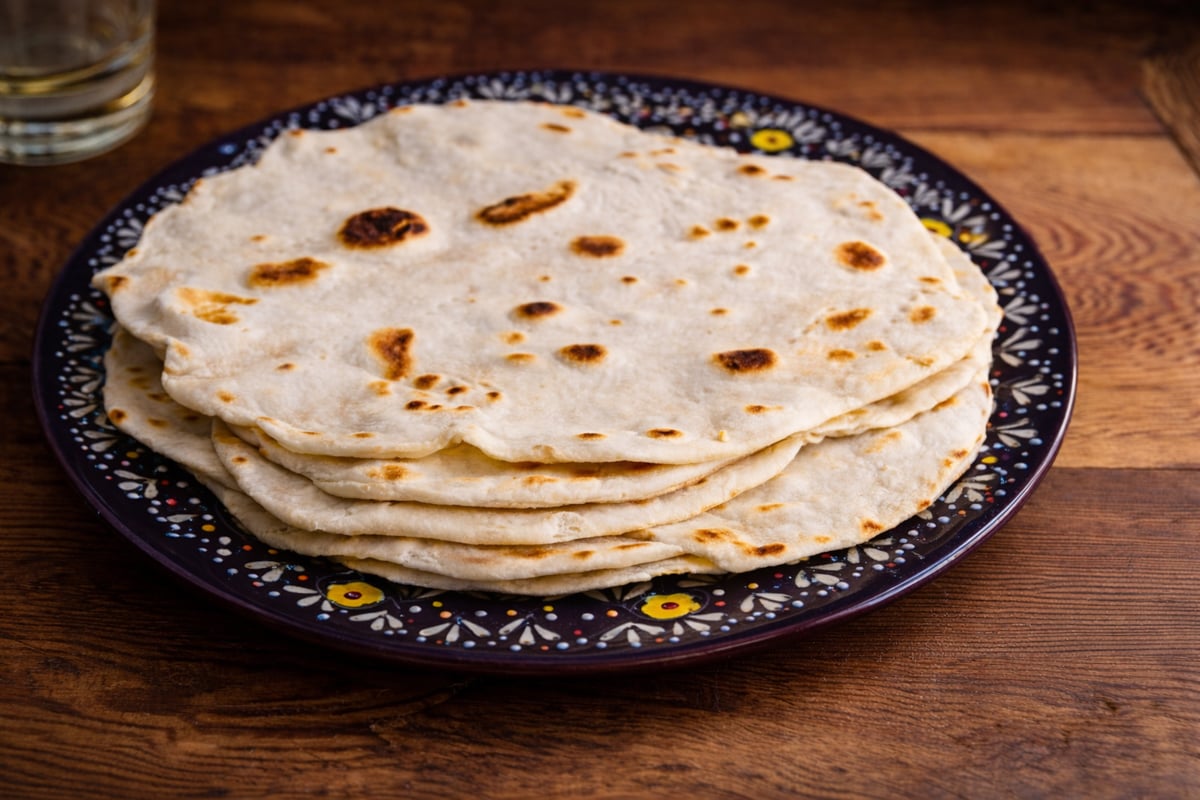
This authentic piadina recipe makes soft, golden Italian flatbread with just 4 ingredients. Ready in under an hour; perfect for sandwiches, snacking, or serving with cured meats.
If you love Italian breads, also try my Crusty No Knead Italian Bread and Crescia al Formaggio.
This article contains affiliate links which support us at no extra cost to you.
Jump To
- What is a Piadina?
- 💖Why we love this piadina recipe
- Ingredients needed to make this
- Equipment you need to make this recipe
- 🍽️ How to make this Italian flatbread
- What to serve with piadina?
- How to Make a Piadina Sandwich
- Can I make the dough with my stand mixer?
- Is shortening the best to use to make homemade piadina?
- Leftover and Storing
- Substitutions & Variations
- ☑️ Our Top Tips
- FAQ'S
- Some other bread recipes:
- Piadina (Italian Flatbread)
What is a Piadina?
Piadina (also called piada) is a traditional Italian flatbread from the Romagna region of northern Italy - specifically the provinces of Forlì-Cesena, Ravenna, Rimini, and Riccione.
Originating from the Emilia-Romagna region of Italy, this soft, slightly crispy flatbread comes together with just four simple ingredients - flour, water, fat, and salt - and cooks up in minutes on a hot skillet. Once you make it at home, you'll wonder why you ever stopped.
I fell in love with piadina while living in Rimini, where you'd find it stuffed with prosciutto crudo, fresh rucola, and tomatoes at tiny street stands. My mother-in-law still makes the best version I've ever had - and this is the recipe she taught me.
My mother-in-law was self-taught and she made it for us this past spring when she was visiting us. It was kind of a bad thing when she did make it that first time, because the kids were requesting it every day. They were expecting fresh and hot piada as an afterschool snack every day!
I think she'll be thrilled to know that I am making it (no way while she was here would I tell her I do know how to make it, then there would be the critiques and her method is better than mine).
💖Why we love this piadina recipe
- Simple ingredients: With just basic pantry staples like flour, water, and yeast, this recipe is accessible to everyone and doesn't require a trip to specialty stores.
- Versatile fat options: You can customize the flavor and texture by using vegetable shortening, pork fat, or extra virgin olive oil, giving you flexibility based on personal preference or dietary needs.
- Quick to make: The dough only needs a short resting time, making it a fast option for when you want to whip up a homemade flatbread in under an hour.
- Perfect texture: The kneading and resting process creates a soft, elastic dough that cooks into a perfectly golden, crispy-yet-tender piadina.
- Customizable fillings: You can fill the piadina with endless combinations of ingredients-whether it's cured meats, cheese, or veggies, it works as a base for both savory or sweet creations!
Ingredients needed to make this
- 1 cup warm water: The base liquid to activate the yeast and bring the dough together.
- 2 teaspoons yeast: Essential for making the dough rise slightly, giving the piadina a light and airy texture.
- 3 cups all-purpose flour: The main structure of the dough, providing the perfect balance between softness and chewiness.
- 1 teaspoon salt: Enhances the flavor of the dough, adding depth to the overall taste.
- 4 tablespoons vegetable shortening, pork fat, or extra virgin olive oil: This adds richness to the dough and helps create a tender, flaky texture. The choice of fat allows for some flavor customization, from neutral (shortening) to savory (pork fat) or more robust (olive oil).
Equipment you need to make this recipe
- Mixing bowl: For combining the water and yeast and for mixing the dough.
- Measuring cups and spoons: To accurately measure the ingredients.
- Wooden spoon or dough hook (if using a mixer): To mix the ingredients together and help form the dough.
- Rolling pin: To roll out the dough into thin rounds.
- Floured work surface: A clean, flat surface for rolling out the dough.
- Heavy frying pan or griddle: For cooking the piadina evenly and achieving that perfect golden-brown crust.
- Fork: To prick the dough and prevent air bubbles during cooking.
- Dish towel: To keep the cooked piadina warm and soft as you cook the remaining rounds.
🍽️ How to make this Italian flatbread
Here is how to make this Italian flatbread (the full recipe is below!):
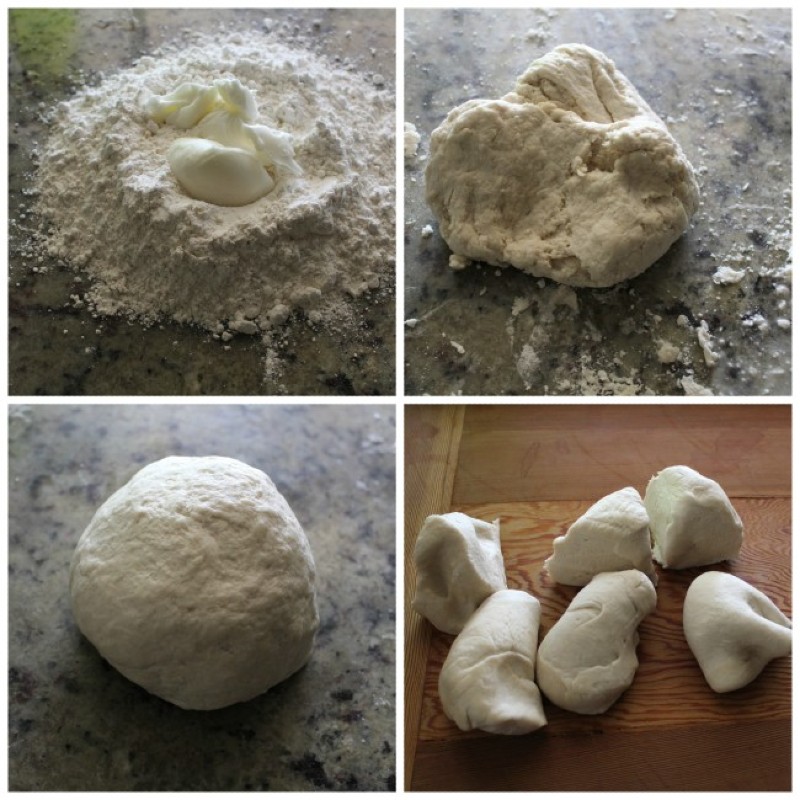
- Step 1: Prepare the Yeast
- In a small bowl, sprinkle 2 teaspoons of yeast over 1 cup of warm water.
- Let the mixture sit for 5 minutes to allow the yeast to activate.
- Step 2: Mix the Dry Ingredients
- Step 3: Add the Fat
- Add 4 tablespoons of vegetable shortening, pork fat, or extra virgin olive oil to the flour mixture.
- Use your hands (or the mixer) to combine the fat into the flour until the texture resembles coarse crumbs.
- Step 4: Combine Wet and Dry Ingredients
- Make a well in the center of the flour mixture and slowly pour in the yeast and water mixture.
- Gradually combine the wet ingredients into the flour until it forms a dough.
- Step 5: Knead the Dough
- Knead the dough by hand or using the dough hook attachment on a mixer for about 10 minutes until smooth, shiny, and elastic.
- Step 6: Let the Dough Rest
- Place the dough in a bowl, cover it with a dish towel or plastic wrap, and let it rest for 30 minutes.
- Step 7: Divide the Dough
- After the dough has rested, divide it into 6 equal pieces.
- Step 8: Roll Out the Dough
- On a lightly floured surface, use a rolling pin to roll each piece into a round, about 6 inches across and ½ inch thick.
- If the dough is difficult to roll out, let it rest for 1-2 minutes before continuing.
- Step 9: Preheat the Pan
- Heat a heavy frying pan or griddle over medium-low heat for about 10 minutes, until it's very hot.
- Step 10: Cook the Piadina
- Place one dough round into the hot pan and prick it all over with a fork to prevent air bubbles.
- Cook for about 5 minutes, flipping frequently, until both sides are golden brown.
- Step 11: Keep Warm
- As you cook each piadina, stack them on top of one another and cover with a dish towel to keep them soft and warm.
- Step 12: Serve
- Fill with your favorite ingredients, fold in half, and serve, or enjoy them plain.
📃 NOTE: Recipe card with detailed instructions are below! Print it out for later!
What to serve with piadina?
Cured Meats and Cheeses: Fill piadina with prosciutto, mortadella, salami, and cheeses like mozzarella, pecorino, or stracchino for a classic Italian pairing.
Grilled Vegetables: Serve with grilled zucchini, eggplant, or roasted peppers, either inside the piadina or on the side.
Fresh Salad: Pair piadina with a light, refreshing salad like arugula with shaved parmesan, cherry tomatoes, and balsamic dressing.
Dips and Spreads: Serve alongside pesto, hummus, or olive tapenade for dipping or spreading inside the piadina.
Soup: A bowl of Italian soups like minestrone or tomato basil soup makes a great companion for piadina, providing a warm and hearty combination.
How to Make a Piadina Sandwich
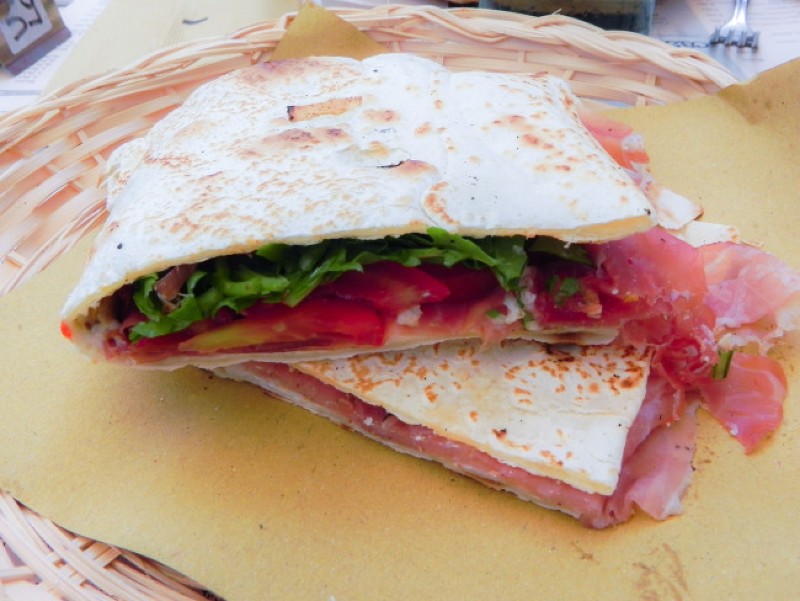
The most classic piadina sandwich you'll find on the streets of Rimini is prosciutto crudo, fresh rucola, and ripe tomatoes. You fold the warm piadina in half around the filling and eat it like a wrap; simple, perfect, unforgettable.
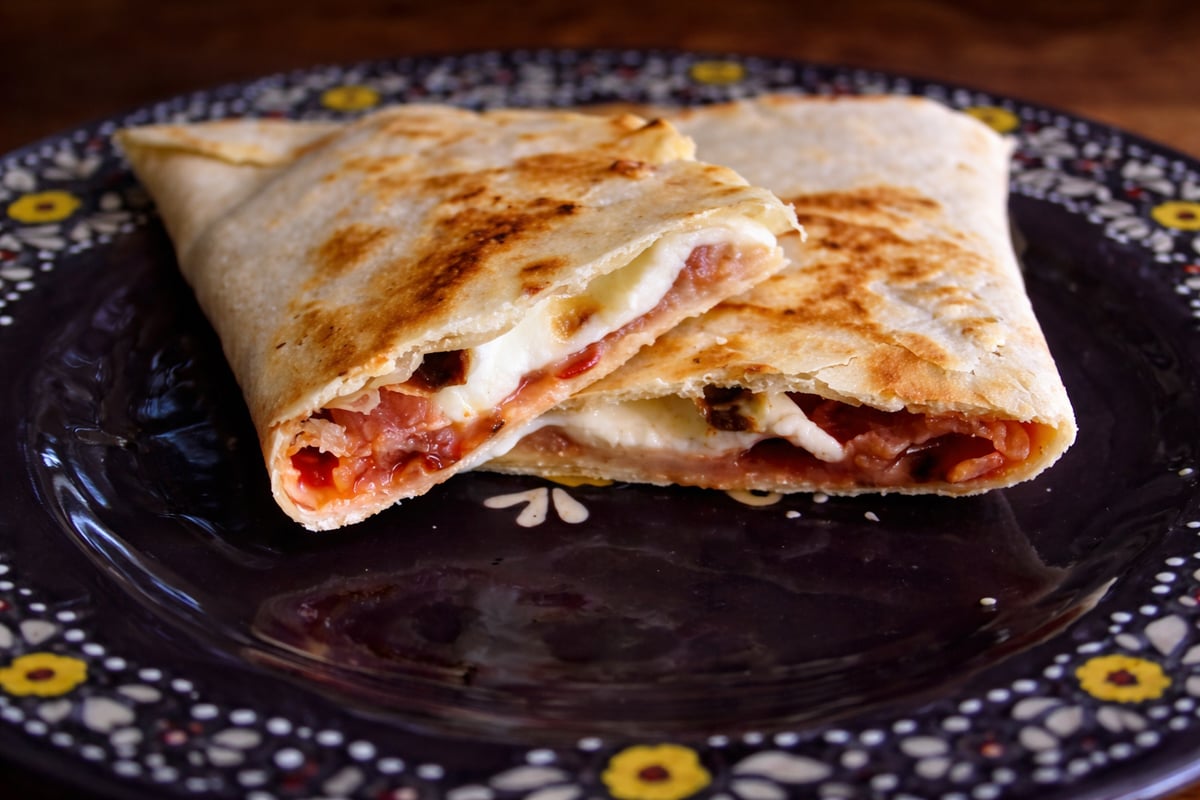
For a melty, panini-style version, fill your piadina with prosciutto and mozzarella or stracchino cheese, fold it in half, and press it back onto a low heat skillet for 2 to 3 minutes per side until the cheese melts and the outside gets a little crispy. Keep the heat low so it doesn't burn.
Some other great piadina sandwich fillings:
Mortadella, pistachio cream, and burrata
Grilled zucchini, roasted peppers, and fresh mozzarella
Arugula, shaved parmesan, and balsamic drizzle
Nutella and sliced banana for a sweet version
Can I make the dough with my stand mixer?
Yes, you can! Don't want to mess up your counter? Then use your mixer with the dough hook or even a food processor will work fine. I like to work the dough and see where it's going and it's therapeutic!
If you are looking for a an easy bread recipe to make with your kids, this is the one! They will have fun rolling out the discs and it's totally fine if they're imperfect. My son grabbed the rolling pin and wouldn't let me finish. He was so proud of his work!
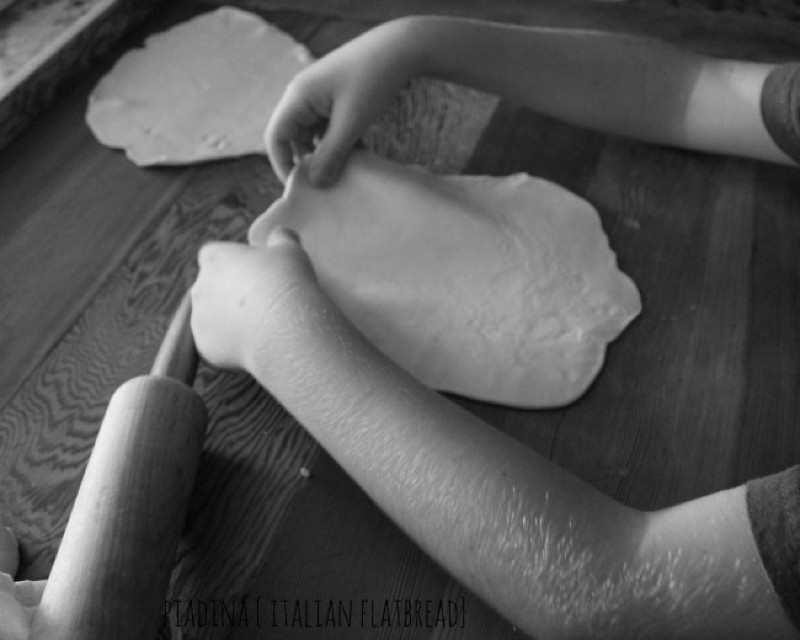
I wouldn't let them use the hot skillet (unless your kids are older and they know what they're doing at the stove...use your discretion).Now this one below is the one we ate in Rimini and it has prosciutto crudo, rucola, tomatoes.
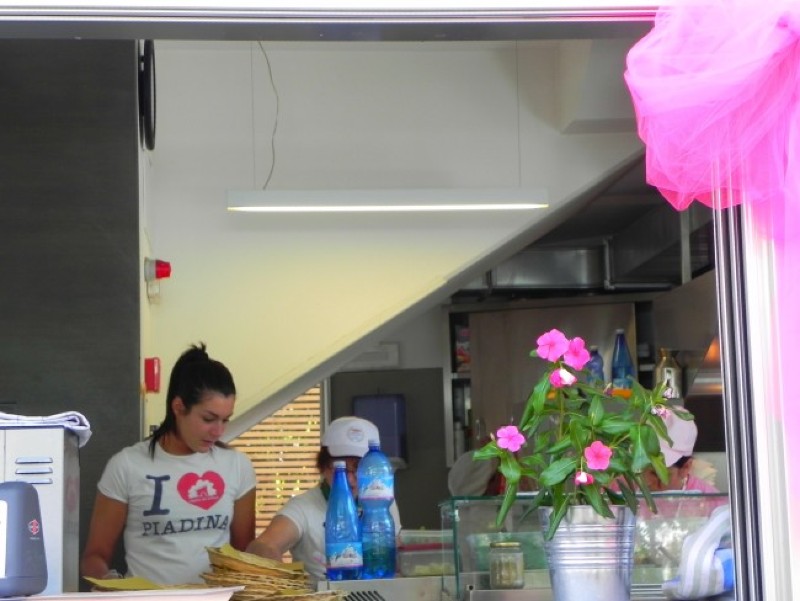
At one of my favorite places to grab the best lunch or dinner: Casina del Bosco.
This isn't a sponsored post. Even though I've eaten at their place over a dozen times, they have no clue who I am. So I can freely talk about them with that fervent lust I mentioned earlier. Man, do I LOVE this place. Planning a trip to Rimini any time soon? You MUST stop by for a piadina or two at Casina del Bosco
Is shortening the best to use to make homemade piadina?
I find that using shortening (or rendered pork fat/strutto) makes it softer and more supple. Each family you will meet that makes piada will have their version. What's the best version?
Depends on taste and if you live in Italy, it all depends on what you grew up eating. This is the recipe my mother-in-law showed me how to make and it is loved by all.
Leftover and Storing
You could store in the refrigerator in a plastic zipped lock freezer bag. Will stay fresh for up a week.
You could freeze the piadina in zipped lock freezer bag for up to 2 months.
it keeps fine in the fridge for a week or you can even freeze them for up to 2 months.
Substitutions & Variations
Substitutions:
- Flour:
- Whole wheat flour can replace all-purpose flour for a heartier, healthier version. You may need to add slightly more water due to the flour's density.
- For gluten-free options, use gluten-free all-purpose flour, though texture may vary.
- Yeast:
- If you're short on time or want a quicker version, you can skip the yeast entirely. The dough will be denser but still delicious.
- Fat Options:
- For a vegan option, stick to olive oil or a plant-based shortening.
- Salt:
Variations:
- Herbed Piadina:
- Add herbs like rosemary, thyme, or oregano to the dough for extra flavor. You can also sprinkle them on top before cooking.
- Stuffed Piadina:
- Fill the piadina before cooking with ingredients like cheese, spinach, or sliced ham. This makes for a delicious, melty filling once cooked.
- Sweet Piadina:
- Spiced Piadina:
- Add a pinch of chili flakes or garlic powder to the dough for a subtle kick of spice.
- Vegan Piadina:
- Vegan Piadina: This is naturally easy to make vegan - just use extra-virgin olive oil or a plant-based shortening as your fat. For a complete vegan piadina, fill with roasted vegetables, hummus, avocado, or vegan cheese. The flavor is wonderful and you'd never miss the animal fat.
☑️ Our Top Tips
- Use warm water for the yeast: The water should be warm, not hot, to properly activate the yeast. Aim for around 110°F (43°C). Too hot, and the yeast will die; too cold, and it won't activate.
- Try "00" flour for a more authentic texture. If you can find it, use half "00" flour and half all-purpose. The "00" flour gives the piadina a slightly softer, silkier texture that's closer to what you'd get in Romagna.
- Don't over-flour your work surface: Use just enough flour to keep the dough from sticking while rolling it out. Too much flour can make the piadina tough and dry.
- The fat you choose changes everything. Vegetable shortening gives a soft, supple dough. Olive oil gives a slightly more rustic flavor. But if you ever get your hands on homemade strutto (rendered pork fat), use it - the flavor is in a completely different league. My mother-in-law renders her own and the piadina she makes with it is unlike anything else.
- Let the dough rest if it resists rolling: If the dough is springing back while you're rolling it out, let it rest for 1-2 minutes to relax the gluten. This will make rolling easier.
- Preheat your pan properly: Make sure your pan or griddle is very hot before you start cooking the piadina. This helps achieve the golden-brown spots and an even cook on each side.
- Flip frequently: Don't wait too long to flip the piadina. Turn it frequently during cooking to prevent burning and to cook it evenly on both sides.
- Stack and cover: After cooking each piadina, stack them and cover with a clean dish towel. This helps keep them soft and warm until you're ready to serve.
- Customize the thickness: For a thicker, more bread-like piadina, roll the dough slightly thicker (closer to ¼ inch). For a thinner, crisper result, roll the dough out thinner (⅛ inch).
- Adjust the dough as you go. If the dough feels too wet while kneading, add a small pinch of flour. Too dry, add a few drops of water. You're looking for a smooth, shiny, elastic dough after about 5 to 7 minutes of kneading - that's when you know it's ready to rest.
- Fill while warm: Fill your piadina while it's still warm for the best texture and flavor. It will be more pliable and easier to fold or wrap around your chosen fillings
FAQ'S
Both are flatbreads cooked on a griddle, but they're quite different. A tortilla is made from corn or wheat flour without any fat or leavening, giving it a thinner, more flexible texture. Piadina is made with wheat flour and a fat (olive oil, shortening, or lard), which gives it a softer, slightly richer texture and a more pronounced golden color when cooked.
Flour, water, yeast, salt, and fat (like olive oil or shortening).
Panini refers to a pressed Italian sandwich, typically made with sliced bread or a roll. Piadina is the flatbread itself - the vehicle. So a piadina sandwich is a type of Italian sandwich, but panini are traditionally made with different bread. Think of piadina as Romagna's version of the sandwich wrap.
Piada and piadina refer to the same flatbread. "Piada" is the shorter, more casual version of the word "piadina," and is often used in the Romagna region of Italy. Both terms are interchangeable, referring to the traditional Italian flatbread served with various fillings.
Some other bread recipes:
Psomi Spitiko-Really Easy Greek Bread
Piadina (Italian Flatbread)
Ingredients
- 1 cup warm water
- 2 teaspoons yeast
- 3 Cups All-Purpose Flour
- 1 teaspoon salt
- 4 Tablespoons vegetable shortening or pork fat or extra virgin olive oil
Instructions
- Sprinkle the yeast into the water in a bowl and let stand 5 mins.
- Place the flour and salt together on the counter (or use your mixer) and mix together. Add the shortening and mix together with your hands (or the mixer). Make a well in the center of the flour and slowly add in the water with the yeast.
- Knead until smooth, shiny, and elastic, about 10 minutes.
- Add the dough to a bowl and cover and let it rest about ½ an hour.
- Divide the dough into 6 equal pieces. On a lightly floured work surface, with a rolling pin roll out each piece to form a round, 6 inches across and ½ inch thick. If the dough resists rolling out, let it rest for 1-2 minutes, then continue.
- Heat a heavy frying pan or griddle over medium-low heat until very hot, about 10 minutes.
- Place one of the dough rounds in the hot pan and prick all over with a fork to prevent air bubbles.
- Cook until golden brown on both sides, flipping it over frequently to avoid scorching and to aid even cooking, about 5 minutes.
- Repeat with the remaining dough rounds as directed in step 7. Stack the rounds on top of one another and cover with a dish towel to keep soft and warm.
- Fill with your choice of ingredients, fold in half and serve. Or enjoy them as they are.
Nutrition Disclaimer
Please keep in mind that the nutritional information presented below is an approximation and may vary depending on the exact ingredients used.
Notes
- Use warm water for the yeast: The water should be warm, not hot, to properly activate the yeast. Aim for around 110°F (43°C). Too hot, and the yeast will die; too cold, and it won't activate.
- Don't over-flour your work surface: Use just enough flour to keep the dough from sticking while rolling it out. Too much flour can make the piadina tough and dry.
- Let the dough rest if it resists rolling: If the dough is springing back while you're rolling it out, let it rest for 1-2 minutes to relax the gluten. This will make rolling easier.
- Preheat your pan properly: Make sure your pan or griddle is very hot before you start cooking the piadina. This helps achieve the golden-brown spots and an even cook on each side.
- Flip frequently: Don't wait too long to flip the piadina. Turn it frequently during cooking to prevent burning and to cook it evenly on both sides.
- Stack and cover: After cooking each piadina, stack them and cover with a clean dish towel. This helps keep them soft and warm until you're ready to serve.
- Customize the thickness: For a thicker, more bread-like piadina, roll the dough slightly thicker (closer to ¼ inch). For a thinner, crisper result, roll the dough out thinner (⅛ inch).
- Fill while warm: Fill your piadina while it's still warm for the best texture and flavor. It will be more pliable and easier to fold or wrap around your chosen fillings.
I love this recipe and your story. I'm always looking for authentic recipes. Especially when our relatives from Padua visit.
Ciao Julie-Grazie! Such a sweet comment...makes me so happy that you have relatives that visit from Padua (love that city!)and you make our recipes. Buon Natale!! Lora
Thank you for this authentic recipe. I am also searching for an authentic recipe for the large round bread ring that has a hole in the center is cut along the equator, then filled with sandwich fillings for parties. It may be slightly crispy on the outside but softer than the typical rustic loaf of Italian bread. Maybe the addition of the strutto or Crisco shortening with the milk to the rustic bread loaf recipe would make you his bread ring. Do you have any recipes for the round bread sandwich ring that I am searching with pictures? I have seen this loaf with sesame seeds on top. Please add me to your email list
Ciao Amelia-thank you so much! I think maybe you mean the muffeletta sandwich? I have a recipe for a stuffed ring bread and it's called a casatiello (it's an Easter bread). Here is the link: https://www.savoringitaly.com/casatiello/ . You could make it and add sesame seeds to the top. Ok, I'll add you to the email list! XX