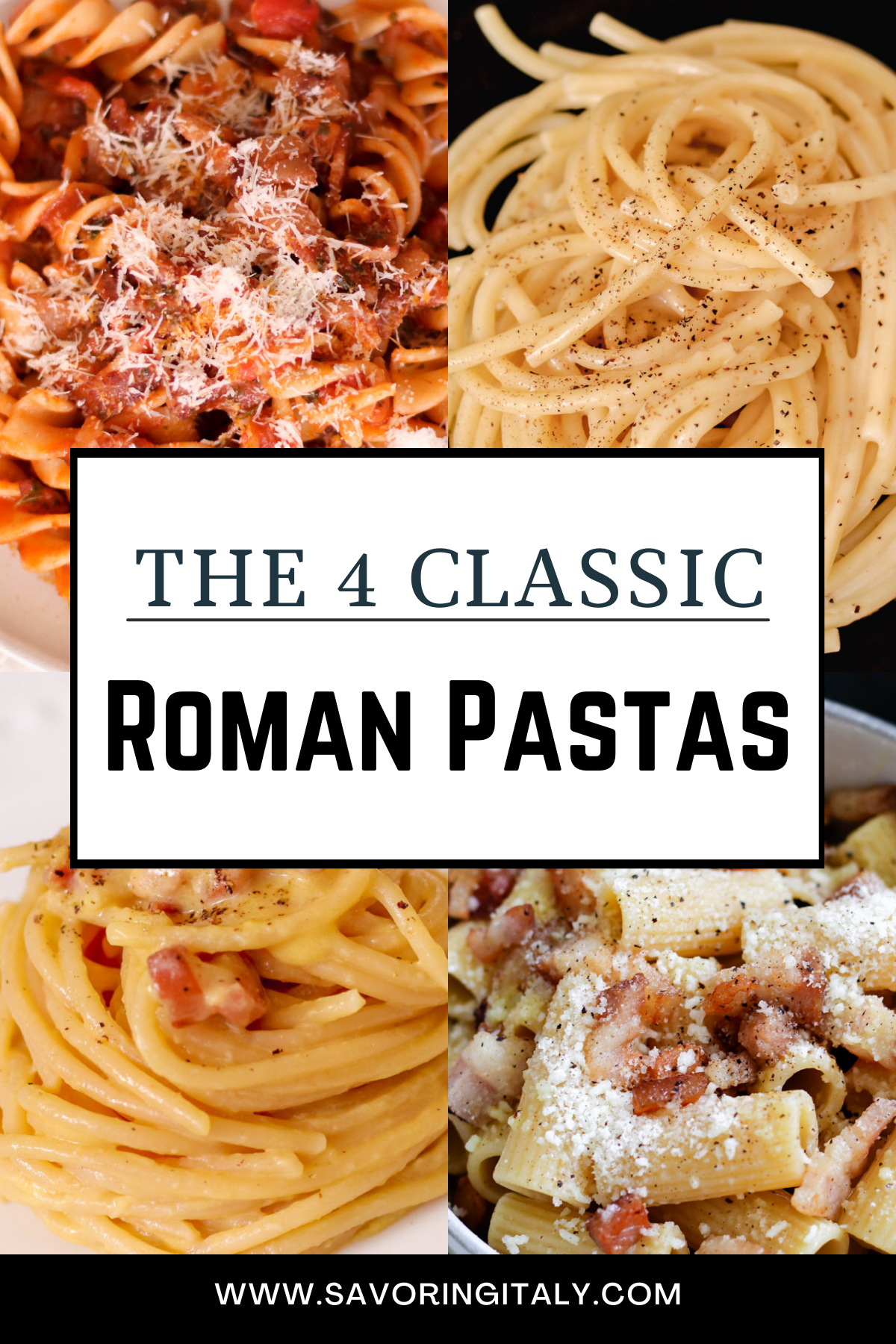
The four traditional Roman pasta dishes are cacio e pepe, carbonara, amatriciana, and alla gricia. They share just a handful of ingredients between them, and yet each one is completely distinct. Understanding them is understanding Roman cooking.
You might also like: Easy Cacio e Pepe (4 Ingredients) or Easy Pasta Amatriciana
This article contains affiliate links which support us at no extra cost to you.
Jump To
Roman pasta is different from the rest of Italy. No cream. No complicated sauces. Just a few very good ingredients, treated with precision. The four classics, cacio e pepe, carbonara, amatriciana, and alla gricia, are built on the same three components: guanciale (cured pork cheek), Pecorino Romano, and black pepper. What changes between them is everything else. Learn them and you understand the soul of Roman cuisine.
A brief history of Roman cuisine
Roman cooking has always been defined by necessity and resourcefulness. The cuisine grew from peasant food, simple ingredients used well, and it has stayed that way at its core. The four classic pasta dishes reflect this. They were not invented in restaurant kitchens. They came from shepherds, farmers, and working-class neighborhoods. Rome gave them their identity.
Alla gricia is the oldest of the four. Before tomatoes arrived in Italy from the Americas in the 16th century, all Roman pasta was based on pork fat, cheese, and pepper. Alla gricia is essentially that original dish, unchanged.
Amatriciana came next, once tomatoes became a kitchen staple. Carbonara is the newest of the four, believed to have developed in the mid-20th century, with eggs likely introduced as a way to stretch the dish further.
Cacio e pepe is the most stripped-back of all. Just pasta, cheese, and pepper. No meat at all. An almost meditative dish that rewards patience and technique.
What are the 4 Classic Roman Dishes?
The 4 Roman pasta dishes are cacio e pepe, carbonara, alla gricia, and amatriciana.
Cacio e Pepe
Cacio e pepe means "cheese and pepper." That is the entire ingredient list, plus pasta and pasta water. It sounds absurdly simple. It is one of the most technically demanding pasta dishes to make well. Try my easy cacio e pepe recipe →
The challenge is the emulsification. You need the starchy pasta water, the finely grated Pecorino Romano, and the pasta itself to combine into a creamy, glossy sauce without any cream and without the cheese clumping. Too much heat and it seizes. Too little water and it dries out.
Key ingredients:
- Spaghetti or tonnarelli (the traditional Roman square-cut pasta)
- Pecorino Romano, finely grated
- Freshly cracked black pepper, toasted in a dry pan first
- Pasta cooking water - the starch is what holds the sauce together
What makes it special:
There is no fat added beyond the cheese. No butter, no oil (despite what some recipes say). The technique alone creates the sauce. Romans consider cacio e pepe the purest test of a cook's skill.
Common mistakes:
- Using pre-grated cheese - it will not melt properly. Grate it yourself, very finely.
- Adding cheese while the pan is too hot - it clumps. Pull the pan off the heat first.
- Not toasting the pepper - toasting brings out the heat and complexity.
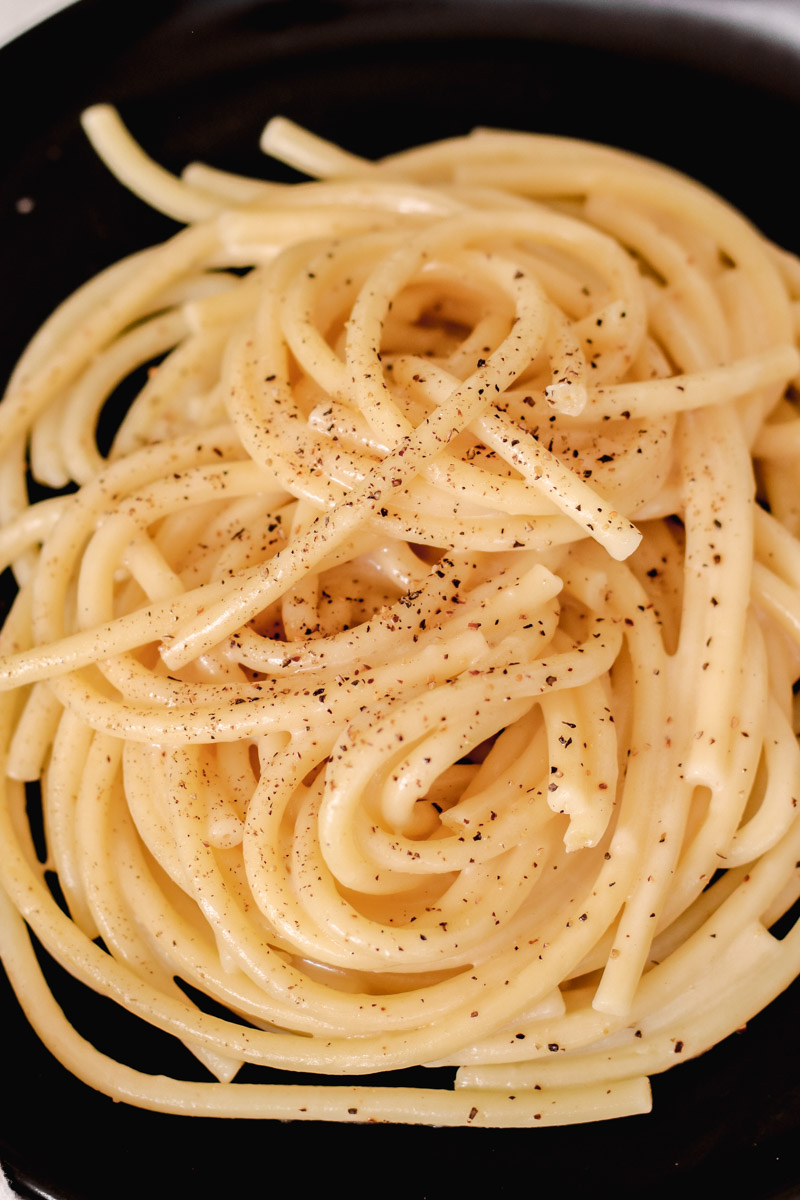
Carbonara
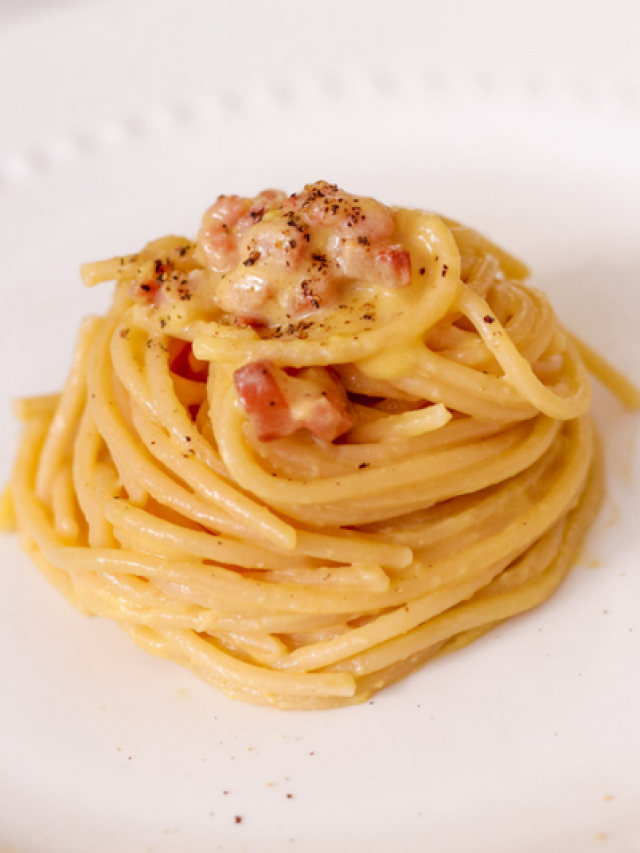
Carbonara is the Roman pasta that the rest of the world has been making wrong for decades. No cream. Ever. The creaminess comes entirely from eggs emulsified with the fat from guanciale and starchy pasta water. See my carbonara recipe →
The dish is believed to have developed in Rome in the 1940s or 1950s. The name likely comes from carbone, the Italian word for coal, though the exact origin story is debated. What is not debated is that carbonara is strictly a Roman dish and strictly made without cream.
Key ingredients:
- Spaghetti or rigatoni
- Guanciale (not pancetta, not bacon - guanciale)
- Whole eggs plus extra yolks for richness
- Pecorino Romano, finely grated
- Freshly cracked black pepper
What makes it special:
The technique. You cook the guanciale until crisp and render its fat. You beat eggs with Pecorino. You toss the hot pasta with the egg mixture off the heat, using pasta water to loosen it into a silky sauce. The residual heat from the pasta cooks the eggs just enough without scrambling them.
Common mistakes:
- Adding cream - it is not carbonara.
- Using bacon or pancetta - guanciale has more fat and a completely different flavor.
- Mixing eggs into a hot pan - they will scramble. Always off the heat.
Amatriciana
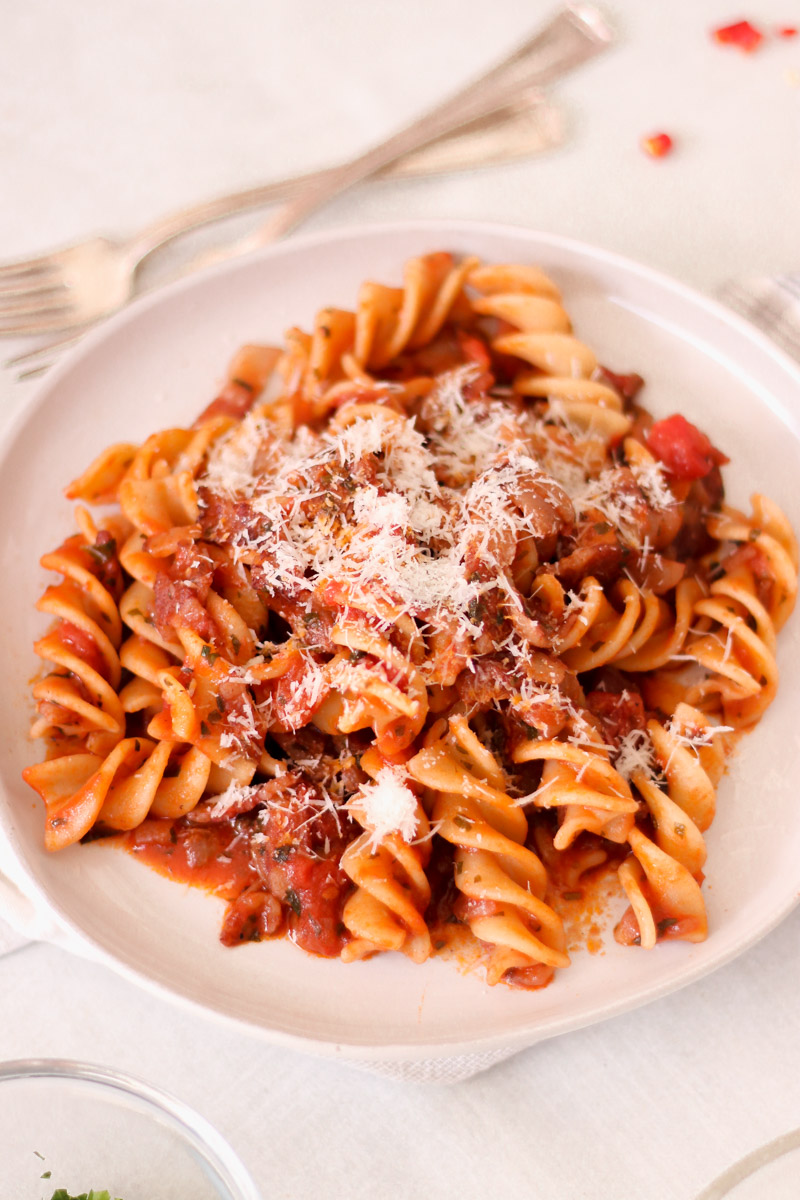
Amatriciana is the only one of the four with tomato. It originated in the town of Amatrice, in the hills northeast of Rome, and is now considered a Roman classic. The combination of guanciale, tomato, Pecorino, and chili is simple and deeply satisfying. Try my amatriciana recipe →
There is a longstanding debate about whether onion belongs in amatriciana. The town of Amatrice says no. Some Roman trattorias say yes. The purist version uses no onion. Both are delicious.
Key ingredients:
- Rigatoni or bucatini (both are traditional)
- Guanciale, cut into strips or chunks
- San Marzano or good canned tomatoes
- Pecorino Romano
- Dried chili flakes
- Dry white wine (optional, for deglazing the guanciale)
What makes it special:
The guanciale fat is the base of the sauce. You render the fat from the pork, deglaze with wine, add tomatoes, and let everything reduce. The Pecorino goes on at the end. The result is rich, peppery, and slightly smoky from the cured pork.
Common mistakes:
- Using bacon - the smokiness overwhelms the sauce. Use guanciale.
- Adding too much tomato - amatriciana is a meat sauce with tomato, not a tomato sauce with meat.
- Skipping the Pecorino at the end - it is what ties the dish together.
Alla Gricia
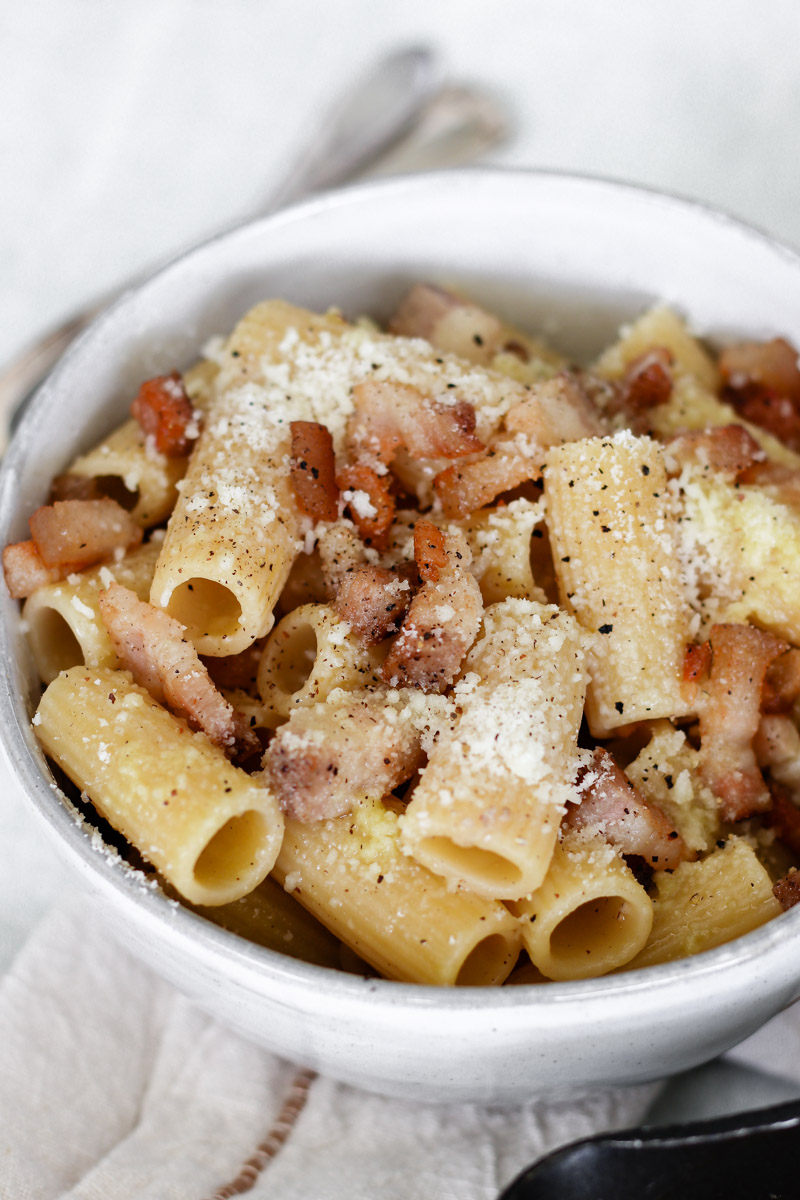
Alla gricia is the oldest of the four and the least well-known outside Italy. It is sometimes called "white amatriciana" because it is essentially amatriciana without the tomato: guanciale, Pecorino, pepper, and pasta water. Nothing else. See my alla gricia recipe →
The dish predates the tomato in Italian cooking, which makes it a living piece of Roman culinary history. It is also the structural ancestor of carbonara: add eggs to alla gricia and you have carbonara. Understanding alla gricia makes the whole family of Roman pasta make sense.
Key ingredients:
- Rigatoni or spaghetti
- Guanciale
- Pecorino Romano
- Freshly cracked black pepper
- Pasta cooking water
What makes it special:
Alla gricia relies entirely on the fat from the guanciale and the starch from the pasta water to create its sauce. There are no eggs, no tomatoes, nothing to fall back on. The guanciale has to be cooked right. The pasta water has to be used correctly. It is pure technique.
Common mistakes:
- Overcooking the guanciale - it should be golden and slightly crisp, not hard or burnt.
- Not adding enough pasta water - the emulsification is everything in this dish.
- Skipping the black pepper - it is not optional. It is half the flavor.
These four classic Roman pasta recipes are simple, yet full of flavor. They showcase the best of Rome's traditional cuisine and will make an impressive addition to any dinner table. Try one of these recipes for a delicious meal that is sure to satisfy!
How the 4 Dishes Relate to Each Other
Think of them as a family tree rooted in three ingredients: guanciale, Pecorino Romano, and black pepper.
- Alla gricia: guanciale + Pecorino + pepper. The original.
- Cacio e pepe: Pecorino + pepper only. No meat.
- Amatriciana: alla gricia + tomato.
- Carbonara: alla gricia + eggs.
Once you see the pattern, the dishes stop being four separate recipes and start being one coherent culinary tradition with four variations.
FAQ'S
The Holy Trinity Roman pastas are a group of three classic Roman pasta dishes: cacio e pepe, amatriciana, and carbonara. These dishes are considered the cornerstone of Roman cuisine and are widely loved.
Alla gricia and carbonara are both pasta dishes from the Lazio region of Italy. While they share many similarities, the main difference is that carbonara sauce includes eggs, while alla gricia does not. Additionally, carbonara often includes pancetta or bacon, while alla gricia traditionally uses only guanciale.
There is no specific pasta dish referred to as "God pasta." It is possible that this term may be a nickname for a particularly delicious or beloved pasta dish, but it is not a widely recognized term in Italian cuisine.
There are hundreds of types of pasta in Italy, but some of the most popular and widely recognized include spaghetti, linguine, fettuccine, penne, and rigatoni.
One of the most famous pasta dishes in Rome is cacio e pepe, which consists of spaghetti or another long pasta, mixed with grated Pecorino Romano cheese and black pepper. Other popular Roman pasta dishes include carbonara and amatriciana.
According to some estimates, the most commonly consumed pasta dish in the world is spaghetti with tomato sauce, also known as spaghetti al pomodoro. This simple and delicious dish is a staple in many Italian households and is loved by people all over the world.
The pasta dish named after twins is called tortellini. According to legend, the shape of the pasta was inspired by the navel of Venus, and it was created by a chef in honor of the birth of twins.