
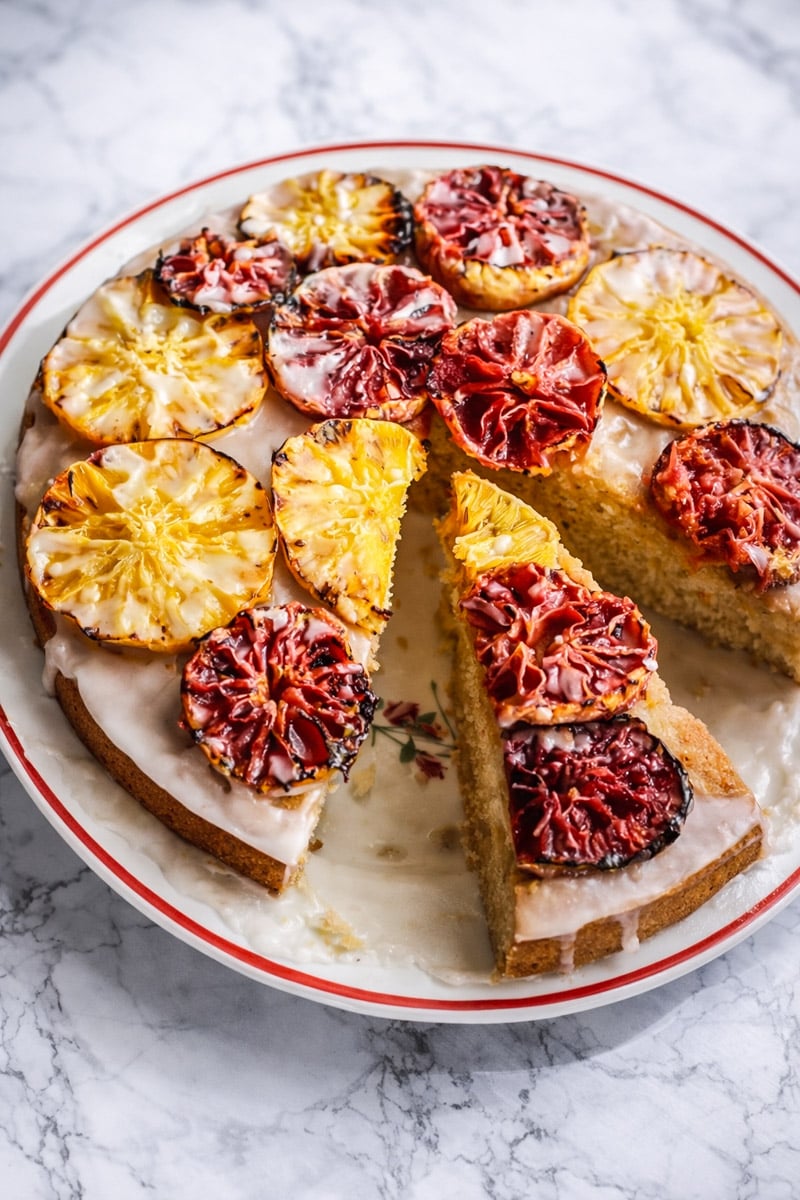
A lovely and simple polenta orange cake that is wonderful alone or served with ice-cream or whipped cream. You can make it with oranges or even grapefruit. The scent of it baking will bring the whole family to the kitchen.
If you're making this Orange Glazed Polenta Cake, be sure to also check out my Italian Orange Poppy Seed Cake and my Lemon Ricotta Cake for more bright, citrusy Italian desserts.
Originally published January 7, 2019 and updated on February 2026
Jump To
There are two components to this orange-glazed polenta cake. Actually...3. The batter, the broiled oranges, the orange glaze. You may wonder why broiled oranges? Why not? My very hip teen daughter told me this cake is very aesthetic. So there you go...that's why you broil the oranges. She also told me that it is amazing and she wishes it wasn't as good because she kept coming back for a small bite.
This is after she told me she doesn't like citrus and cakes. Which is why when I made something very similar, this Screwdriver Cake-Orange Vodka Polenta Cake, was the last time. Italians make various cakes and cookies with polenta.
What is polenta?
Raise your hand if you're not sure what polenta is? Polenta is just the Italian version of grits. Polenta and grits are made from different types of corn, but they are basically both coarsely ground cornmeal. If you would like to make this cake totally gluten-free, use your favorite gluten-free flour in place of the all-purpose flour.
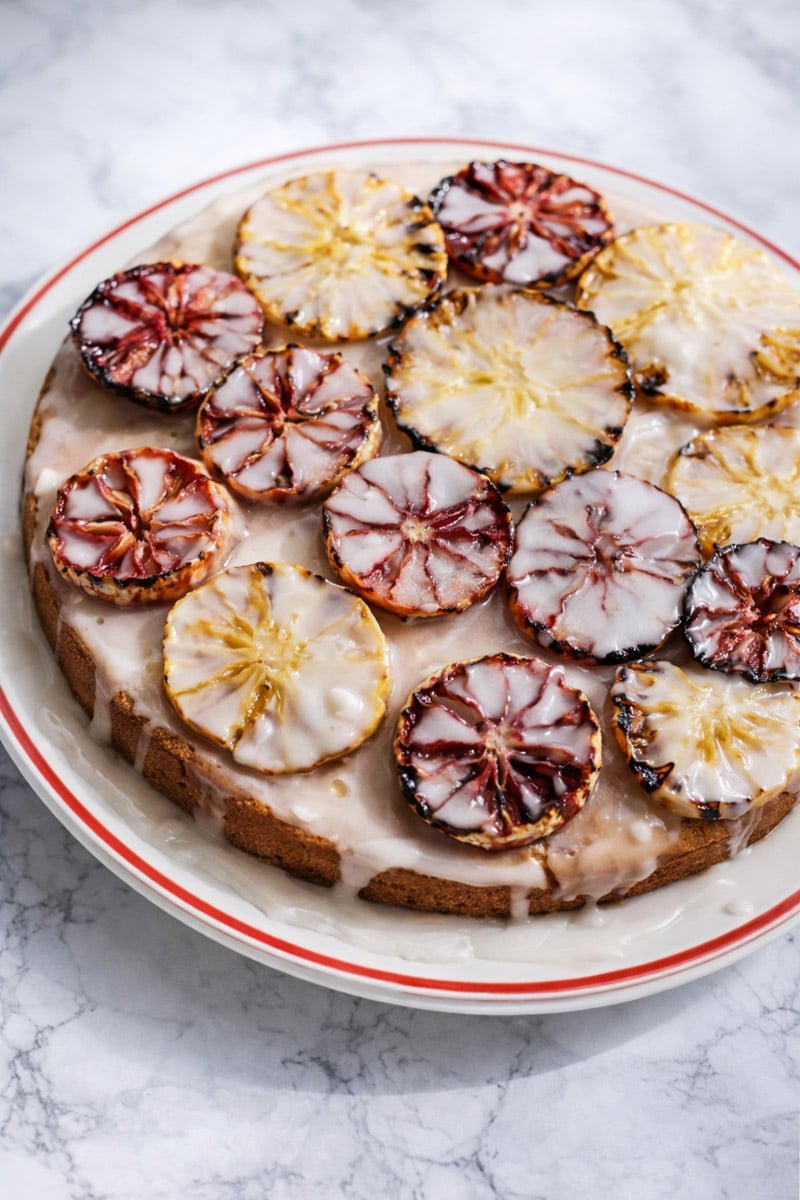
The stunning color of the navel and blood oranges and the orange glazes make this a cake that seems so fancy, yet you didn't even really break a sweat to make it (unless you live in South Florida!).

Ingredient Notes:
For the Cake
- Cornmeal: Use plain yellow cornmeal for a slightly rustic texture and subtle crunch that pairs beautifully with citrus.
- All purpose flour: Balances the cornmeal so the cake stays tender and not too dense.
- Baking powder and baking soda: Work together to give the cake a light rise and soft crumb.
- Salt: Just a pinch enhances the sweetness and bright orange flavor.
- Sugar: Use ½ cup in the batter plus 3 tablespoons for proper sweetness and balance.
- Eggs: Separate and bring to room temperature. Whipped egg whites help create a lighter texture.
- Vegetable oil: Keeps the cake moist and soft. You can substitute with a mild olive oil if preferred.
- Orange juice: Freshly squeezed gives the best flavor. You will use some in the batter and more for the glaze.
- Coconut milk: Adds richness and subtle creaminess without overpowering the citrus.
- Oranges: Slice thinly, about ⅛ inch thick. A mix of navel and blood oranges adds beautiful color.
- Orange zest: Do not skip this. The zest provides the most concentrated citrus flavor.
For the Glaze
- Confectioners sugar: Creates a smooth glaze that sets nicely over the cake.
- Fresh orange juice: Brightens the glaze and enhances the overall citrus flavor.
Instructions
- Step 1: Preheat the oven to 175°C (350°F). Rinse and dry the oranges. Slice off the ends, then cut the oranges into ⅛ inch (about 3 mm) rounds. Remove all seeds.
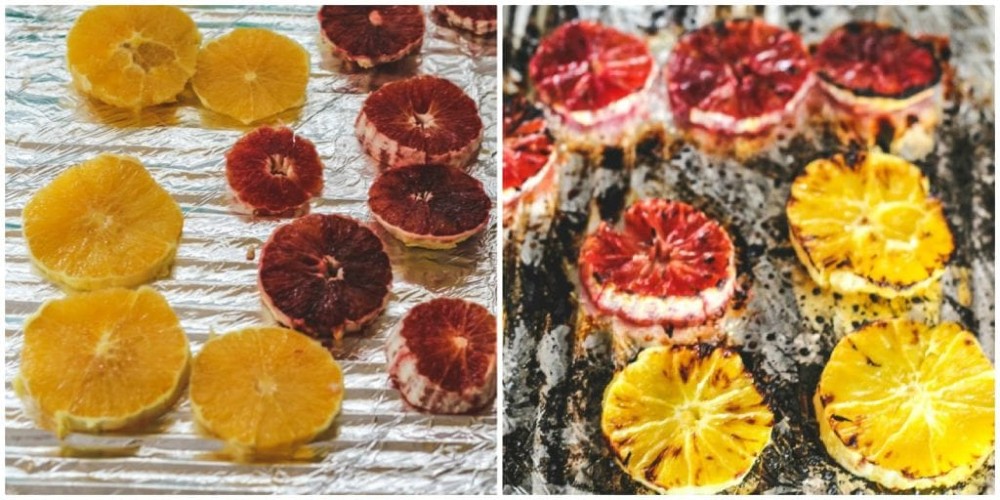
- Step 2: Turn on the oven broiler. Arrange the orange slices in an even layer on a foil lined baking sheet fitted with a wire rack. Sprinkle with 3 tablespoons sugar. Broil for about 7 minutes, rotating the pan as needed, until slightly caramelized. Set aside.
- Step 3: In a small bowl, whisk together the orange juice and coconut milk.
- Step 4: In a medium bowl, whisk together the cornmeal, flour, baking powder, baking soda, salt, and orange zest.
- Step 5: In another medium bowl, beat the egg whites until soft, fluffy peaks form. Set aside.
- Step 6: In a clean mixer bowl, beat the sugar and oil together for about 1 minute until combined.
- Step 7: On medium speed, beat in the egg yolks one at a time until incorporated.
- Step 8: Add ⅓ of the flour mixture and mix. Add ½ of the orange juice and coconut milk mixture and beat for about 1 minute. Add another ⅓ of the flour mixture and mix. Stop and scrape down the sides of the bowl. Add the remaining orange juice mixture and beat for about 1 minute. Add the remaining flour mixture and mix until just combined.
- Step 9: Stop the mixer and gently fold in the egg whites until fully incorporated and no white streaks remain.
- Step 10: Spoon the batter over the caramelized orange slices. Smooth the top with a spatula. Bake for 30 to 35 minutes, or until a toothpick inserted in the center comes out clean. While the cake bakes, prepare the glaze.
Glaze
- Step 11: In a small bowl, whisk together the confectioners sugar and orange juice until smooth and spreadable. Add more juice to thin or more sugar to thicken as needed.
- Step 12: Let the cake cool for about 10 minutes, then release it onto your serving dish. Once completely cooled, place the oranges on top and drizzle with the glaze.
Pro Tips
- Slice oranges evenly: Keep the slices about 3 mm thick so they caramelize properly without burning or turning too soft.
- Remove all seeds: Even one missed seed can make a bite slightly bitter. Take the extra minute to check each slice.
- Do not over broil: Watch the oranges closely. They caramelize quickly and can burn fast under the broiler.
- Whip egg whites correctly: Stop at soft peaks. Overbeating can make them dry and harder to fold into the batter.
- Fold gently: Use a spatula and light motions to keep the batter airy. This keeps the cake soft instead of dense.
- Do not overmix the flour: Mix just until combined to avoid a tough texture.
- Test for doneness properly: Insert a toothpick into the center. It should come out clean or with a few moist crumbs, not wet batter.
- Cool before glazing: Let the cake cool completely so the glaze sets beautifully instead of melting into the cake.
- Use fresh juice for the glaze: Freshly squeezed orange juice gives the brightest flavor and makes a big difference.
Can I use different oranges in this polenta cake?
You could use all navel oranges or all blood oranges. Or a combo of whichever ones you prefer.

Be sure to beat the egg whites separately and fold them in at the end. It does make the cake a bit fluffier. I added less cornmeal than when I made this the last time. But you could add ½ flour and ½ cornmeal if you like more cornmeal.
I know there are some recipes that are even all cornmeal. My kids wouldn't be too thrilled with an all cornmeal cake, so I think the ⅔ cups of cornmeal are the right portion.
FAQ'S
This cake is dairy-free, as I used coconut milk. You could use regular milk if you aren't dairy-free or use almond milk if you happen to have some on hand. You could even use grapefruits. Just make this cake and enjoy a slice with a cup of coffee or tea!!
Yes! You can make this cake totally gluten-free if you substitute the all-purpose flour with 1:1 gluten-free flour (I like King Arthur's flour or Bob's Red Mill).
If you have any leftover, the oranges on top will get soggy the next day. You could do what I did and just toss the oranges if you don't eat them the first day. Store the leftover portion of the cake in an airtight container. It will be fine on the counter for a day or two, and after that, store it in the fridge.
If you don't want to do the extra step of broiling the oranges, you could place them on top and have them bake along with the cake. The broiling of the oranges is quite simple. Just take care to really watch them. The sugar on top will caramelize, which make them taste extra delicious. The cake is best eaten the same day.
Did you make this and love it? Please RATE THE RECIPE below:)
I would LOVE IT if you can leave me a star rating and a review down below and let me know your thoughts! It means the world to me to hear how you liked it.
Please Subscribe and give a follow on Instagram, Facebook, Pinterest, and TikTok xx

BEST Polenta Orange Cake Recipe
Equipment
Ingredients
CAKE
- ⅔ cup plain yellow cornmeal
- 1 cup all-purpose flour
- 1 teaspoon baking powder
- ½ teaspoon baking soda
- pinch of salt
- ½ cup sugar plus 3 tablespoon sugar
- 2 large eggs separated and at room temperature
- ½ cup vegetable oil
- ¼ cup orange juice plus another ¼ cup for the glaze
- ¼ cup coconut milk
- 2-3 small oranges sliced about ⅛ inch thick I used navel and blood oranges
- zest of 1 orange
GLAZE
- 1 cup confectioner's sugar
- juice of one orange
Instructions
- Preheat oven to 350 F. Rinse and dry your oranges. Cut the ends off of the oranges and slice the rest of the oranges about ⅛ inch thick. Take out all the seeds.
ORANGES
- Heat oven broiler. Arrange orange slices in an even layer on an foil-lined baking sheet fitted with a wire rack; sprinkle with 3 Tbsp. sugar. Broil, rotating pan as needed, until slightly caramelized, about 7 minutes; set aside.
- In a small bowl, add the orange juice and coconut milk. In a medium sized bowl, whisk together the cornmeal, flour, baking powder, baking soda, salt and orange zest.
- In another medium sized bowl, beat the egg whites until they are soft with fluffy peaks. Set aside the beaten egg whites.
- In a clean bowl of a mixer, beat the sugar with the oil until combined (about 1 minute).
- On medium speed, beat in the egg yolks one at a time until combined. Add ⅓ of the flour mixture. Add ½ of the orange juice/coconut milk and beat for about a minute. Add another ⅓ of the flour mixture. Stop the mixer and with a spatula, scrape down the sides of your pan to combine all the flour mixture. Add the rest of the orange juice/coconut milk and beat for about a minute. Add the rest of the flour mixture.
- Stop the mixer and fold in the egg whites gently until combined and you don't see any more white streaks.
- Spoon the batter on top the caramelized orange mixture. Even out the top of the batter with a spatula. Bake about 30-35 minutes or until a toothpick inserted in the middle comes out clean. While the cake is baking, prep the orange glaze.
GLAZE
- After the cake has cooled for about 10 minutes, release it from the pan on your serving dish. When the cake has completely cooled, place the oranges on top and drizzle on the glaze.
Nutrition Disclaimer
Please keep in mind that the nutritional information presented below is an approximation and may vary depending on the exact ingredients used.


How pretty is this! I love that glaze on top! Key for sure!
This cake couldn't look any more perfect!
This cake looks amazingly delicious! Such wonderful flavors
Wow this cake is so unique! I would love to try it out!
That orange glaze has me drooling! I love how creative this recipe is.
Hello gorgeous! Not only does this cake sound amazing, it's absolutely beautiful!