
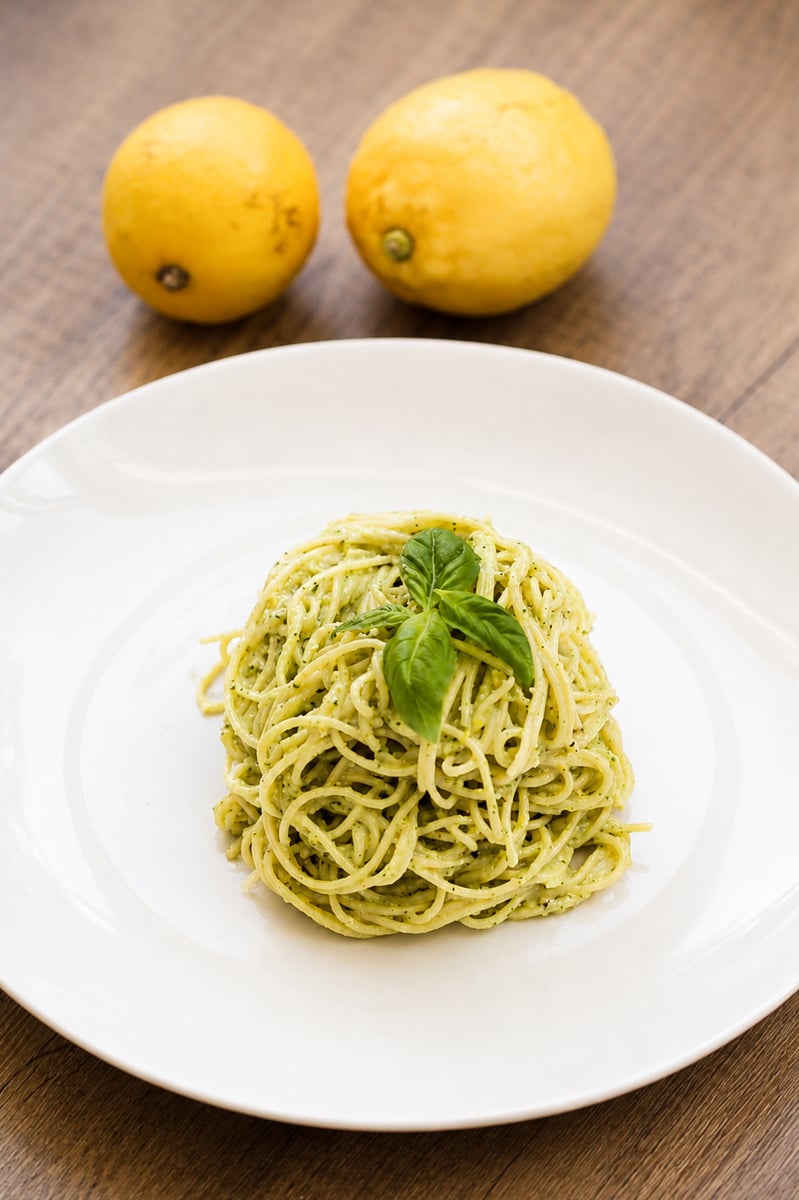
This lemon pesto pasta is one of the most satisfying things I make all summer. A vibrant no-cook sauce of fresh basil, toasted pine nuts, plenty of Parmigiano-Reggiano, lemon zest, and good olive oil gets tossed with hot pasta and a splash of starchy pasta water until every strand is coated in something that tastes like pure Italian sunshine. No cream. No shortcuts. Just a sauce that does not need any of that.
If you love bright, easy Italian pasta, you will also want to try my Spaghetti Aglio e Olio and my Easy Lemon Ricotta Pasta . These are two other recipes I reach for when I want something quick and genuinely Italian.
This article contains affiliate links which support us at no extra cost to you.
Jump To
I first ate a version of this pasta along the Amalfi Coast, where lemons grow on trees draped over the hillsides and their fragrance is everywhere. The local version was called spaghetti al pesto di limone - a simple, no-cook sauce built around the exceptional Sfusato Amalfitano lemons that grow only there. You do not need those specific lemons to make this at home, but you do need the best unwaxed lemons you can find, because their zest is what makes this dish sing.
The technique is the same as traditional Genovese pesto pasta: you use the starchy pasta cooking water and the emulsification of olive oil to create a glossy, coating sauce without adding any cream. This is how pesto pasta is made in Italy. The pasta water does the work.
What Is Lemon Pesto Pasta?
Lemon pesto pasta is an Italian pasta dish built around a variation of traditional Genovese basil pesto that uses fresh lemon zest and lemon juice as a central flavor. While classic pesto is all about the basil and richness of pine nuts and Parmesan, lemon pesto adds a bright, citrusy lift that makes the whole sauce feel lighter and more summery.
The dish is inspired by spaghetti al pesto di limone, a specialty of the Amalfi Coast in Campania, where the famous Sfusato Amalfitano lemons make this sauce particularly extraordinary. That said, this works beautifully with any good unwaxed lemon. The result is a pasta that manages to feel both elegant and effortless at the same time.
No cream is needed or wanted here. The glossy, silky texture of a properly made pesto pasta comes from slowly incorporating starchy pasta cooking water into the sauce as you toss everything together. This emulsification - oil and water combining with the starch - creates a coating sauce that clings to every strand of pasta. It is the same technique used in carbonara and cacio e pepe, and it works every time.
Why You'll Love This Recipe
- No cooking required for the sauce. The lemon basil pesto is made entirely in a food processor or blender. Just blend, toss, and eat.
- Ready in 30 minutes. Most of that is just waiting for the pasta water to boil. The active work is under 10 minutes.
- No cream. The glossy, silky texture comes from pasta water emulsified with olive oil. This is how Italians make it and it is genuinely better without the cream.
- Bursting with summer flavor. Fresh basil, bright lemon zest, and fragrant olive oil together make a sauce that tastes like the best thing you have ever eaten on a warm evening.
- Completely vegetarian. This pasta is naturally vegetarian and can easily be made vegan by swapping the Parmesan for a good vegan alternative.
- Works as a base for so much else. Top it with grilled shrimp, pan-seared chicken, or a handful of roasted cherry tomatoes to make it a more substantial meal.
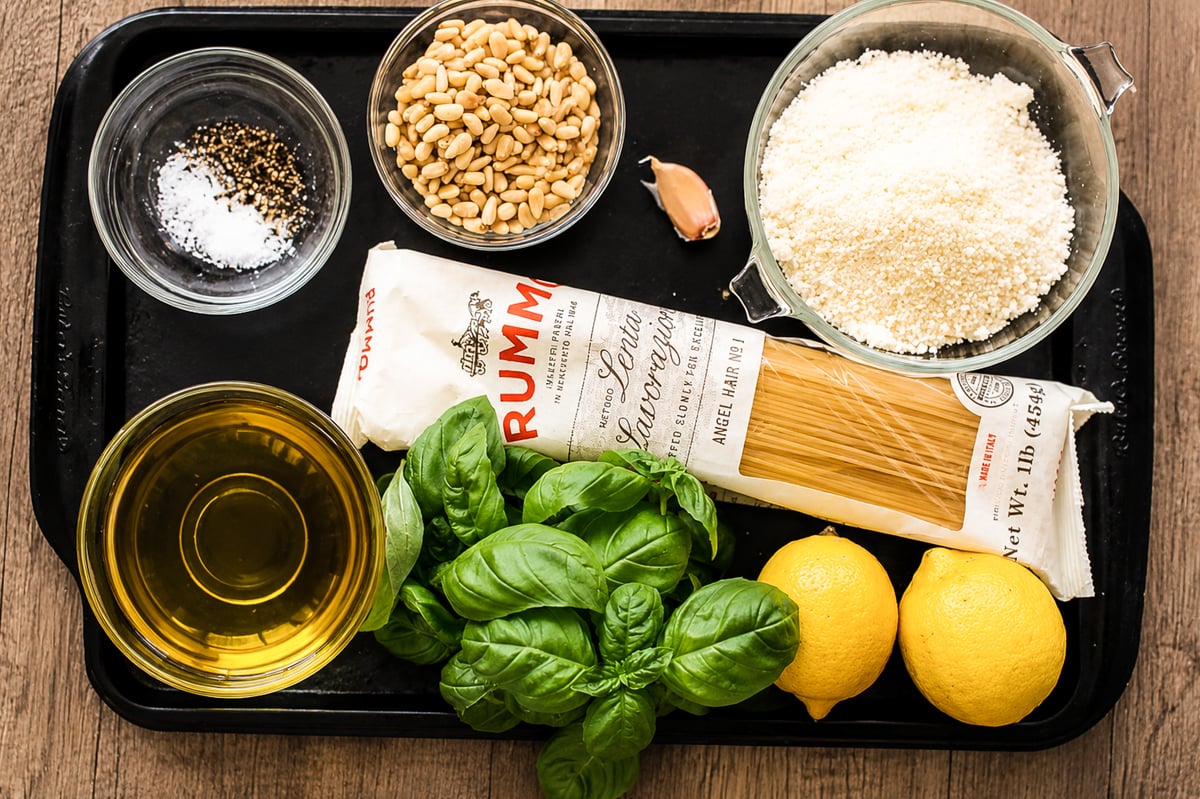
Ingredient Notes
Here is what you need and a few notes on each:
For the Lemon Basil Pesto:
- Fresh basil: Two packed cups of fresh basil leaves. This is the foundation of the pesto. Use the freshest, most fragrant basil you can find. Remove any stems that seem woody - they can make the pesto bitter.
- Pine nuts: The traditional nut in Italian pesto and the best one for this recipe. Toast them very lightly in a dry pan for 2 to 3 minutes to deepen the flavor. If pine nuts are unavailable or too expensive, walnuts or blanched almonds both work well here.
- Garlic: One to two cloves depending on how much you love garlic.
- Lemon zest: Zest of two lemons.
- Fresh lemon juice
- Parmigiano-Reggiano: Half a cup, freshly grated. Do not use the pre-grated canister variety. Freshly grated Parmigiano melts into the sauce and provides the nutty, savory depth that balances the lemon. Pecorino Romano is a sharper, saltier alternative.
- Extra-virgin olive oil: Half a cup of your best olive oil, plus more for serving. The olive oil is the backbone of pesto. A good fruity, grassy EVOO makes a noticeable difference in the final flavor of the sauce.
- Salt: Season carefully since the Parmigiano adds significant salt. You may not even need any more salt. Taste before adding more.
For the Pasta:
- Spaghetti or linguine: My preferred pasta for this sauce. The long strands hold the pesto beautifully and give you that satisfying twirl. Trofie, the traditional Ligurian pasta shape for pesto, is also spectacular here. Short pasta like fusilli or penne works if that is what you have.
- Pasta cooking water: Reserve at least ¾ cup before draining. This starchy water is what creates the glossy, coating texture without any cream. It is essential.
- Extra Parmigiano and olive oil for serving: A final scatter of freshly grated Parmesan and a drizzle of good olive oil at the table elevates the finished dish.
How to Make Lemon Pesto Pasta
Step 1: Make the Lemon Basil Pesto
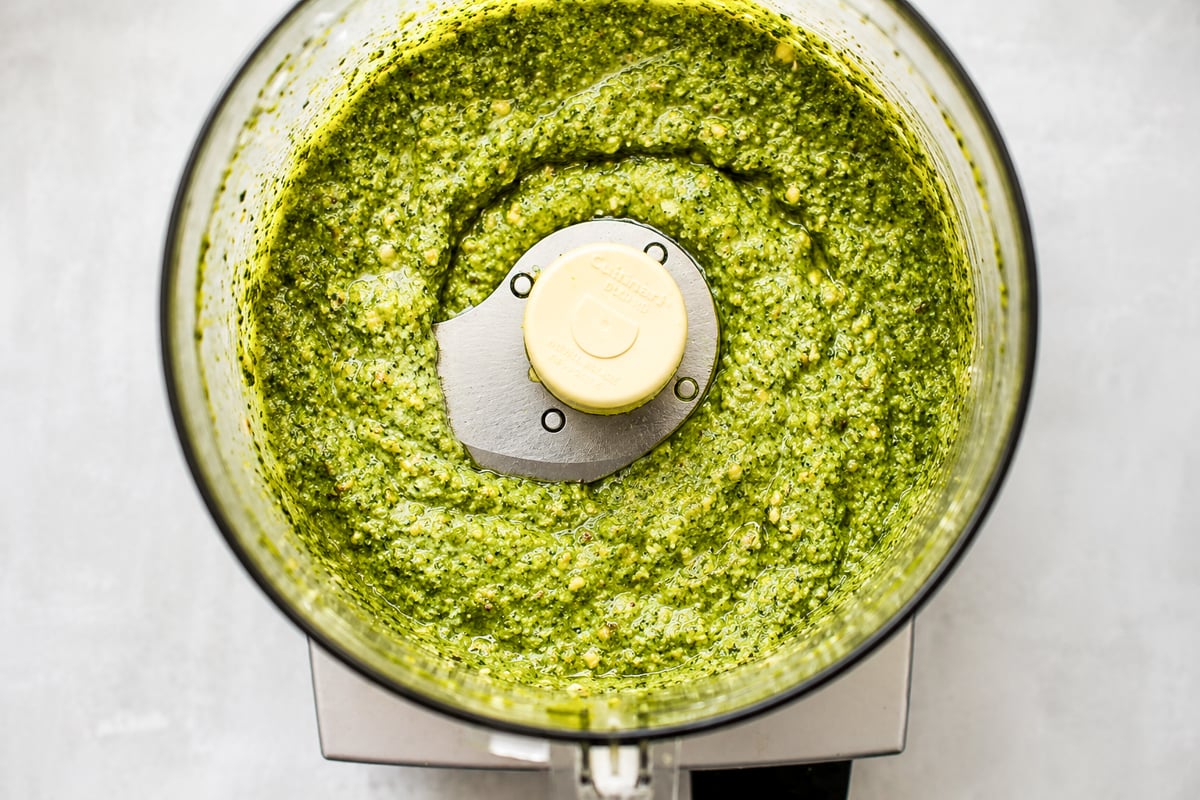
If you are toasting the pine nuts, do that first in a dry skillet over medium-low heat for 2 to 3 minutes, stirring frequently, until just lightly golden. Let them cool slightly. Add the basil, pine nuts, garlic, Parmigiano, lemon zest, lemon juice, and a pinch of salt and black pepper to a food processor. Pulse several times until everything is roughly combined. With the processor running, slowly stream in the olive oil until you have a smooth, bright green sauce. Taste and adjust salt, lemon, and olive oil as needed.
Step 2: Cook the Pasta
Bring a large pot of water to a full rolling boil. Salt it generously. It should taste pleasantly salty. Add the pasta and cook until al dente, 1 to 2 minutes less than the package instruction. Before draining, scoop out at least ¾ cup of the starchy cooking water and set it aside.
Step 3: Toss Everything Together
Drain the pasta and transfer it immediately to a large serving bowl or back into the warm pot. Add about a third of the lemon pesto and toss well. Add pasta water one or two tablespoons at a time, tossing continuously, until the sauce becomes glossy and coats every strand. The pasta water and olive oil from the pesto will emulsify into a silky sauce as you toss. Add more pesto to taste. The sauce should be bright, vibrant, and just loose enough to coat the pasta without pooling at the bottom.
Step 4: Serve Immediately
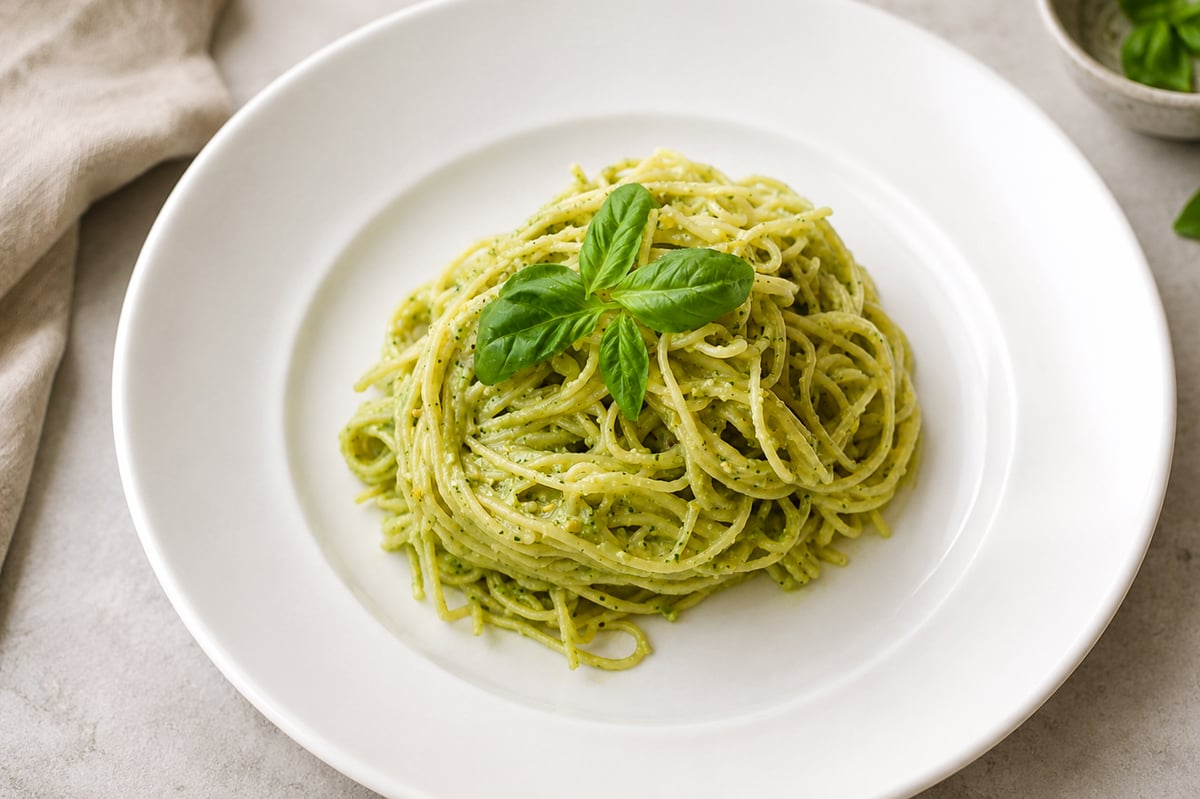
Divide among bowls and finish each one with extra grated Parmigiano, a few fresh basil leaves, a shower of lemon zest, and a generous drizzle of your best olive oil. Eat immediately. This pasta does not wait.
Why This Recipe Has No Cream
Many lemon pesto pasta recipes add heavy cream to the sauce. I understand why: it makes the sauce thicker and more forgiving, and it softens the bright tartness of the lemon. But it also mutes every other flavor in the dish. The basil gets lost. The lemon zest disappears under the richness. The olive oil loses its character.
The authentic Italian technique does not need cream. What creates the glossy, coating texture is the emulsification of pasta water and olive oil. The starch in the cooking water acts as a natural binder, connecting the fat in the oil and pesto to the water, creating a sauce that clings beautifully to the pasta without any dairy beyond the Parmesan. The result is lighter, brighter, and tastes more like Italy.
The key is to add the pasta water gradually while tossing continuously. This is the same technique used in carbonara and cacio e pepe. It takes about one minute of active tossing and the results are remarkable.
Expert Tips for the Best Lemon Pesto Pasta
- Use the freshest basil you can find. Wilted or yellowing basil makes a dull, slightly bitter pesto. Bright, perky basil makes a vibrant green sauce with real flavor.
- Do not over-process the pesto. Pulse and blend just until smooth. Over-processing generates heat and can turn the basil dark and slightly bitter. You want a vivid, bright green sauce.
- Reserve more pasta water than you think you need. You may only use half of it, but running out mid-toss is frustrating. Always set aside at least ¾ cup.
- Do not add all the pesto at once. Start with a third of the batch, toss, taste, and add more. The lemon is assertive and a little goes a long way. You may have leftover pesto, which keeps well in the refrigerator.
- Finish with good olive oil. A final drizzle of your best extra-virgin olive oil at the table makes the dish feel luxurious and adds a layer of flavor you cannot get from the cooking oil alone.
- Use unwaxed lemons. The zest is the star here. Waxed lemons have a coating that dulls the flavor. If you can only find waxed lemons, scrub them very well under hot water before zesting. I use organic lemons.
Variations
- Add shrimp: Quickly sauté shrimp in olive oil and garlic and pile them over the finished pasta. The combination of lemon pesto and garlicky shrimp is absolutely extraordinary.
- Add roasted cherry tomatoes: Roast halved cherry tomatoes at 400 degrees F for 20 minutes until blistered and jammy. Scatter them over the pasta at the end. The sweet acidity plays beautifully with the lemon.
- Add burrata or fresh mozzarella: Tear a ball of burrata over the finished pasta for a creamy, luxurious element without any actual cream sauce.
- Make it vegan: Use nutritional yeast instead of Parmesan in the pesto and skip the final cheese garnish, or use a good vegan Parmesan alternative.
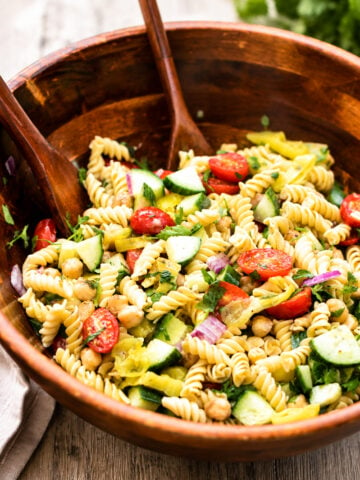
- Cold pasta version: This lemon pesto is exceptional served at room temperature or slightly chilled as a pasta salad. Toss with the pesto and a little pasta water, let cool, and add diced mozzarella, cherry tomatoes, and olives. Perfect for summer entertaining.
- Change the pasta shape: Trofie, the traditional Ligurian shape for pesto, holds the sauce especially well. Fusilli, casarecce, or penne rigate also work beautifully if you prefer a short pasta.
What to Serve With This Pasta
This lemon pesto pasta is a complete meal on its own, but it also pairs beautifully with:
- Insalata mista - a simple dressed green salad that provides a refreshing contrast to the rich pesto
- Burrata Caprese as a starter - the creamy burrata and tomatoes echo the flavors in the pasta beautifully
- Easy Italian Bruschetta to start, with a glass of cold Vermentino or Falanghina
- Grilled shrimp or pan-seared white fish as a main protein alongside
- Italian affogato or a simple fruit dessert to follow - the lemon notes carry right through the meal
Storing
The lemon pesto sauce keeps well in the refrigerator for up to 5 days. Press a piece of plastic wrap directly against the surface of the pesto before sealing to prevent oxidation and browning. Give it a good stir and taste before using - you may want to add a little fresh lemon juice to brighten it back up.
The dressed pasta is best eaten immediately and does not store especially well since the pasta continues to absorb the sauce and the texture changes. If you have leftovers, store in an airtight container in the refrigerator for up to 1 day and refresh with a splash of water and a drizzle of olive oil when reheating gently.
The pesto can also be frozen for up to 3 months. Freeze it in ice cube trays, then transfer the cubes to a freezer bag. This way you can thaw exactly as much as you need without committing a whole batch.
Did you make this and love it? Please RATE THE RECIPE below:)
I would LOVE IT if you can leave me a star rating and a review down below and let me know your thoughts! It means the world to me to hear how you liked it.
Please Subscribe and give a follow on Instagram, Facebook, Pinterest, and TikTok xx

Lemon Pesto Pasta
Equipment
- 1 large sauce pan
- 1 Large bowl
Ingredients
- 1 lb think spaghetti or spaghetti or linguine
- 2 large lemons zested and juiced (I use organic)
- 1 cup pine nuts toasted
- 1 cup grated Parmigiano-Reggiano cheese loosely packed, finely grated, plus more for garnish
- 1 clove garlic peeled
- 1 cup loosely packed fresh basil stems removed
- ¾ cup extra-virgin olive oil
- ¼ teaspoon sea salt may not need it as the cheese is salty
- ¼ teaspoon freshly ground black pepper
Instructions
Start the pasta:
- Fill a large pot with water, season it generously with salt, and bring it to a boil. While the water heats, prepare your lemon pesto so it's ready when the pasta is done.
Cook until al dente
- Add the pasta to the boiling water and cook according to the package directions, stopping when it still has a little bite. Before draining, scoop out about 1 cup of the starchy cooking water and set it aside.
Make pesto
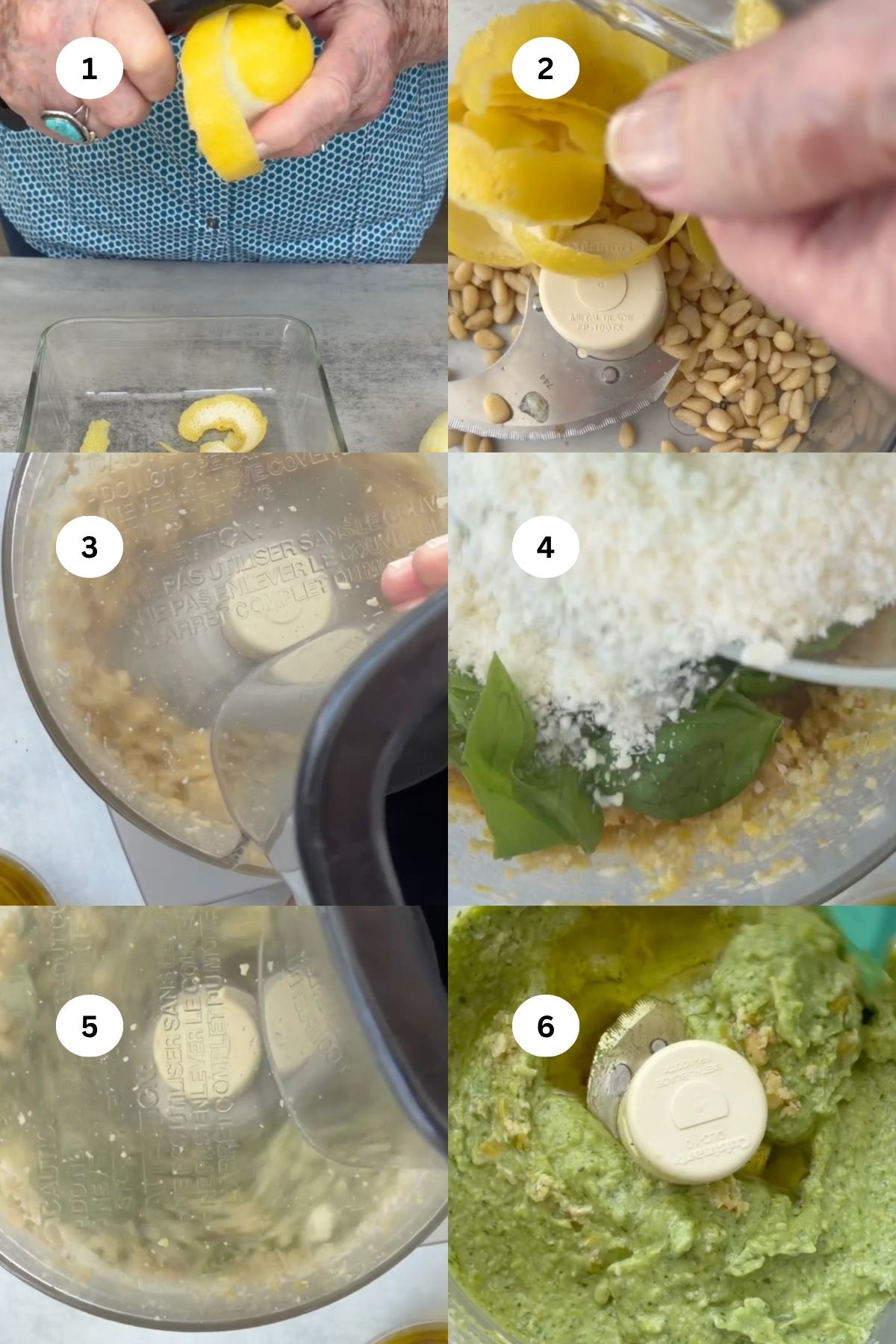
- While the pasta water comes to a boil, prepare the pesto. In a food processor, pulse together the lemon zest, pine nuts, and garlic until finely chopped. Add the fresh basil, Parmigiano Reggiano, salt and pepper, then pulse a few more times just to combine. Pour in the lemon juice.
Add in the olive oil
- With the food processor running, slowly drizzle in the olive oil until the pesto is smooth and well blended, stopping the machine to scrape down the sides as needed to fully combine.
Combine with the pesto
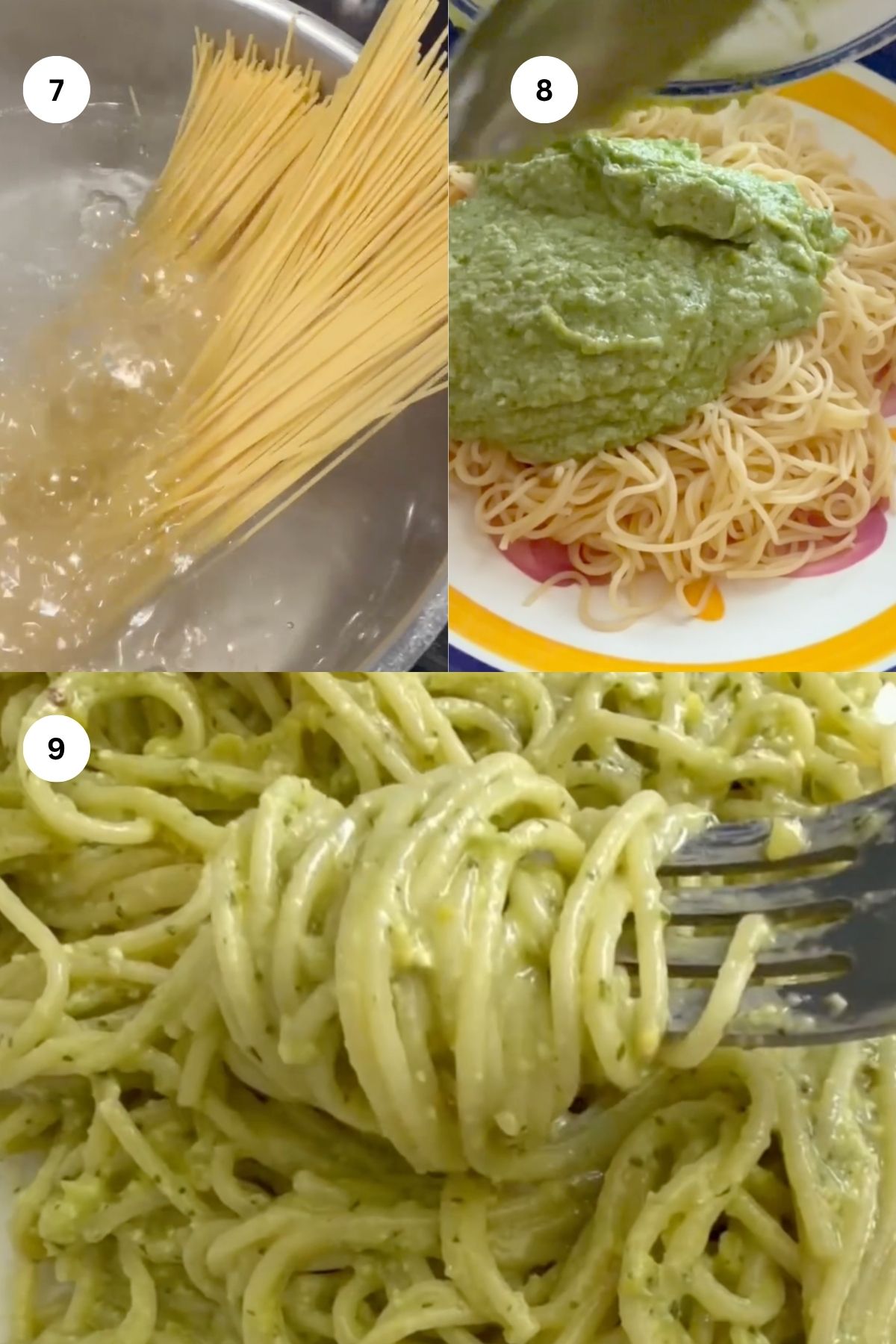
- Drain the pasta and place it back in the pot or in a large serving bowl. Spoon in some of the lemon pesto and toss until the pasta begins to take on the sauce.
Make it silky
- Add a splash of the reserved pasta water and keep tossing. Continue adding a little at a time until the pesto loosens into a glossy sauce that clings to the pasta. Add more pesto if you'd like a stronger lemon-basil flavor.
Finish and serve
- Taste and adjust with salt and freshly ground black pepper. Serve warm with a drizzle of extra-virgin olive oil and freshly grated Parmigiano Reggiano, if you like.
Nutrition Disclaimer
Please keep in mind that the nutritional information presented below is an approximation and may vary depending on the exact ingredients used.
Notes
 Reserve the pasta water before draining: The starchy water helps loosen the pesto and creates a silky sauce that coats the pasta.
- Add pesto gradually: Start with a few spoonfuls, then add more to taste. Some pestos are stronger than others, especially with lemon.
- Do not heat the pesto too much: Toss the pesto with the hot pasta off the heat so it stays fresh, bright, and flavorful.
- Use any pasta shape you like: Short pasta, spaghetti, linguine, or fusilli all work well. Choose a shape that holds the sauce.
- Make it creamier: Add a spoonful of ricotta, mascarpone, or a little extra Parmigiano Reggiano.
- Add protein: Grilled chicken, shrimp, salmon, or white beans would all pair nicely with the lemon pesto.
- Storage: Store leftovers in an airtight container in the refrigerator for up to 3 days. Add a splash of water or olive oil when reheating to loosen the sauce.
 Reserve the pasta water before draining: The starchy water helps loosen the pesto and creates a silky sauce that coats the pasta.
Nutrition
Questions you might have about this Lemon Pesto Pasta
What pasta shape goes best with lemon pesto?
Spaghetti and linguine are my top choices because the long strands cling to the pesto beautifully. Trofie, the traditional Ligurian pasta shape, is even better if you can find it - its twisted shape holds pesto in every groove. Short pasta like fusilli, casarecce, or penne rigate also work well. Avoid very smooth, slippery pasta shapes like rigatoni lisce, where the sauce slides right off.
Can I make this ahead of time?
The lemon pesto sauce can be made up to 5 days ahead and kept in the refrigerator with plastic wrap pressed directly on the surface. The dressed pasta is best served immediately. For entertaining, I recommend making the pesto a day ahead and cooking the pasta fresh when guests arrive. The whole dish comes together in under 30 minutes.
What can I add to lemon pesto pasta?
This pasta is wonderful as-is but also works beautifully with sauteed shrimp, grilled chicken, roasted cherry tomatoes, torn burrata, halved black olives, or a handful of fresh arugula wilted in at the very end. Crispy pancetta or prosciutto crumbled over the top adds a salty, savory contrast to the bright lemon.
Is pesto pasta better hot or cold?
Lemon pesto pasta is best served warm, right after tossing. Because the pesto sauce is not cooked, the heat of the pasta warms the sauce gently without cooking the basil or altering the fresh flavor. It is also excellent at room temperature, making it perfect for summer entertaining or as a pasta salad base. I do not recommend serving it fully chilled from the refrigerator - let it come to room temperature first.
Delicious and easy!
Hi Claire-Really happy you enjoyed the lemon basil pasta! Thank you!
LEMON pesto. Hurrah! This is my favorite pesto recipe. I don't think I can ever eat regular pesto again. I can't describe how delicious this turns out. I hope everyone of your readers gives it a try. How did I never have this before. AMAZING!
Yum! Tastes like summer in a bowl! I had some just-picked tomatoes from my garden and added those in too. Delicious!
I love a good pasta recipe and this lemon and basil one looks super delicious and flavoursome! I will be making this a lot this summer, thank you for sharing!
Made this lemon basil pasta tonight and it’s a total winner. So fresh, takes just minutes to throw together, and the splash of lemon is perfect. Everyone at home polished it off!
Oh hello new summer favorite pasta dish! Super simple, very fresh, ridiculously easy to put together and I always have the ingredients for it at home! Winner!
Hi Mia-So happy you enjoyed it. Thanks for letting me know!
So fresh and bright! The lemon really cuts through the richness of the pesto.
Tried this recipe today and it came together so quickly. The basil and lemon were a perfect match with the pasta!
I love lemon and basil together..so fresh and vibrant. This is the perfect summer pasta dish!
This is summer on a plate! The bright, zesty splash of lemon totally cuts through the richness of the traditional pesto, making the whole dish feel so fresh and clean. It comes together in minutes but feels like a restaurant-quality meal.
Loved this lemony pesto pasta. The perfect pasta to have right after work! So easy to make and super delish!
This is great! I had some leftover smoked chicken and I threw it in there. Really good stuff.
I made this with some seared lemon pepper shrimp, and it was so good together.
I love the bright lemon flavor with the earthy, green flavor of the basil. This is so good.